General News
Audiology
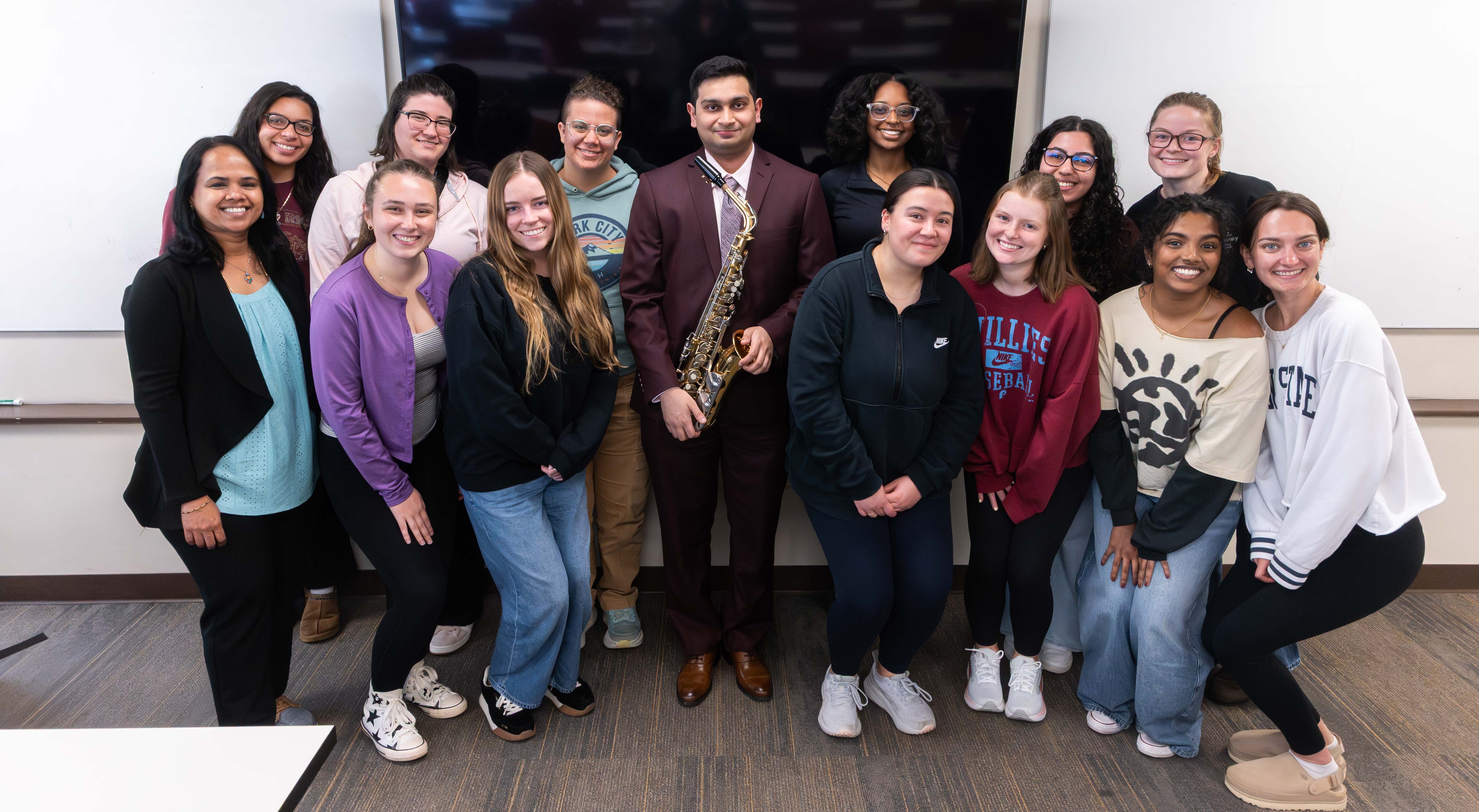
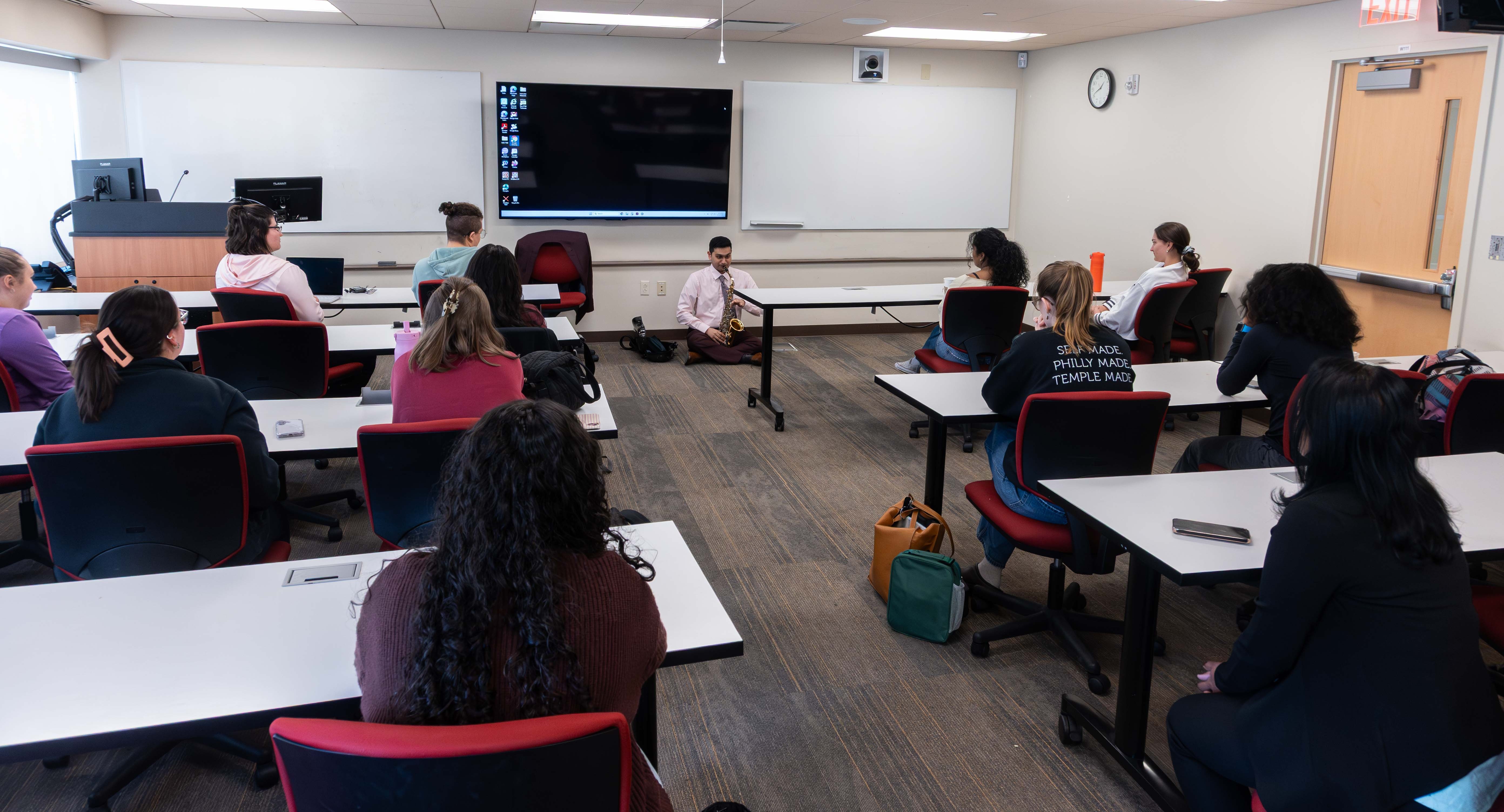
Osborne Audiology in Drexel University’s College of Nursing and Health Professions on the Elkins Park campus, recently launched its inaugural lecture titled “Beyond the Senses: Health, Hearing, and Human Experience,” welcoming acclaimed saxophone artist Shishir Kumar as its first guest speaker.
This new lecture series was developed to help Doctor of Audiology (AuD) students explore the broader human impact of hearing and health beyond traditional clinical measures. Through conversations connecting science, perception, communication, music, wellness, culture, and lived experience, the series aims to deepen students’ understanding of how sensory experiences influence quality of life and overall well-being.
 Importantly, the initiative is also envisioned as an emerging interprofessional educational opportunity, bringing together students and faculty across health professions and related disciplines. The goal is for future sessions to create opportunities for shared learning among students in audiology, speech-language pathology, counseling, nursing, occupational therapy, physical therapy, creative arts therapies, physician assistant studies, nutrition sciences, and other programs interested in the human dimensions of health care and health sciences.
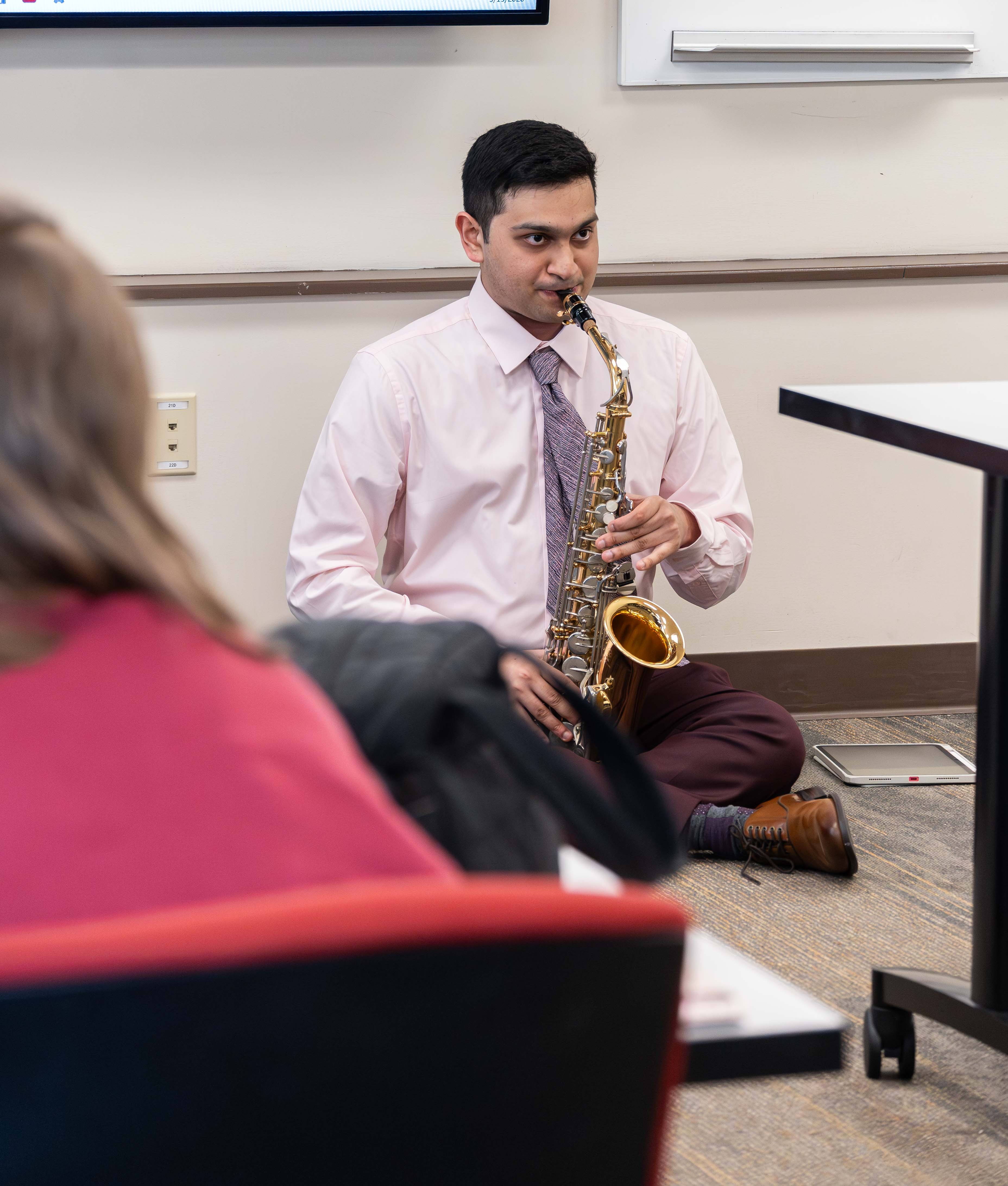
The inaugural lecture focused on music perception and well-being, with Kumar engaging students in an interactive discussion about the intricate relationship between hearing abilities and musical experiences. Doctor of Audiology students from Osborne Audiology explored how hearing loss can affect melody recognition, pitch perception, rhythm appreciation, emotional connection to music, speech understanding in musical environments, and social participation.
A highly regarded artist specializing in the Carnatic saxophone, Kumar is recognized for his “strict adherence to Carnatic classicism” while bringing a distinctive artistic voice to the instrument. Throughout the session, Kumar demonstrated how music serves not only as entertainment, but also as a powerful medium for emotional connection, identity, memory, communication, healing, and wellness. Students were encouraged to think critically about how hearing loss may alter an individual’s relationship with music and, in turn, influence emotional and psychosocial well-being.
“This lecture series reflects our belief that health professions education must extend beyond textbooks, diagnostics, and clinical procedures,” said Radhika Aravamudhan, PhD, EdD, chair of Osborne Audiology. “Our hope is that this becomes an interprofessional platform where students across disciplines come together to better understand the human experience of health, communication, hearing, music, and well-being. These conversations help future professionals appreciate the person beyond the patient.”
As the inaugural speaker in the series, Kumar set the tone for future guest lectures that will continue to explore the intersections of health, communication, hearing, wellness, arts, and lived experience. Osborne Audiology hopes the initiative will inspire students across professions to approach care with both scientific expertise and human-centered understanding.