Current Student News
Physician Assistant
General News
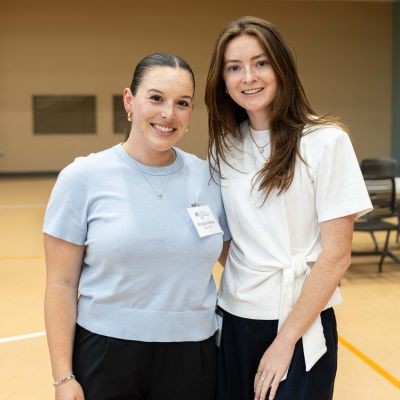
Marisa Hellmuth ‘26PA believes that while medical knowledge can be taught in a classroom, true medical care is discovered and developed through hands-on patient experiences.
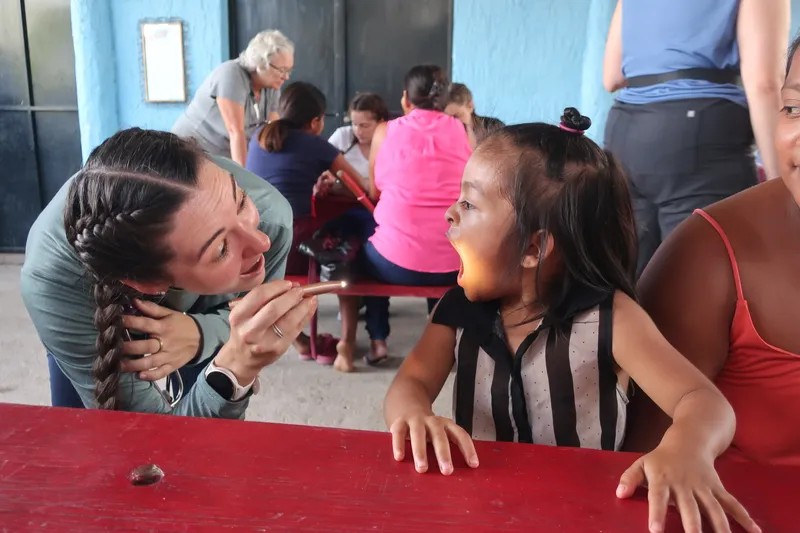
And boy, did Hellmuth get a real-time example of that coming true. She recently gained firsthand experience in patient care during a service trip to Guatemala with fellow students from the Salus at Drexel University Physician Assistant (PA) Studies Program in Drexel’s College of Medicine Graduate School of Biomedical Sciences and Professional Studies.
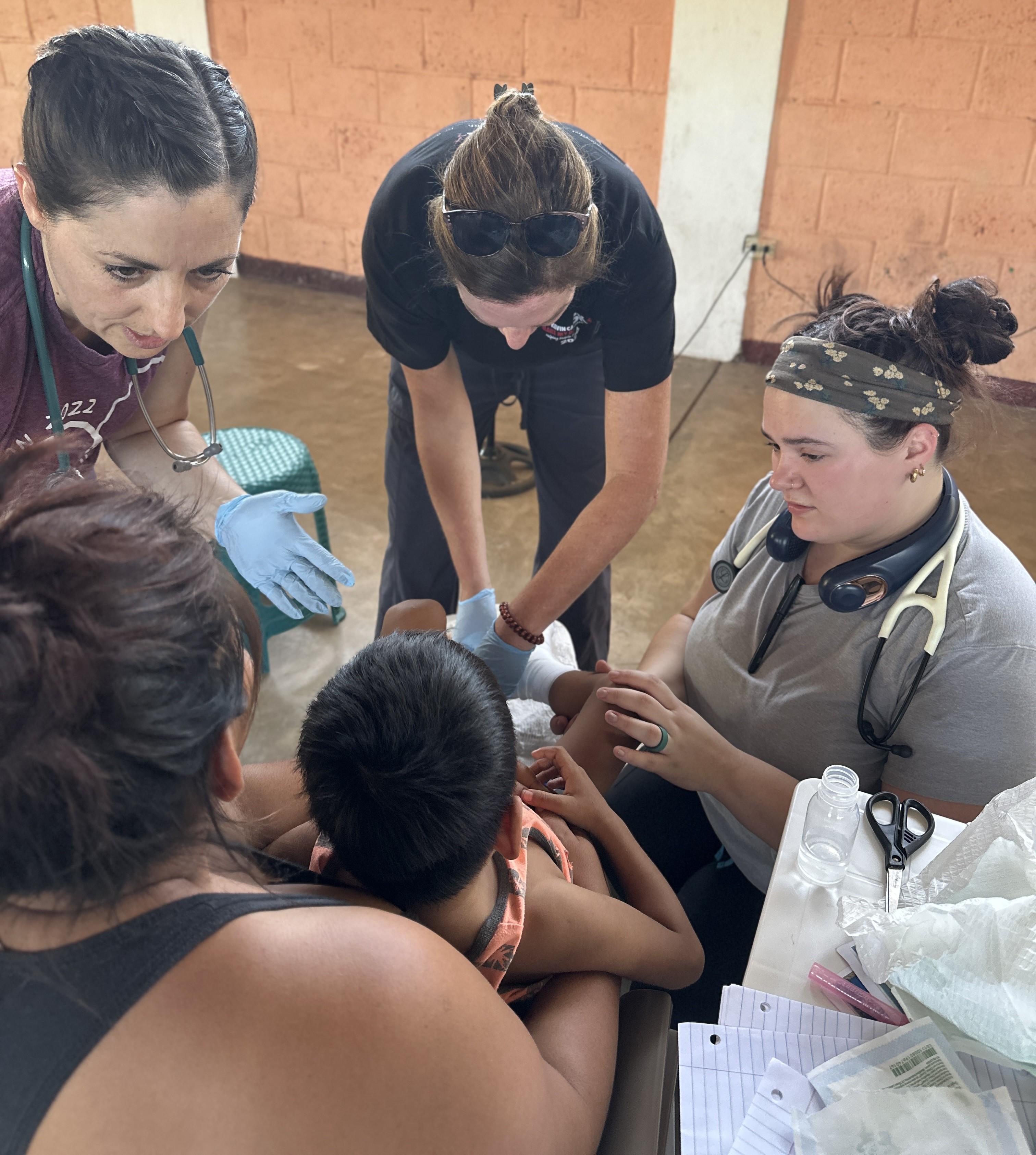 At one of the day’s clinics, a Guatemalan mother arrived with her three-year-old son, whose right foot was wrapped in layers of bandages and causing him significant pain. As Hellmuth and others began to gather the boy’s medical history, it was revealed his foot had been accidentally burned in a hot-oil incident.
“I didn't feel comfortable having the patient leave without us being able to visualize the wound to see if it was infected or healing properly,” said Hellmuth, a Bucks County, Pennsylvania, resident who graduated summa cum laude from Thomas Jefferson University, East Falls Campus with a degree in health sciences and a minor in gender and health studies. “It took a few minutes to convince the mother that we needed to look at the burn and she finally agreed, but stated it was extremely painful to take the bandages off because they were sticking to the healing tissue.”
After soaking the bandaged foot in a basin of water – with loud crying from the boy because of the pain – the bandages were removed and the wound was examined. A wound care nurse traveling with the health care team cleaned and rewrapped the foot and the mother was supplied with Vaseline, gauze, Tylenol and instructions on how to properly change the bandages and clean the wound.
“The encounter had thrown me off kilter, just due to the fact that I had seen so many stomach issues and ear infections, I did not even have the possibility of wound care practice in my mental toolbox at the time,” said Hellmuth. “It allowed me to practice my ability to mentally and physically pivot my medical train of thought. And, even though I wasn't the one specifically providing the medical care, this encounter reminded me that sometimes as a medical provider, patients just need a warm presence to calm them down during a procedure.”
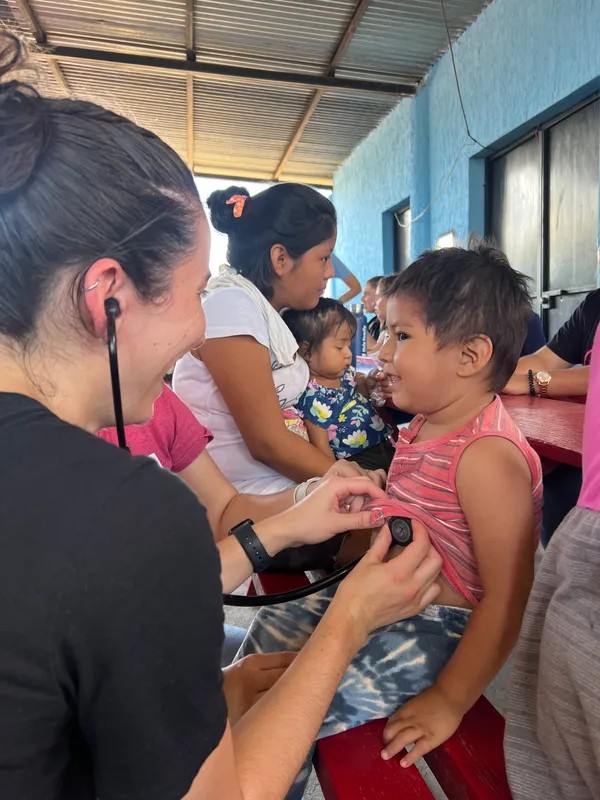 According to Morgan Leh, MSPAS, PA-C, assistant professor, who along with Cara Orr, MMS, PA-C, associate professor, and Jeanne-Marie Pucillo, DHSc, MSPAS, PA-C, associate professor, served as a faculty advisor on the trip, the story perfectly illustrates exactly how physician assistants are trained in the Salus at Drexel University PA program.
“PAs are trained to expand access to care, transform health and wellness and serve patients in a team-based medical practice and I think we represented that on this trip,” said Leh, who was on her first service trip as a faculty member. “Patient education is really the foundation of our profession and we had the opportunity to do that with every single patient encounter we had.”
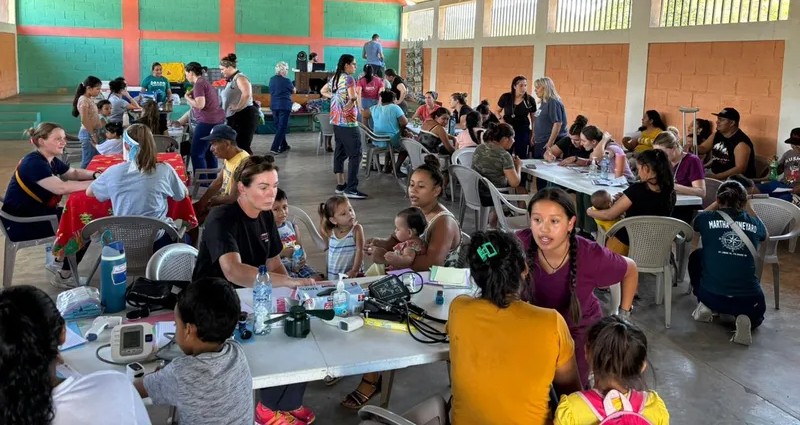
From August 16-23, the Drexel group traveled to Zacapa, Guatemala, for a service trip sponsored by the humanitarian organization Hearts in Motion, bringing together 16 students from the Class of 2026 and three faculty members. In addition, the contingent included several other health care professionals and some non-medical volunteers.
Over the course of the week, the team provided care to 387 patients across five different communities, offering everything from treating acute illnesses, infections and wound care to vital patient education on managing chronic diseases in both infants and adults. Beyond medical care, they administered vitamins, menstrual kits, water filters, children's books to a school in the community and countless hygiene essentials including toothbrushes, toothpaste, soap, feminine hygiene products. On their very first day, the group even visited one of the region’s most impoverished communities to hand out sandwiches and rice milk.
This service trip to Guatemala has been on the radar of Hailey Phillips ‘26PA for a while now. During her interview to enter the Salus at Drexel University PA program, she had spoken to faculty member Jeanne-Marie Pucillo at length about the Hearts in Motion trip to Guatemala. The discussion played a big role in Phillips’ desire to be part of the program.
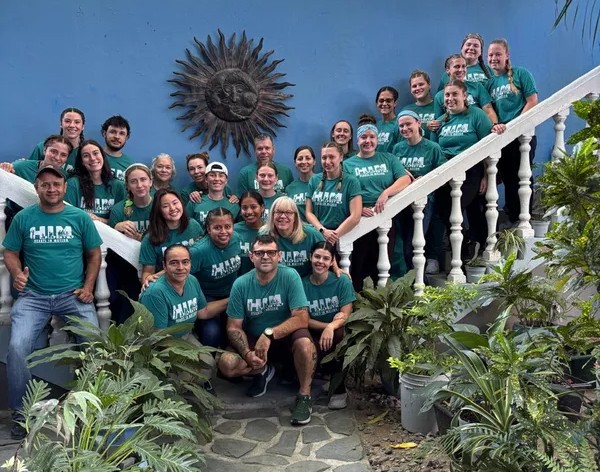 "In my undergraduate education, both my major and minor had a focus on public health and health disparities in America and global health," said Phillips, originally from Horsham, Pennsylvania who earned a degree in biobehavioral health with a minor in diversity and inclusion from Penn State. “So when I was researching PA programs, I was interested in Salus' trip to Guatemala because of its sustainability. Working with Hearts in Motion, you knew that your impact would expand outside the week.”
Phillips added the experience helped her “feel comfortable in being uncomfortable.” “When people don't have access to treatment or the ability to change certain lifestyle factors, you must adjust accordingly,” she said. “This trip helped prove how vital it is to treat people as individuals, looking at what they have access to and what they can change in their lives. Not only did I grow as a PA, but I grew as a human being.”
Both Phillips and Hellmuth called the service trip “eye-opening” and “life-changing” and both would highly recommend the experience to their PA peers.
“You are able to experience an entirely different type of medical care that is going to impact how you treat every patient going forward,” said Hellmuth. “This trip also helped me become more confident in my medical decision-making skills, which is a huge advantage before starting (our) clinical year. Even if you are hesitant about language barriers, there are so many people on the team ready to help you and the patient communicate their needs.”