Optometry
General News
Current Student News
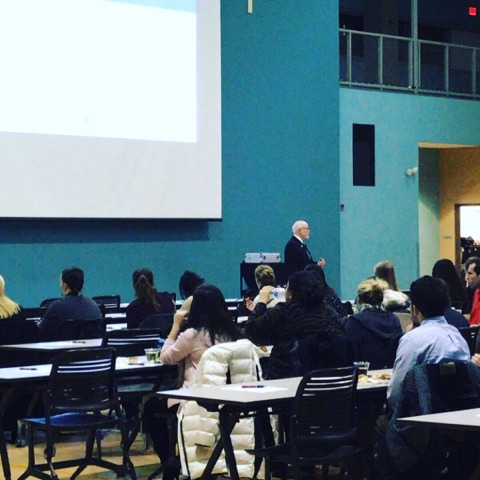 More than 160 of the University’s Pennsylvania College of Optometry (PCO) students entered the Hafter Student Center on the evening of Friday, December 8 for an educational program on the InfantSEE initiative.
Dr. Glen “Bubba” Steele, professor and chief of Pediatric Services at The Eye Center at Southern College of Optometry, shared both a historical perspective of the InfantSEE program as well as his passion for early care and prevention in infants and children.
Launched in 2005, InfantSEE is a year-round public health program managed by Optometry Cares – the American Optometric Association’s (AOA) Foundation. Through this program, optometrists enrolled as InfantSEE providers offer no-cost eye assessments to children between the ages of six months and a year old. These comprehensive assessments, which Dr. Steele noted, can help identify, prevent and treat vision disorders before they affect a child’s ability to see and learn.
According to a declaration made in Pennsylvania three years ago, “Undetected vision problems can lead to permanent vision impairment, contribute to a decrease in a child’s quality of life and may lead to developmental and behavioral difficulties which impede classroom learning as well as increase the costs to society.”
“Identify it early because we want them to lead long and productive lives,” Dr. Steele emphasized during his presentation.
According to the AOA, children should begin receiving comprehensive eye exams during the first year of life because of the rapid development of vision during that time. One in ten children is at risk from undiagnosed eye and vision problems and one in 30 children will be affected by amblyopia, a leading cause of vision loss in people younger than 45 years of age.
 “Prior to the InfantSEE launch, very few babies were seen for a full eye exam,” Dr. Steele said. “Since launch, over 136,000 babies have been seen each year. And, one in ten babies had an issue that needs to be followed up after medical care.”
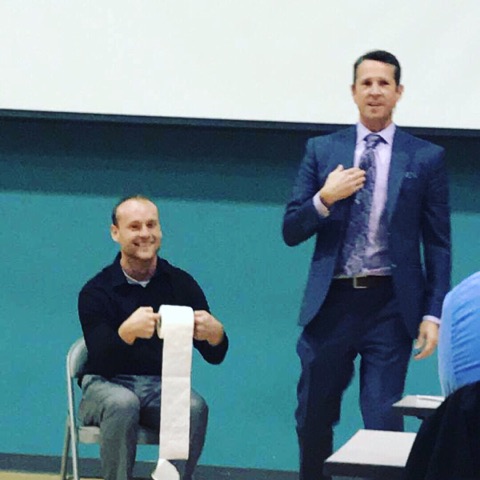
A highlight of the evening was “The Jon Petz Experience,” where businessman, magician and entrepreneur Jon Petz put on a performance like no other for the students. This included making a student’s $100 bill reappear inside of a lemon, and “levitating” four students at the end of the show. He also encouraged students to take risks and experience their own “show times.”
“Get past reasons not to do things and create an impact moment,” said Petz. “You can achieve a series of significant moments that matter. Don’t just complete the assessment, engage yourself in the moment.”
During the two-hour program, students not only had the opportunity to learn more about how InfantSEE and its providers continue to make a difference in the lives of infants and families, but they also had a chance to go home with some great raffle prizes.
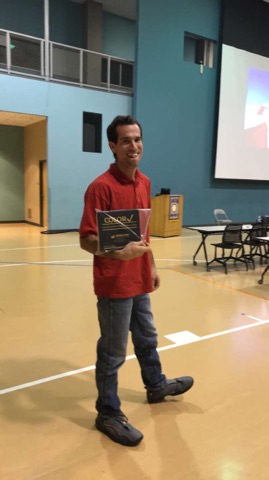 Dr. Elise Ciner, PCO professor, secured an array of pediatric specific clinical equipment for which all optometry students in attendance were entered to win.
Donations included:
The next morning, a community-wide InfantSEE information session was held at The Eye Institute (TEI). Dr. Melissa Trego, dean of PCO, announced the event, which focused on the importance of having your child’s eyes examined early. “The sooner you can detect any type of abnormalities in a child’s vision, the better you can make sure that you guarantee that they can have good vision for the rest of their life,” she said.
Held in TEI’s Toland Classroom, the morning started with a continental breakfast. After several presentations on childhood developmental milestones and vision, the event concluded with a Pediatric Eye Care Panel moderated by Dr. Trego featuring Dr. Steele, Dr. Eileen Schanel Klitsch, a child psychologist, and Dr. Ruth Shoge, PCO clinical educator.