General News
Current Student News
Occupational Therapy
Alumni News
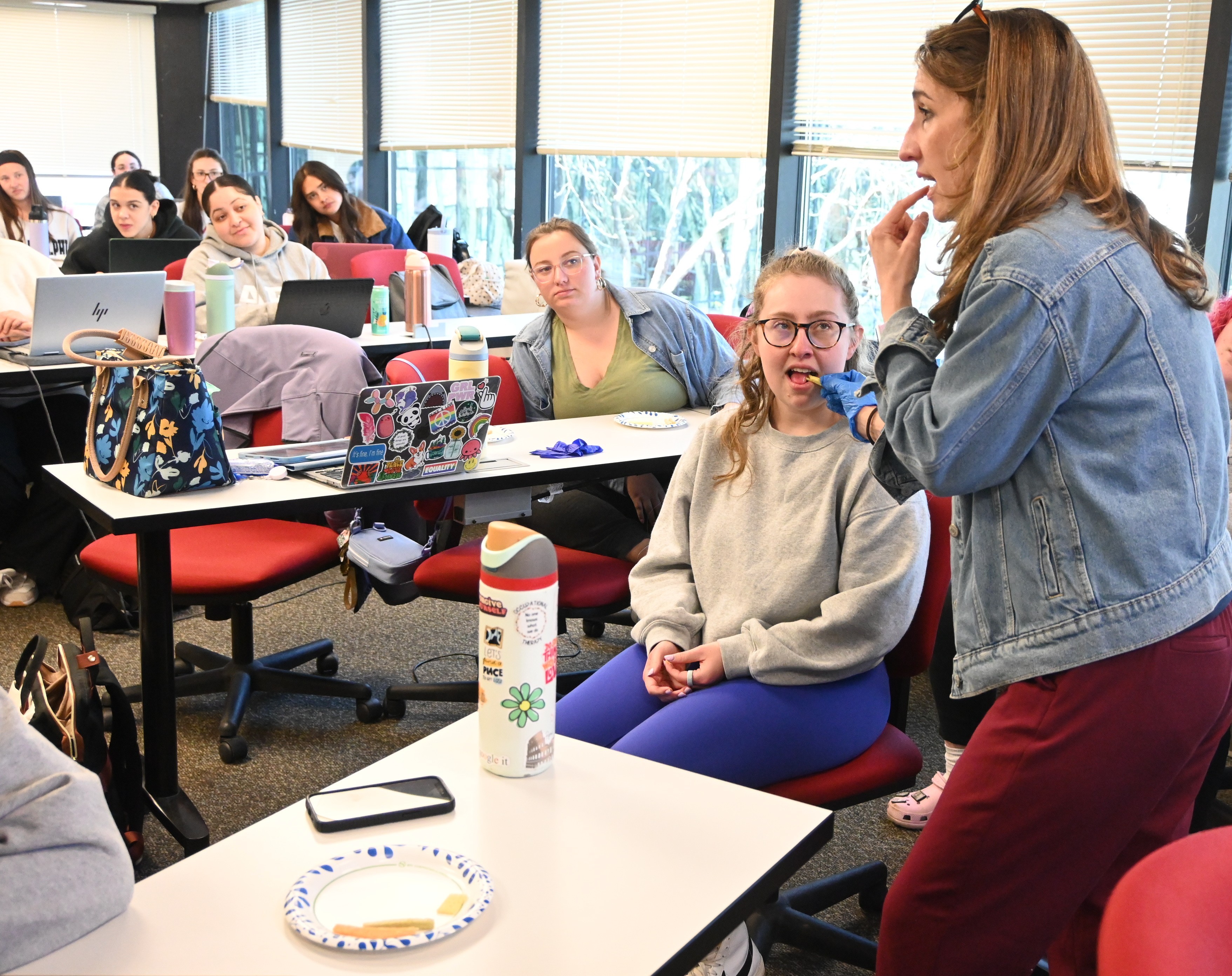
Rather than solely listening to lectures, master’s students in the Occupational Therapy (OT) program within the College of Nursing and Health Professions (CNHP) on Drexel University’s Elkins Park campus participate in hands-on, real-life applications. These experiences provide students with valuable learning opportunities to develop a deeper understanding of course content before entering the profession.
Just ask Olivia Ruderick ‘27MSOT, a first-year student in the program. She and her fellow first-year classmates recently participated in a Pediatric Practice focused on the anatomy of the head and neck while also learning to collaborate in a multidisciplinary environment, specifically alongside Speech-Language Pathologists (SLPs).
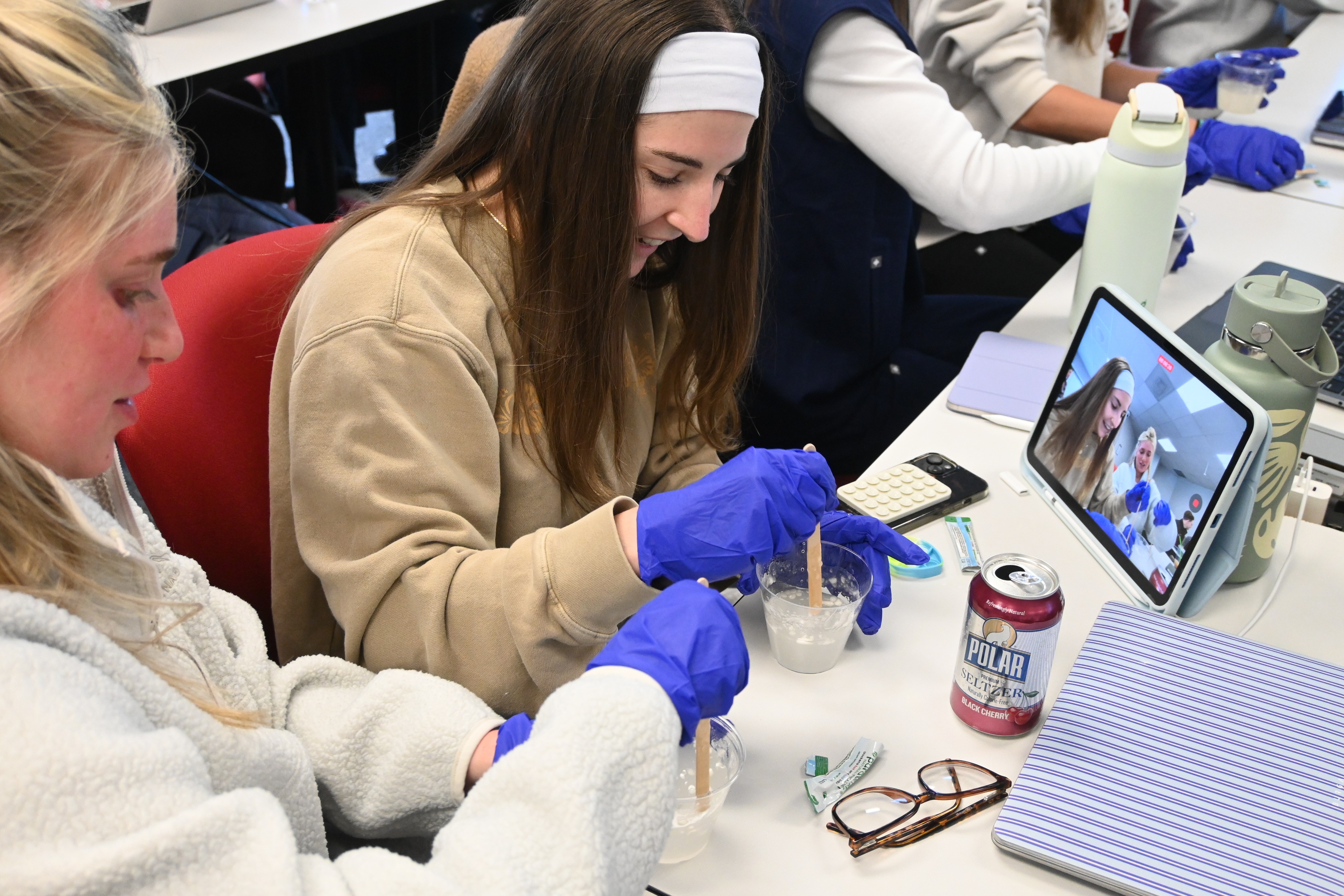 “Many OTs work alongside SLPs, so it is important for us to understand their roles and how we can collaborate,” said Ruderick. “We also co-treat, so as OTs we need to understand how we can collaborate with one another to successfully treat our patients.”
According to Sharon Marcy, OTD ‘23, MS, OTR/L, assistant professor in the OT department, OTs do indeed work on inter-and multidisciplinary teams in a variety of healthcare scenarios, and it is not unusual to find the two professions together during co-treatment sessions.
During the Pediatric Program class, OT students were introduced to the use of oral-motor examinations and thickening agents. This experience allowed them to engage with modified thickened liquid consistencies and textures commonly prescribed in feeding and swallowing therapies.
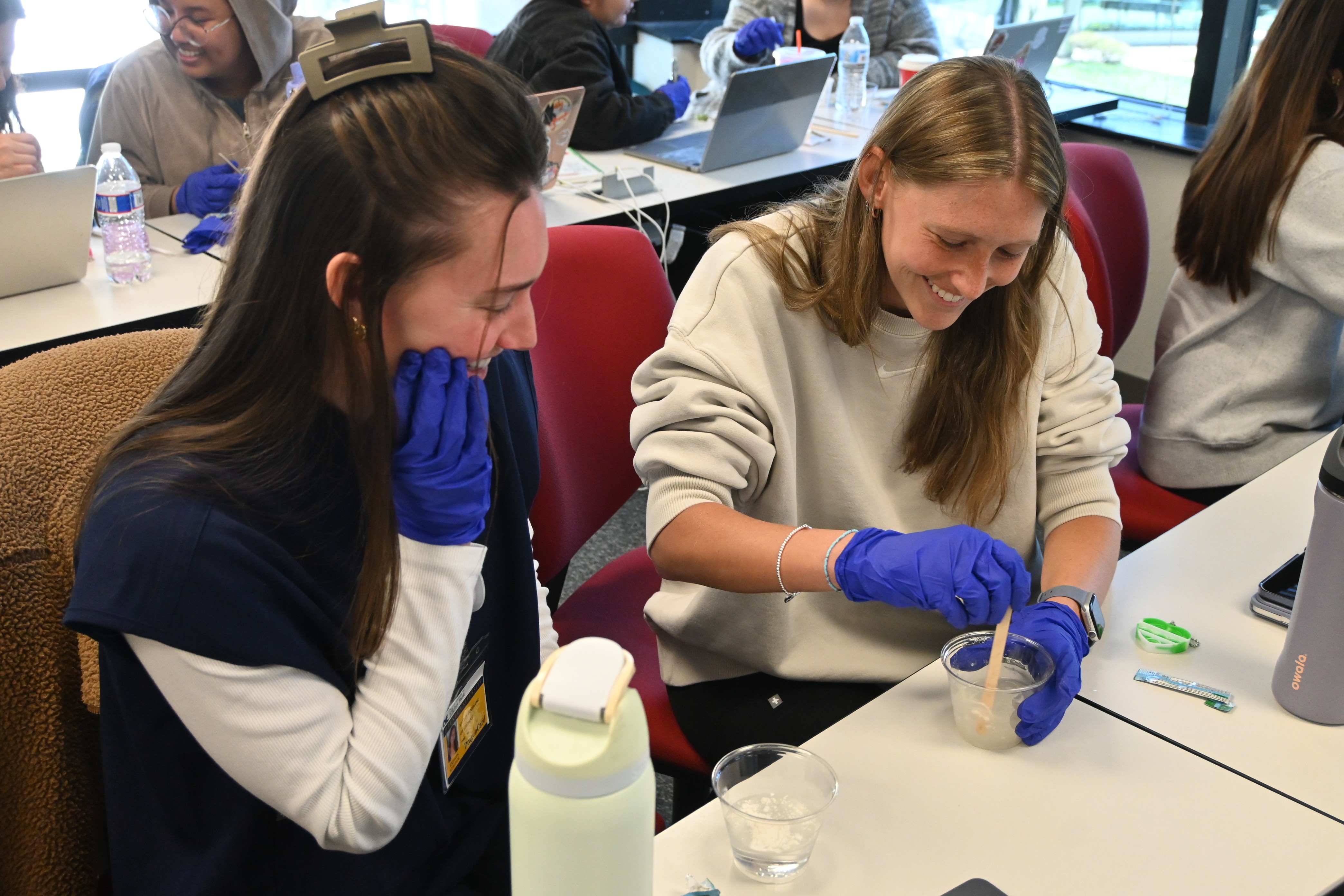 “We made thickened water, which is used for individuals who have dysphagia. The thickener helps the liquid not move below the vocal folds and into the trachea and lungs, which results in aspiration,” said Ruderick. “We tried the thickened liquid, and at first, it was an odd texture, but I tried it a second time, and it wasn't horrible.”
She added that students also observed tongue lateralization, the side-to-side movement of the tongue necessary for manipulating food in the mouth, transferring it to the molars, and then forming a bolus for swallowing.
“Those activities advanced my knowledge in this area because they gave me the opportunity to have hands-on experiences with these important skills needed for proper development in pediatrics,” said Ruderick.
OT adjunct, Jennifer Snyder, MSOT ‘20, OTR/L, encouraged students to consider food from a sensory perspective and to identify the range of sensory experiences involved in eating, even with simple foods.
“I think it's important for them to better understand why a child might choose a particular food as a safe food and avoid others,” said Snyder. “This will help guide intervention that is more effective and will give a jumping off point in foods they might start with when working with children with sensory sensitivities, when looking to expand their diet. Sensory sensitivities can create huge barriers to participation in mealtime.”
She also prompted students to reflect on how the tongue, jaw, lips, and cheeks work together during eating. Snyder explained that when any of these structures do not function efficiently during chewing, eating can become difficult and unpleasant. She also said the demonstration showed how therapists can help oral-motor skills to improve feeding goals.
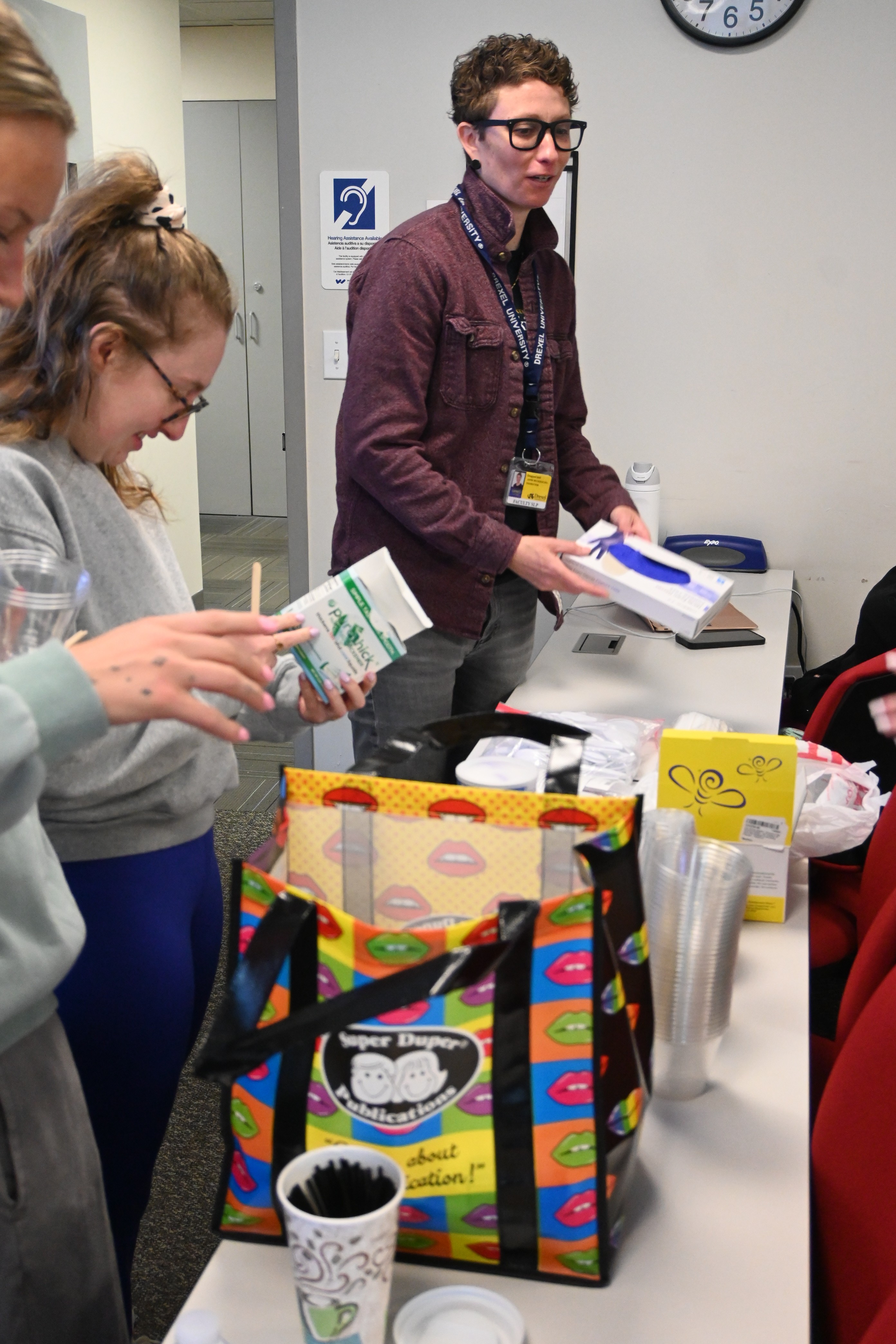 “Feeding challenges are very common and a source of family stress. One reason for feeding challenges in children is sensory sensitivities to certain kinds of textures, smells, or even temperatures,” said Snyder. “Since OTs are the experts on sensory processing challenges, we offer a unique perspective on sensory issues in feeding.”
The class also featured advice and demonstrations from Anne Ruckdeschel, MA, CCC-SLP, CBIS, assistant professor in the SLP department on Drexel’s Elkins Park campus. She spoke to the students about the shared scopes of practice between OTs and SLPs. Her discussion included the use of Augmentative and Alternative Communication (AAC) devices to support clients, as well as developing cognitive and social interaction and communication skills. “Interdisciplinary practice is essential to reach a better understanding of the patient or client as a whole,” said Ruckdeschel. “SLPs and OTs are fortunate in that we often have the opportunity to work together in many areas, including feeding and swallowing, augmentative and alternative communication (AAC), and, in some cases, cognitive-communication.”
According to Ruckdeschel, ensuring both professionals understand their respective scope and ways they can enhance each other's ability to support the client or patient ensures better outcomes for everyone.