Speech-Language Pathology
General News
Current Student News
While brainstorming with student leaders about a new voluntary educational opportunity for students in Drexel University’s Master of Science Speech-Language Pathology (SLP) program at the Elkins Park campus, an idea began to take shape. The group envisioned a talk show-style program featuring audience participation and lively back-and-forth conversations. Ostensibly designed to be both engaging and informative, the program will give an opportunity to learn more about the real-world SLP profession from faculty members and clinical supervisors with firsthand experience.
But what to call this new endeavor? Robert Serianni, MS, CCC-SLP, FNAP, chair and director of the SLP department, may have dated himself a bit by suggesting tongue-in-cheek “The Merv Griffin Show.” (Griffin was a talk show host whose show had two runs, from 1962 to 1963 on NBC and from 1969 to 1972 on CBS.)
“I picked a much older talk show, and the students didn’t know who he was,” said Serianni. “There were a lot more contemporary talk shows that I could have picked, but I ended up choosing the oldest one I could think of.”
 The final choice embraced a more contemporary inspiration: Between Two Ferns, a satirical talk show hosted by comedian Zach Galifianakis, in which the host and guest sit between two potted ferns for an unconventional interview.
Dubbed “Between Two Ferns SLP Version,” the program gives students the opportunity to engage with faculty members and clinical supervisors in an informal setting. Through candid discussions and audience questions, students gain valuable insight into the realities of the speech-language pathology profession from educators who first-hand experiences bring didactic concepts to life.
“We’ve been really intentional to make sure that our faculty are certified SLPs because we want the people who are teaching future speech pathologists to have participated in the work they are teaching about,” said Serianni. “The students in our program are really interested in learning about the diversity of places they can go to work. And they thought that since they worked with licensed and certified speech pathologists as their faculty and their clinical educators, they wanted to know more about our work histories and see the potential trajectory into the profession.”
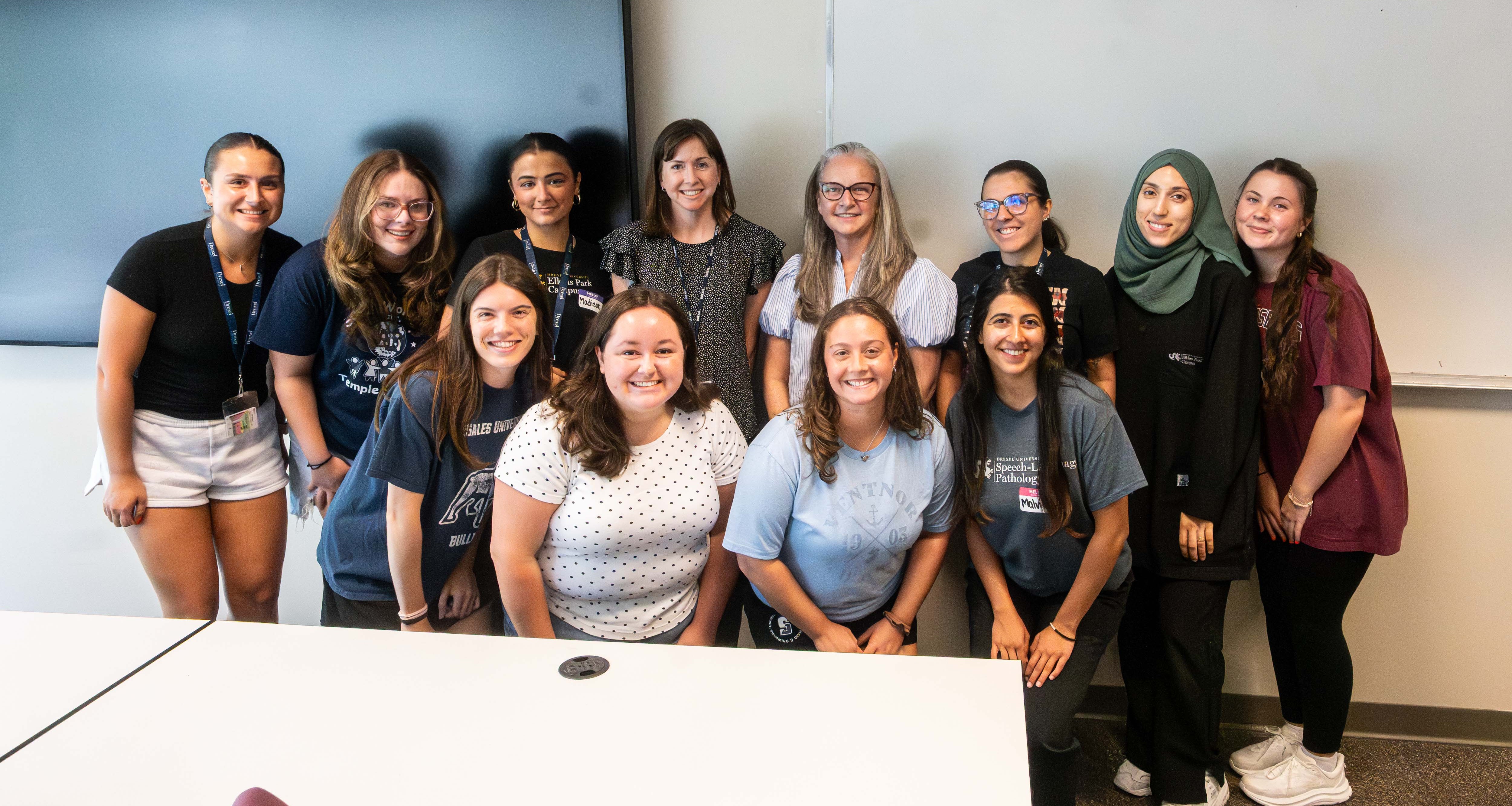
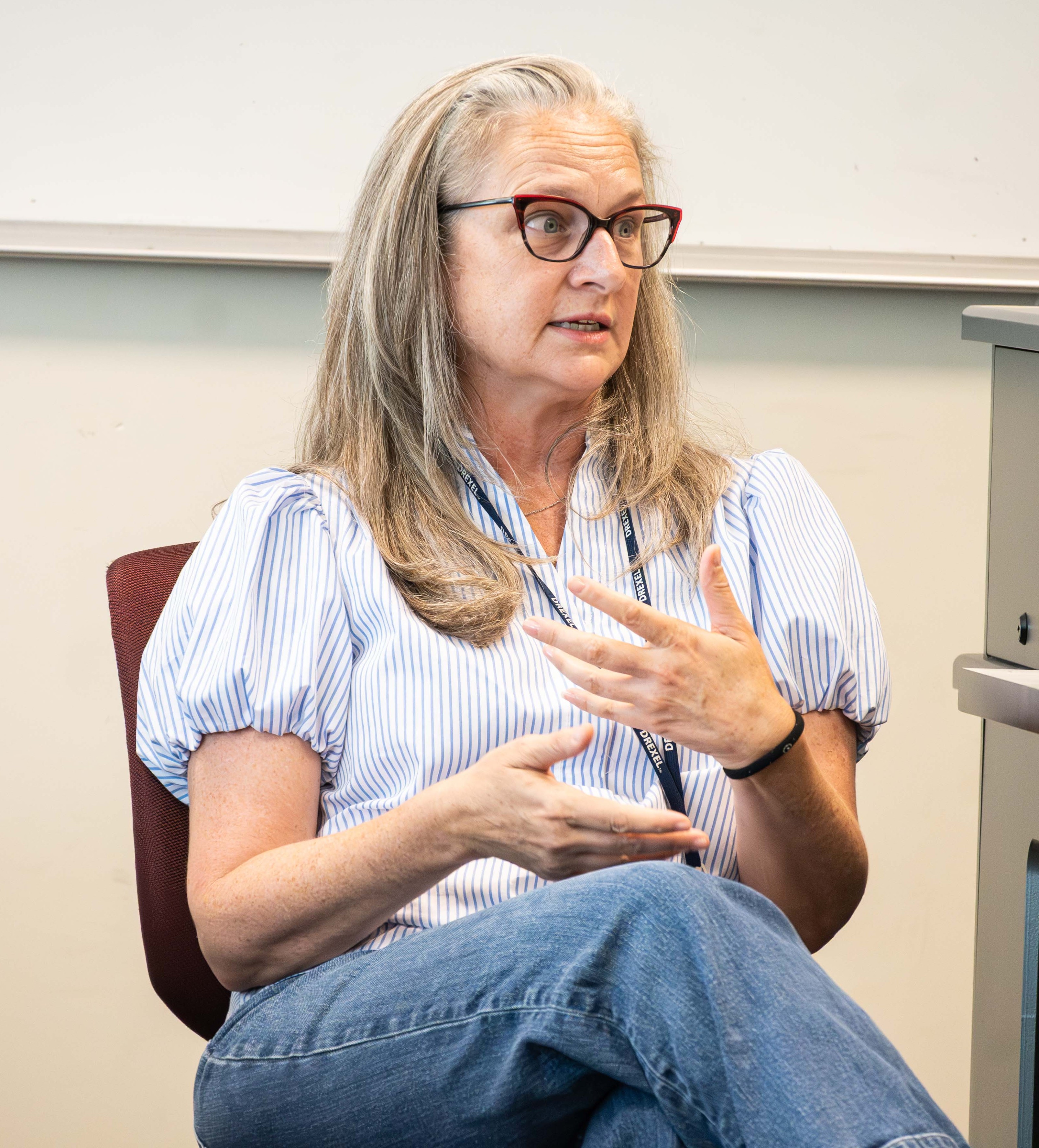
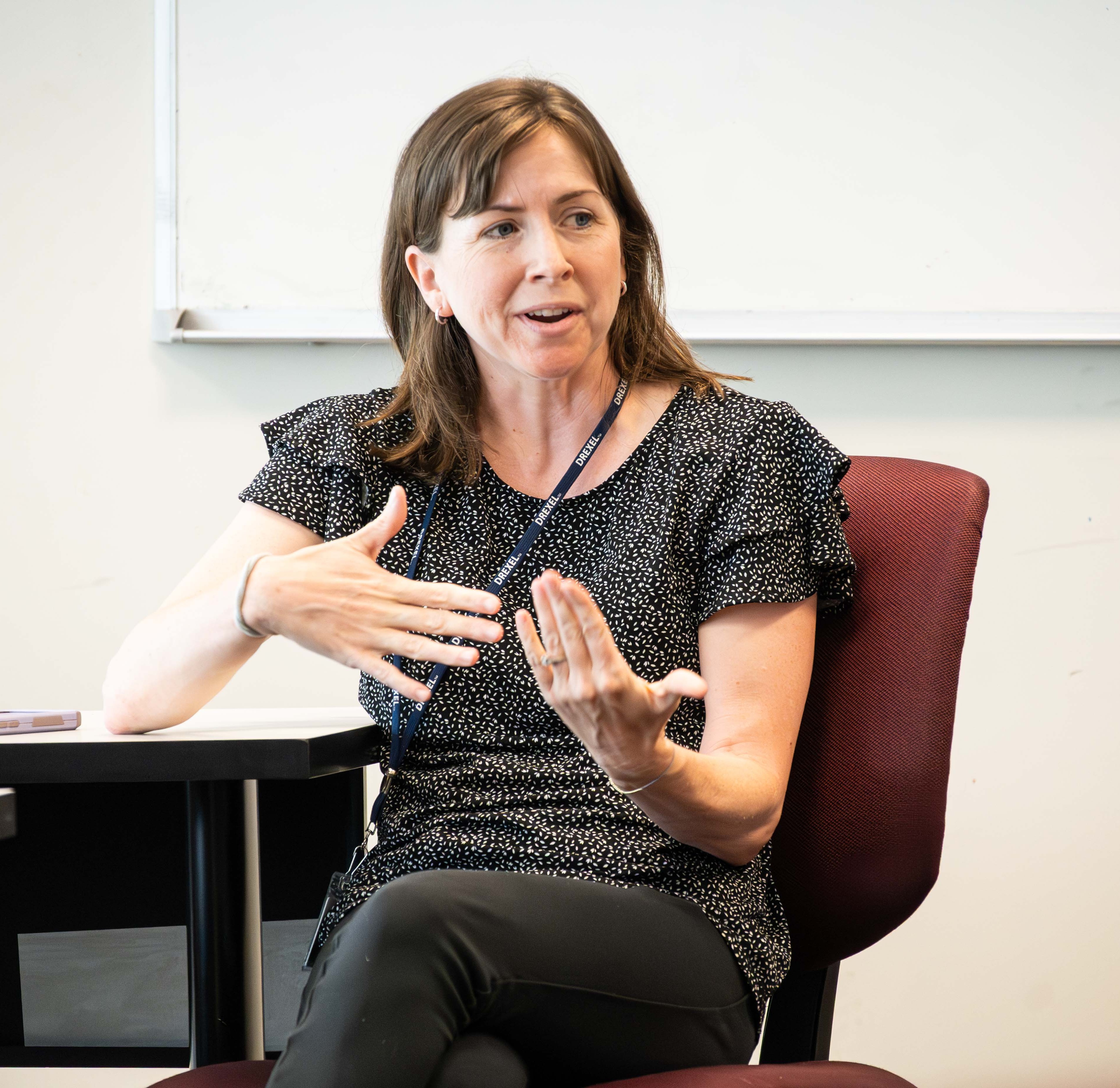
The first session was in the spring of 2026 and was such a success that another was scheduled for this summer. The latest session included clinical educators Jennifer Downs, EdD, CCC-SLP, and Emily Jett, MA, CCC-SLP, both of whom teach master’s students at the Speech-Language Institute (SLI), the program’s onsite clinical facility in Elkins Park, Pennsylvania.
And it has indeed become a valuable learning opportunity for the students. According to Malvika Nair ‘27SLP, professors would often share stories in the classroom about their previous clinical experiences, professional journeys, and lessons they had learned throughout their careers.
 “Those stories always sparked more questions and made us realize how much we could learn from hearing more about their experiences outside the traditional classroom setting,” said Nair, of Bridgewater, New Jersey, who graduated from The College of New Jersey (TCNJ) with a degree in Speech-Language Pathology and Audiology and a minor in Deaf Studies.
Nair added that as SLP students began preparing for their externship process and discussing their preferred placements and practice settings, many realized their perceptions of the profession were based on limited exposure. They often lacked a clear understanding of what day-to-day clinical practice looks like across different work environments, making it difficult to determine which setting would be the best fit for their interests and career goals.
“Drexel’s faculty has such a diverse range of professional experience across hospitals, private practice, schools and other settings that we thought it would be valuable to create an opportunity for students to learn more about the career paths and what those roles realistically entail,” she said.
The insight has ultimately been invaluable for Nair and her classmates. The open and comfortable discussions between the two groups in a non-classroom setting allow students to hear about what it’s like to open a private practice, what hiring teams look for when considering a new SLP, how to advocate for oneself as a new clinician, and what faculty members wish they had known when they were graduate students entering the profession. Students also received intel about personal experiences involving contract negotiations, benefits, career transitions, additional training, and the realities of working in different settings.
“These are all important real-world topics that may not necessarily come up in a typical lecture,” said Nair. “It also helped us better understand the expertise of our faculty and clinical supervisors, including faculty we may not have had the opportunity to work with directly. I now have a better sense of who I can reach out to when I have questions about a particular population, clinical setting, or career path. Drexel’s SLP faculty are incredibly diverse, knowledgeable, and willing to support students, and I think this event really highlighted how valuable that is.”
According to Serianni, the “Between Two Ferns SLP Version,” program will continue being offered to incoming cohorts.