
Speech-Language Pathology
General News
Current Student News

Jenna Nurick ‘26SLP is passionate about recognizing Speech-Language Pathology (SLP) as a professional degree. It requires extensive investments of time, money, and a high level of dedication. She believes that without recognition, entering and maintaining a career in the profession can become unnecessarily challenging.
So she decided to advocate for her profession by writing a letter to U.S. Sen. John Fetterman of Pennsylvania. Nurick believed that because of Fetterman’s recovery from a stroke in May 2022, the senator might have a deeper understanding of the critical role that speech-language pathologists play in rehabilitation and recovery.
 “His personal experience, combined with his position as a policymaker, makes him a good fit to speak on this issue,” said Nurick.
She answered this call to action to advocate for her profession after a recent guest lecture that SLP students on Drexel University’s Elkins Park campus heard from Amy Goldman, MS, CCC-SLP, a member of the SLP department’s advisory board.
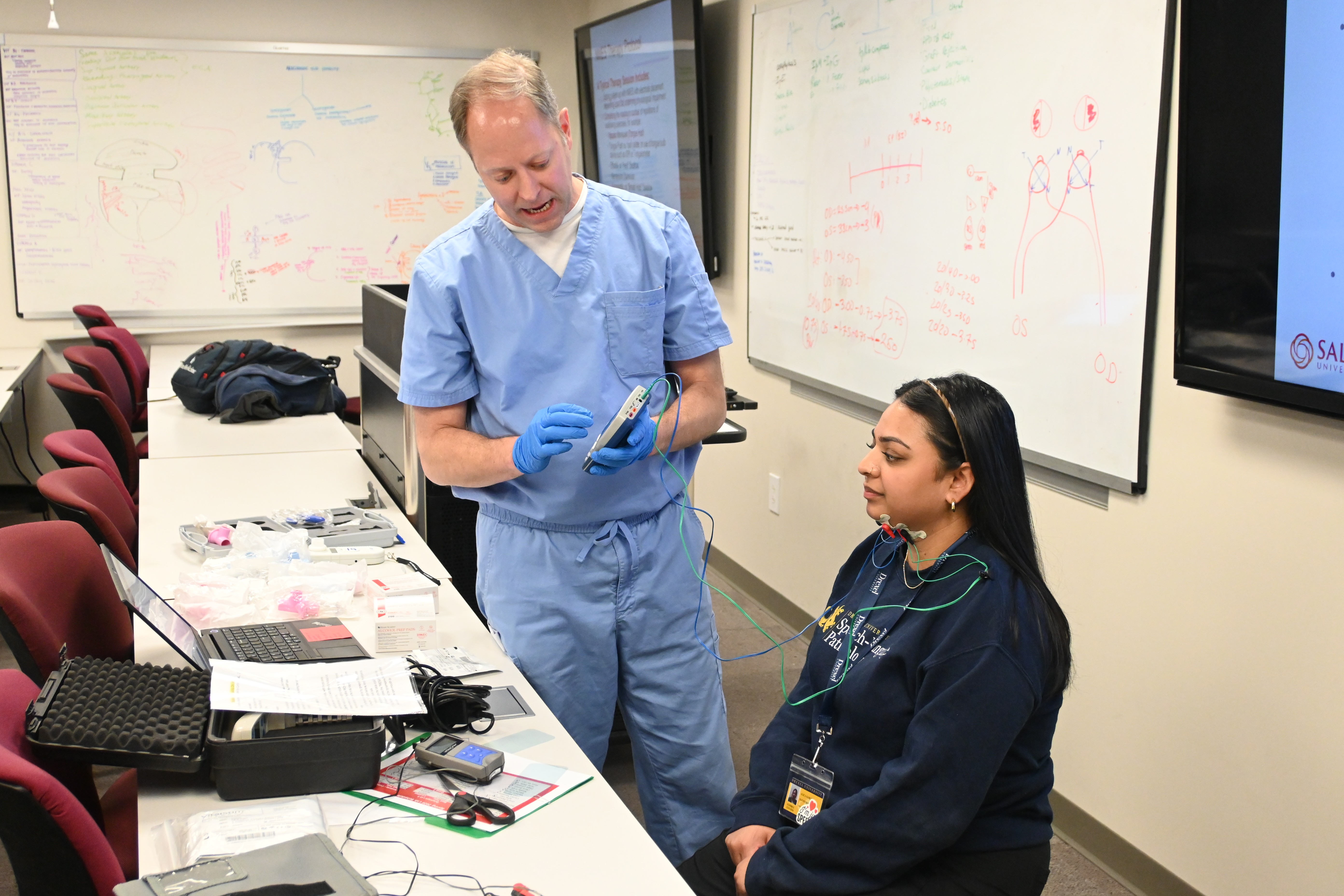
Class activities like this one are aimed intentionally at students to illustrate to them the importance of advocacy for their profession, according to Robert Serianni, MS, CCC-SLP, FNAP, chair and program director of the SLP department at the Elkins Park campus.
“Students don’t always realize it is their responsibility to push lawmakers to create legislation to improve the support for our patients, clients and students as well as the communities we serve and ultimately, the profession, said Serianni, who added the department is lucky to have world-class advocates like Goldman and Jennifer Bergstrom, EdD, CCC-SLP, assistant professor in the department, share their advocacy knowledge with the students. “It makes sure we are current in our scope of practice and that we get the laws and funding to further the care we provide.”
During her lecture, Goldman asked the students to select either a state or national issue in communication sciences and disorders important to them and write an email to an elected official. Goldman wanted to not only encourage the students to advocate for their profession, but to realize the issues important to the profession require the voice of advocates to be heard by the individuals who make laws and policies.
“I wanted the students to understand how the laws affect the services that SLPs provide came to be,” said Goldman. “Do they just get developed out of thin air? No, some people see a need and advocate to make things happen.”
The message resonated with many of the students, including Nurick.
 “Learning about advocacy is essential for furthering both my education and future professional career. It is imperative to stay informed about issues and policies that affect the profession to provide proper care and support to patients and their families,” said Nurick. “By developing advocacy skills, I can educate colleagues, families, and the broader community. Promoting awareness is a foundational step in creating meaningful change and ensuring continued progress within the profession.”
Goldman emphasized to the students advocacy has different levels. There is advocating on behalf of the student; self-advocacy; for the unmet communication and swallowing needs of the public; legislative advocacy; grassroots advocacy; and systems advocacy, like working with a state agency to make sure more speech-language services are covered under the state’s Medicaid plan.
“The gains that resulted in benefits that we see today – ways to help the profession and the people we serve – were a result of advocacy,” said Goldman. “And, we see that these things are not done deals once we have the law. Constant advocacy is needed to sustain the gains that have been made.”
To make sure the students understood the legislative process, Goldman had them prepare for the lecture in advance by watching “I’m Just a Bill,” the 1976 Schoolhouse Rock! segment that covers the steps on how a bill in the U.S. Congress becomes a law through a catchy song.
Nurick said that one of the most important lessons she gained from the lecture was the value of speaking up and taking action toward issues that matter to her, both personally and professionally.
“Individuals often hesitate to share their perspectives, assuming their voices will not make an impact,” she said. “However, advocacy demonstrates that even a single voice can inspire broader action and collective change. This understanding highlights the importance of participation in advancing both the profession and the communities it serves.”