Speech-Language Pathology
General News
Current Student News
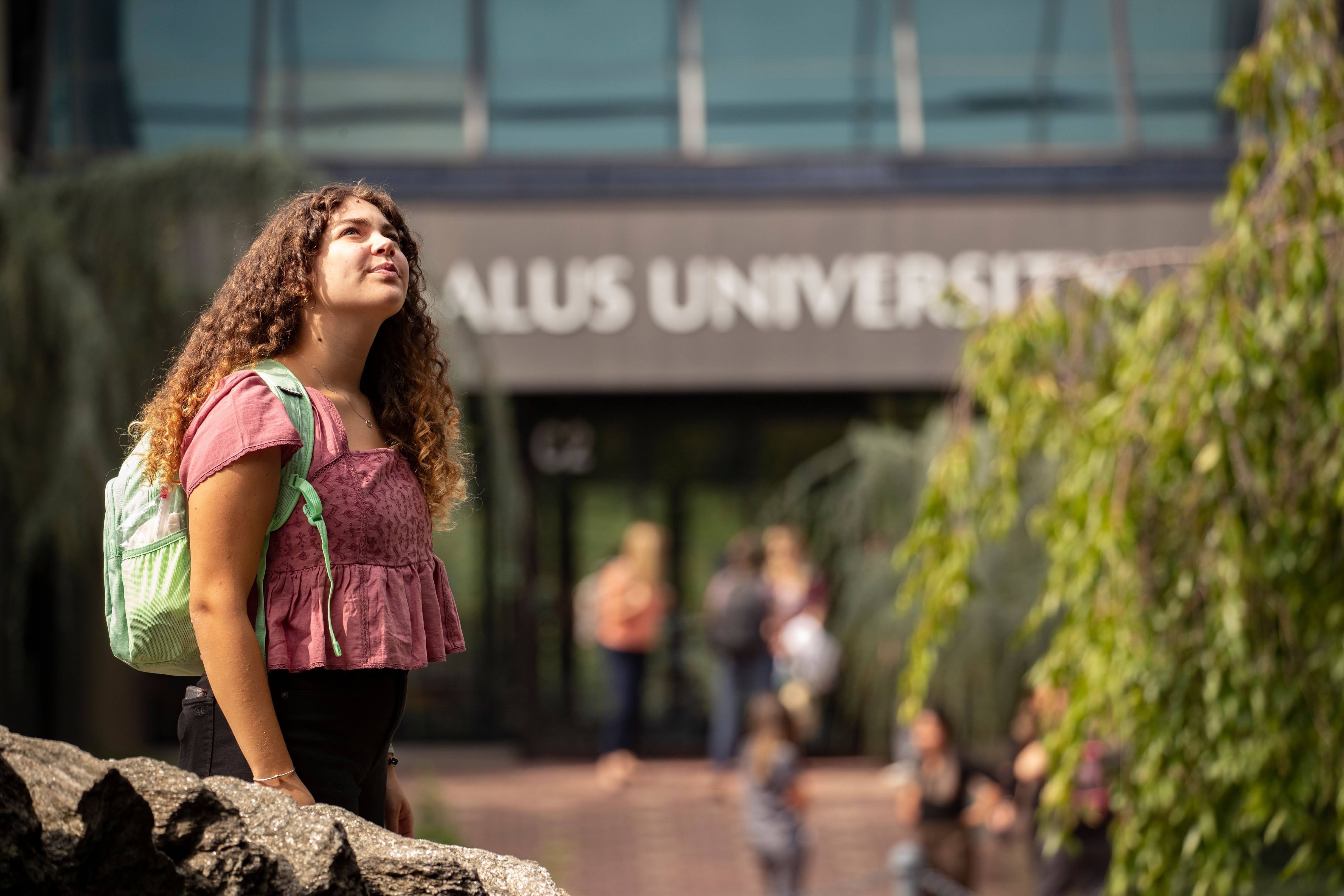
Although she was pursuing a degree in psychology as an undergraduate student at Ithaca College in New York, Sophie Wollman, MS ‘23, wasn’t exactly sure what she was going to do with it.
And, then she saw her cousin, who had been diagnosed with a rare genetic condition – and who was non-verbal at the time – working with a speech-language pathologist (SLP) using an augmentative and alternative communication (AAC) device, specifically an iPad, to communicate.
“It was the coolest thing I had ever seen in my life. That was it. I decided right there that’s what I wanted to do,” said Wollman.
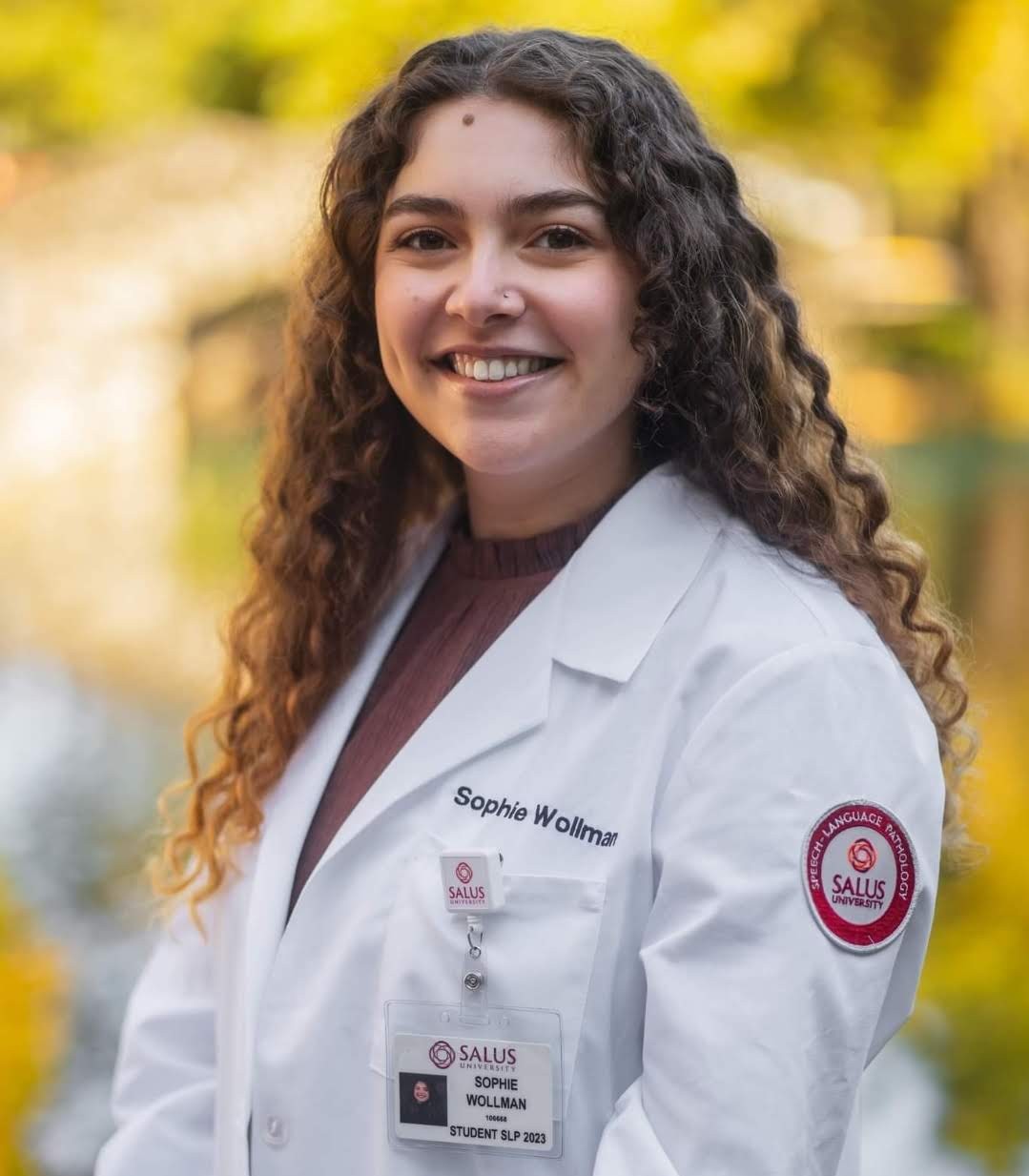 She had enough time left in her educational journey at Ithaca College to add a communication disorders minor to the mix, and decided to pursue graduate school to become a SLP.
Wollman looked at several different SLP programs, mostly in the greater Philadelphia area, before ultimately choosing the SLP program at what was then Salus University, now the Drexel University, Elkins Park Campus. She was drawn to specific features of the program including early clinical training opportunities, the smaller, graduate-only campus, the convenience of commuting from her home in Blue Bell, Pennsylvania, and the welcoming, engaging faculty-especially chair and program director Robert Serianni, MS, CCC-SLP, FNAP.
“You begin the SLP program with hands-on experience with real clients. While you’re learning, your hand is held just the right amount,” said Wollman. “And, when they see that you’re ready to be on your own, they let you be on your own. Up until that point, you’re led and taught exactly what you need to do, what you need to provide your clients with, every single type of client.”
Wollman noted that the hands-on experience students gain in the Speech-Language Institute (SLI), the program’s on-campus clinical facility now celebrating its 10th anniversary, combined with diverse externship opportunities, truly prepares them for the professional world.
“I knew that I was capable when I graduated. I was lucky enough to have such amazing externship supervisors who told me that I was doing a good job. That told me I was ready,” she said.
Since graduation, Wollman has been working for the Montgomery County Intermediate Unit in early intervention with students ages three to five-years-old in an autistic support classroom. That’s where she gets to work with the augmentative and alternative communication technology that she enjoys utilizing.
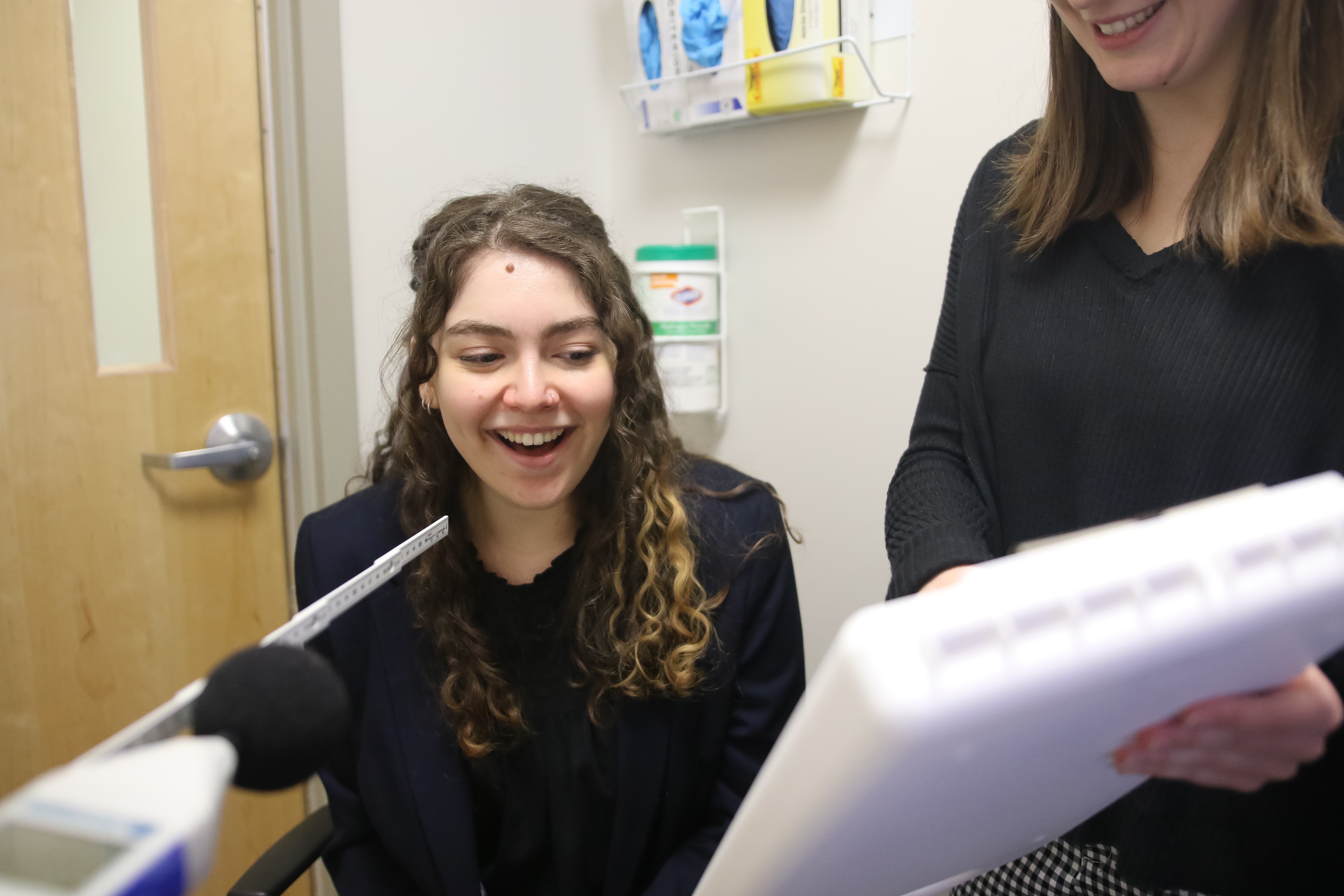 “I work with them on their communication goals as well as behavior goals and I get to implement AAC,” she said. “Most of the children have an iPad with a high-tech speech-generating device, which has been so crucial. I love that I’m able to do with all the clients that need it.”
When she is not being an SLP, Wollman spends a lot of time crocheting and making her own clothes. And, she’s planning to adopt three rats as pets, although she hasn’t yet decided on their names.
“Rats are fantastic pets. They can learn tricks, they like to cuddle, and they’re kept in a cage, so I don’t have to worry about them making a mess in my apartment,” she said.
Wollman shared that while she is very happy in her current role, she could see herself in the future working more directly with AAC device technology, particularly on the software end.
“I would really love to work with families, individually, and help them implement AAC,” she said. “But I really want to stress that wherever I’m practicing, whatever I’m doing, I want to advocate for neuro-diversity in clients – recognizing that everyone’s brain is different. Some autistic individuals don’t consider it to be a disorder. Their brain just works differently from others. Everyone has strengths and weaknesses, and I want to help elevate everyone’s strengths.”