General News
Audiology
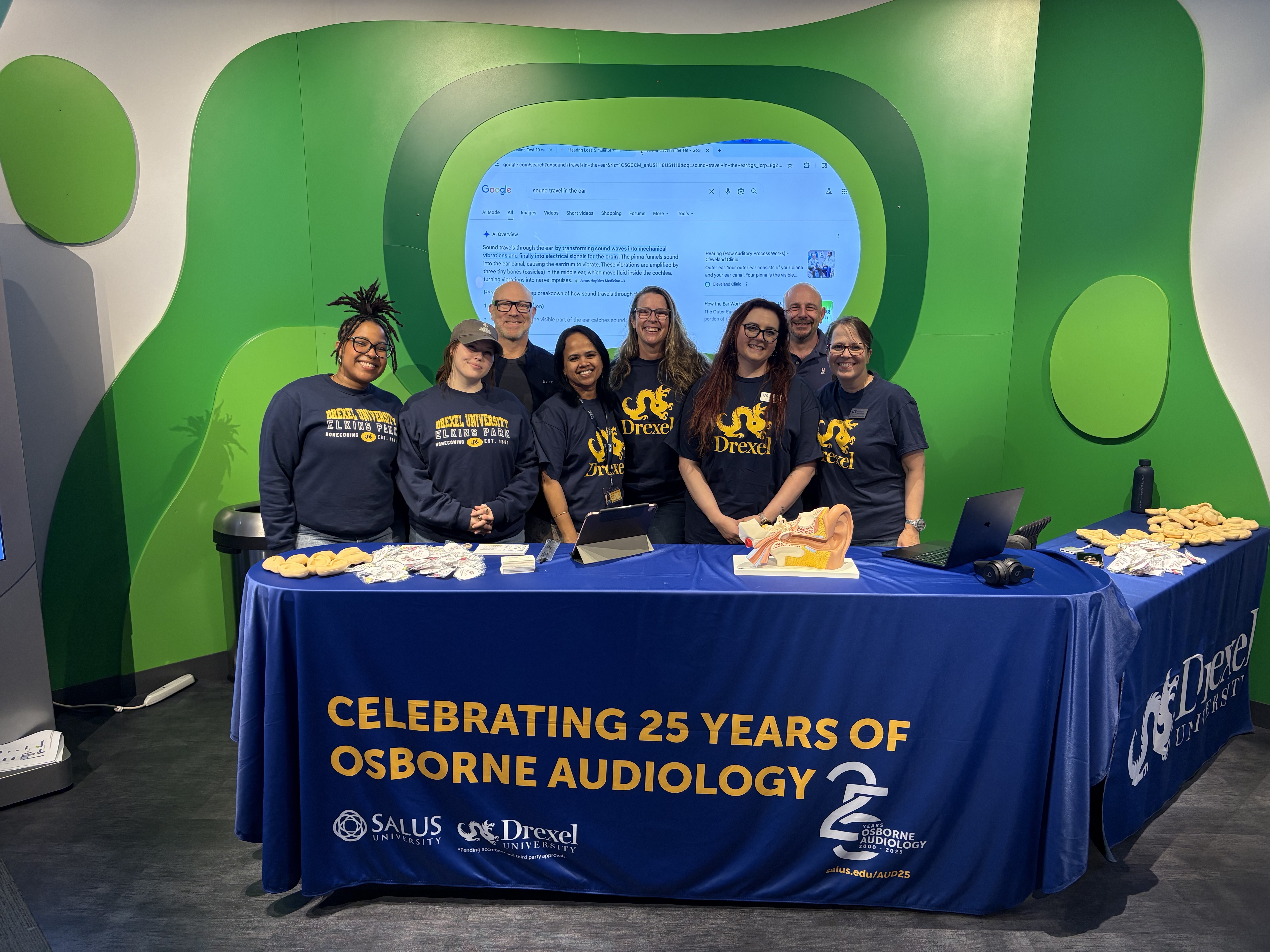
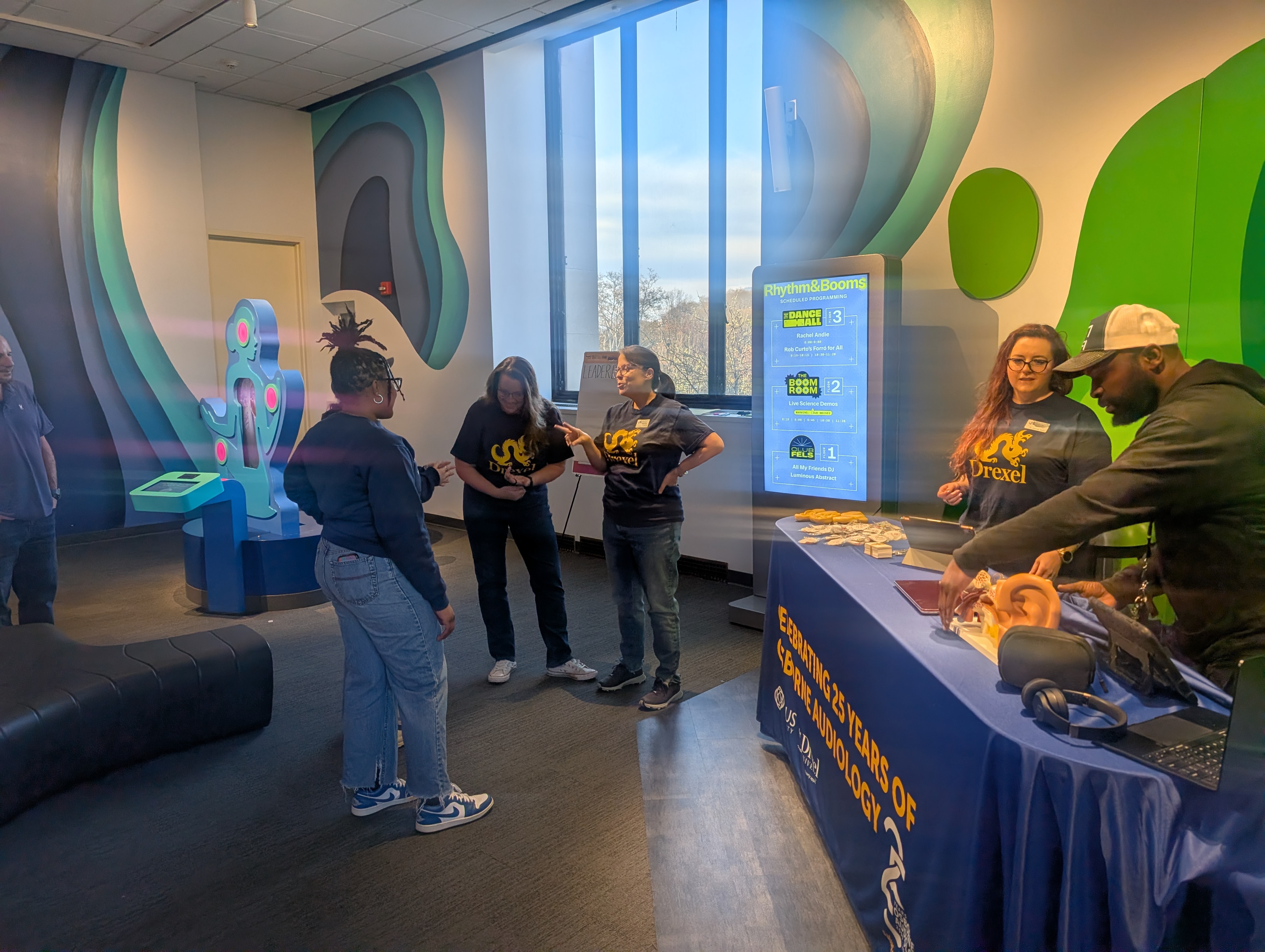
When the Osborne Audiology Department at Drexel University had the opportunity to participate in The Franklin Institute’s Rhythm & Booms event as part of the popular Science After Hours series, students and faculty embraced the chance to bring hearing science to life for the Philadelphia community.
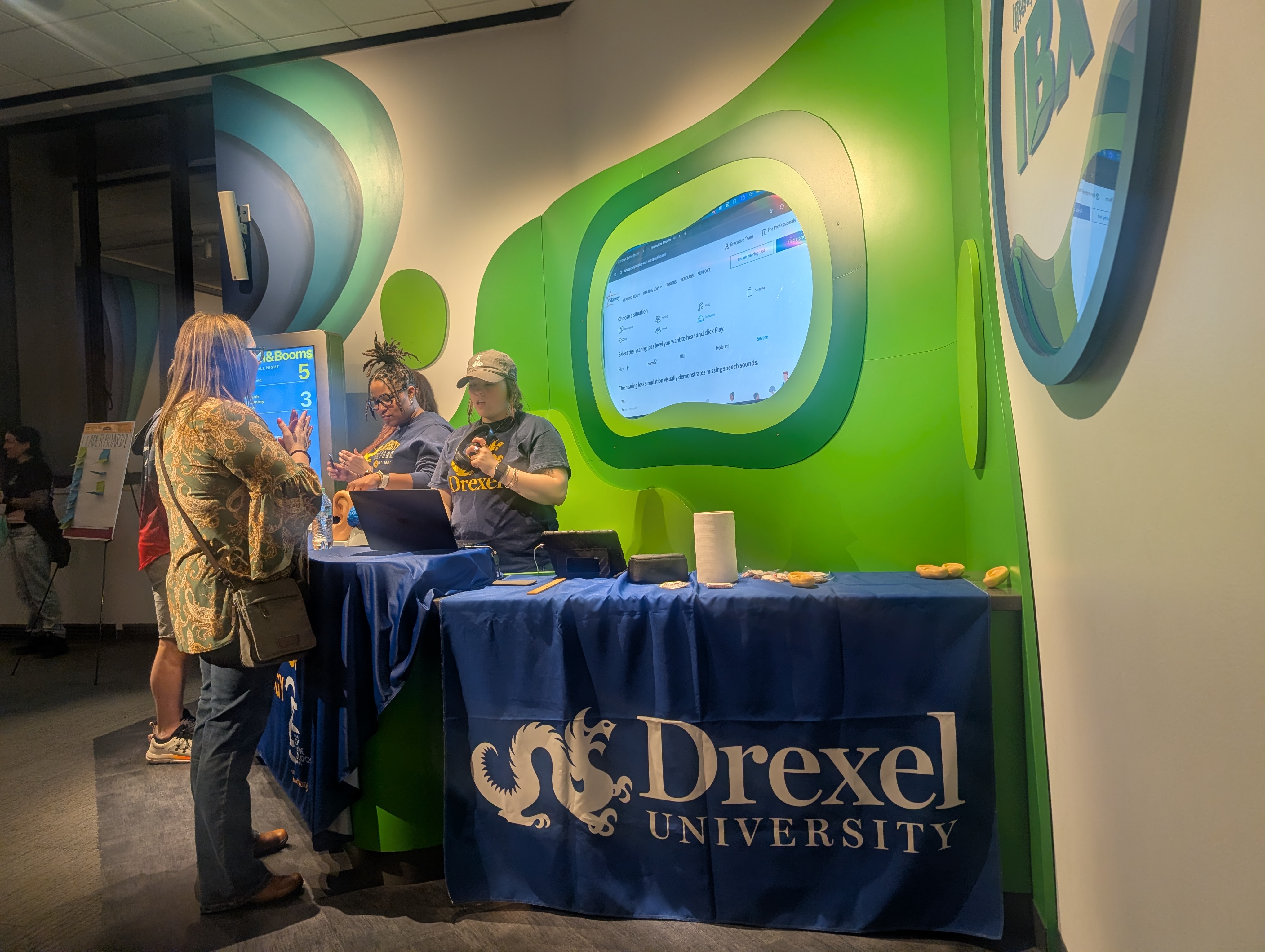 Held at The Franklin Institute, Philadelphia’s premier science museum, Science After Hours is a 21-plus evening program that combines science, entertainment, and interactive learning experiences. The Rhythm & Booms themed event focused on sound, music, and the science behind what we hear - making it an ideal setting for audiology outreach.
Representing Osborne Audiology in Drexel University’s College of Nursing and Health Professions were chair, Radhika Aravamudhan, PhD, EdD, Lindsay Bondurant, PhD, CCC-A, director of the Pennsylvania Ear Institute (PEI), instructor Amanda Ayars, AuD, CCC-A, Jackie Todaro, academic coordinator, and students Georgia Hight-Schickel ‘28AUD and Emily Turner ‘28AUD.
The Osborne Audiology team created an engaging exhibit designed to educate attendees about hearing and hearing health. Visitors explored demonstrations showing how sound travels through the ear, how hearing loss occurs, and the impact hearing loss can have on speech understanding and music perception. Guests also learned practical strategies for hearing conservation and hearing protection.
One of the most popular attractions was a video otoscope demonstration, which allowed attendees to see inside their own ear canals. Many visitors were fascinated by the opportunity and eager to learn more about ear anatomy and hearing function.
“Spending an evening at the Franklin Institute talking about the ear and all of its complexities with people who were curious was a lot of fun,” said Hight-Schickel. “It was a unique and exciting way to share what I’m learning with others and, hopefully, get them interested in learning more about audiology.”
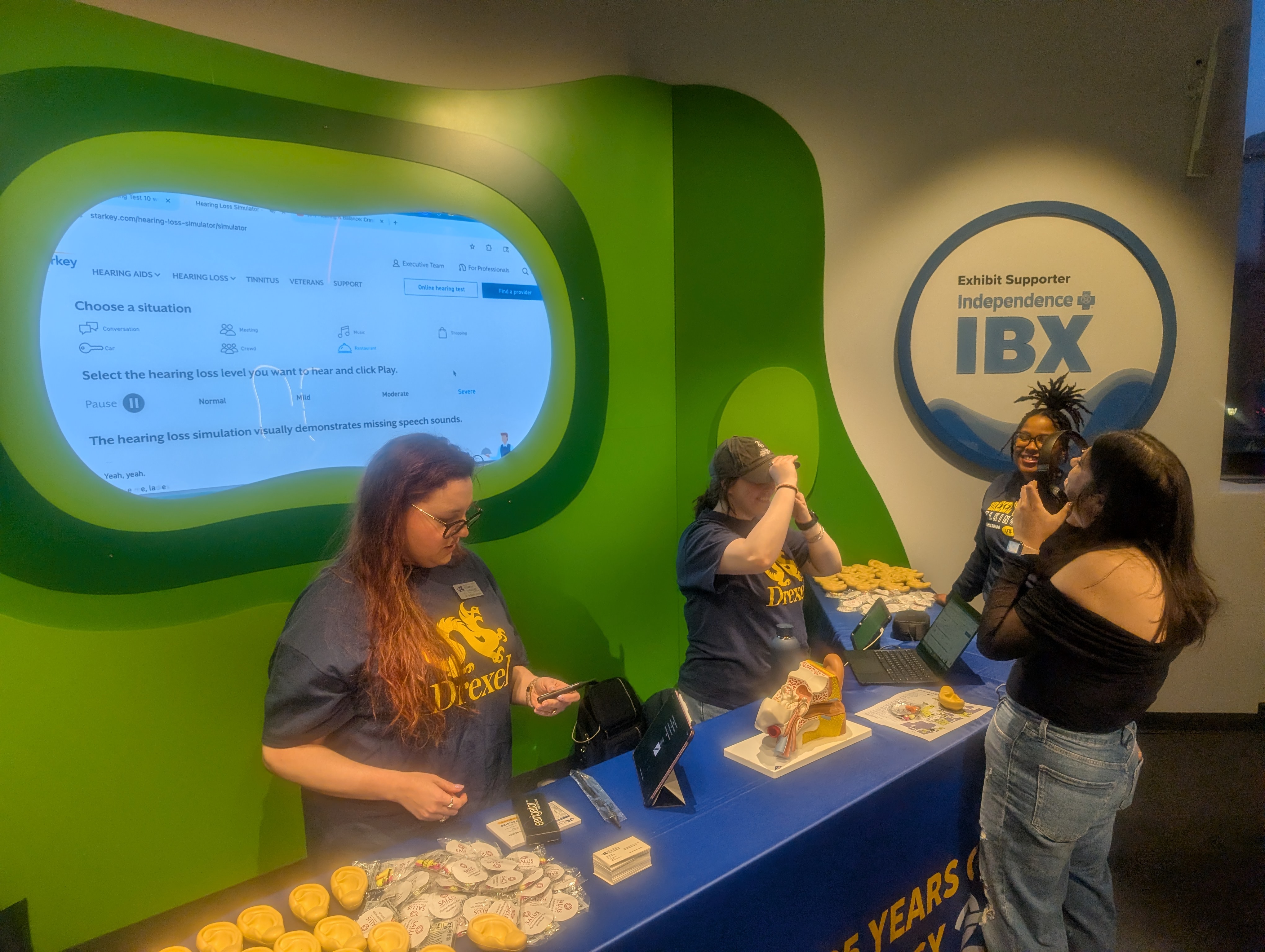 Turner noted that the relaxed and interactive atmosphere created meaningful opportunities for conversation. “Events like this help me practice explaining complex hearing science in an approachable way, which is an important skill for patient counseling and community outreach as a (Doctor of) audiology student,” she said.
According to Dr. Aravamudhan, many guests were surprised to learn how common noise-induced hearing loss can be is and how everyday environments, such as concerts, earbuds, sporting events, and city noise, can impact hearing over time.
“It was inspiring to see the public so engaged in learning about hearing health. Events like this show how science outreach can make audiology visible, relevant, and impactful,” she said.
For current students, the evening provided valuable real-world experience in public education, patient communication, and advocacy. For attendees, it offered a memorable and hands-on introduction to the importance of hearing health.
Dr. Ayars summed up the spirit of the event. “I really enjoyed everyone’s reaction to seeing their own eardrums, hearing the difference in different levels of hearing loss, and hearing people’s laughter as they tried to balance on one leg,” said Dr. Ayars. “This event was so much fun!”
Through events like Rhythm & Booms, Osborne Audiology continues to demonstrate Drexel University’s commitment to experiential learning, community engagement, and preparing future clinicians to lead with knowledge, compassion, and innovation.