Optometry
Drexel
General News
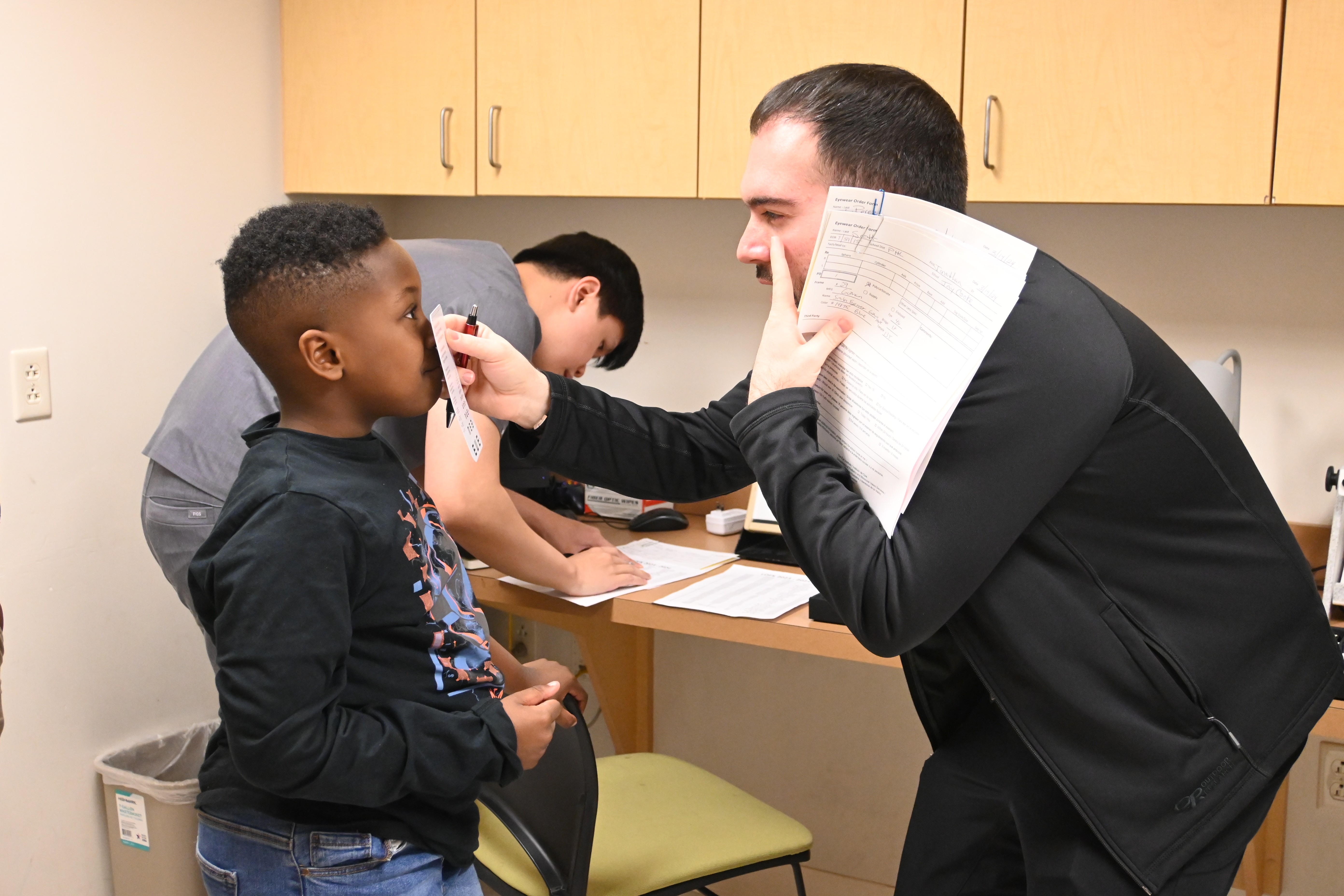
When she was a student at the Pennsylvania College of Optometry (PCO), Tamara Hill, OD '97, would join Satya Verma, OD ‘75, FAAO, FNAP, Diplomate, the now retired director of Externship Programs at PCO, when he conducted vision screenings on children in the Head Start programs within the School District of Philadelphia.
At one time, PCO students had little exposure to preschool children, so Dr. Verma initiated contact with Head Start and the school district in the early 1980s not only to provide care to this younger age group, but also to benefit the community and provide Doctor of Optometry students with hands-on experience with preschoolers.
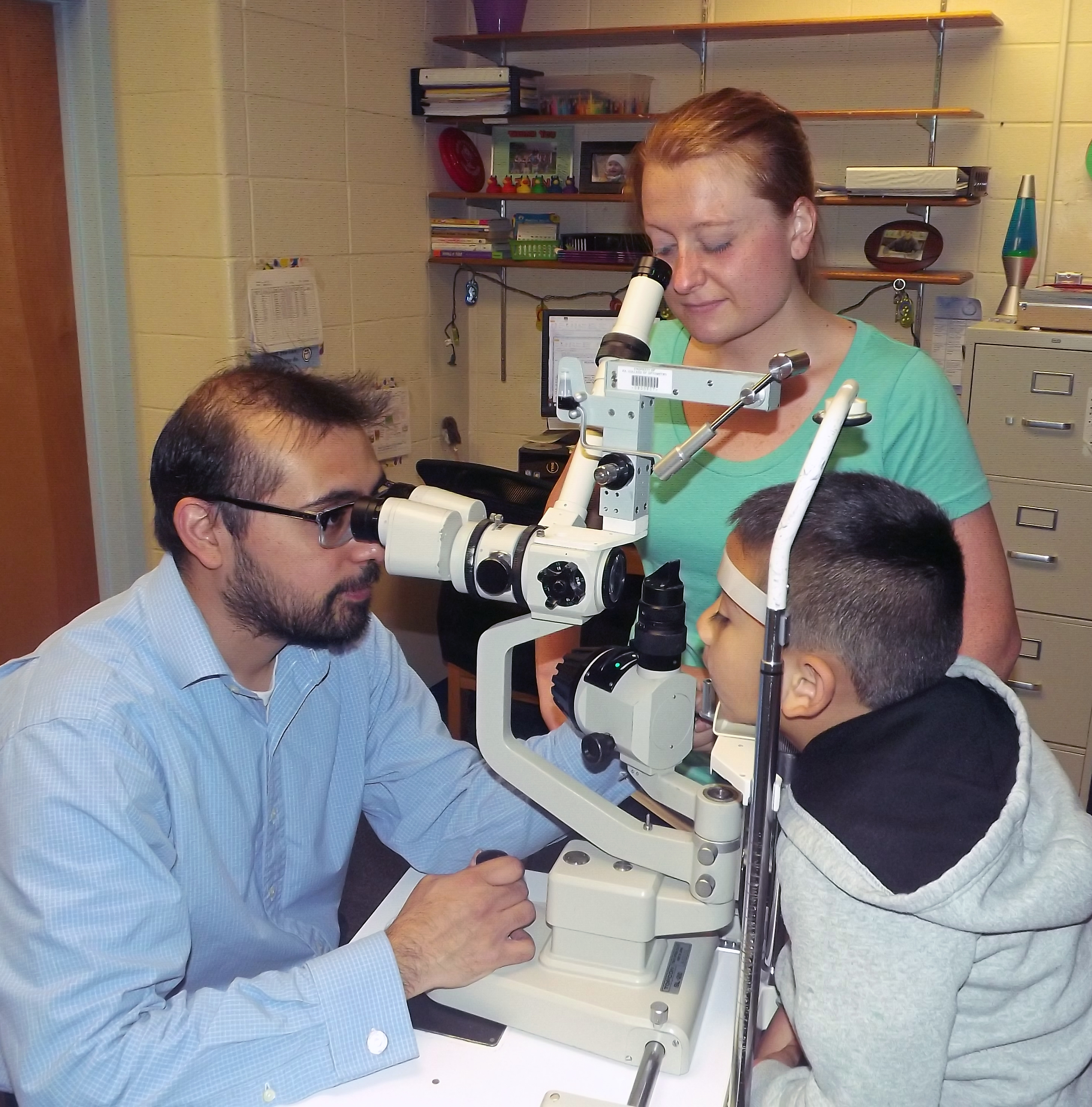 That experience made a deep impression on Dr. Hill and since her graduation from PCO, she’s been involved in mobile eye care for her entire career and has worked with the Head Start program in her private practice.
Now Dr. Hill has come full circle. She is one of the faculty helping to revive PCO’s involvement with Head Start in the School District of Philadelphia, a program that was on a recent hiatus. Luis Trujillo, OD ‘09, Pediatric Resident ‘12, provided care to preschoolers through the program two years ago.
“Many eye care providers really don’t see children aged six years and younger. So, what an opportunity this is to take some pressure off the parents as well as bring the services into the school and be able to also help the school nurses,” said Dr. Hill. “The nurses in the Head Start programs are amazing.”
For follow up care, The Eye Institute – PCO's main clinical facility – has a dedicated Pediatric and Binocular Vision Service that provides complete optometric care for children, toddlers and infants.
According to Dr. Hill, the Head Start nurses do all the advance legwork to identify which students need to be seen by the PCO faculty and optometric interns.
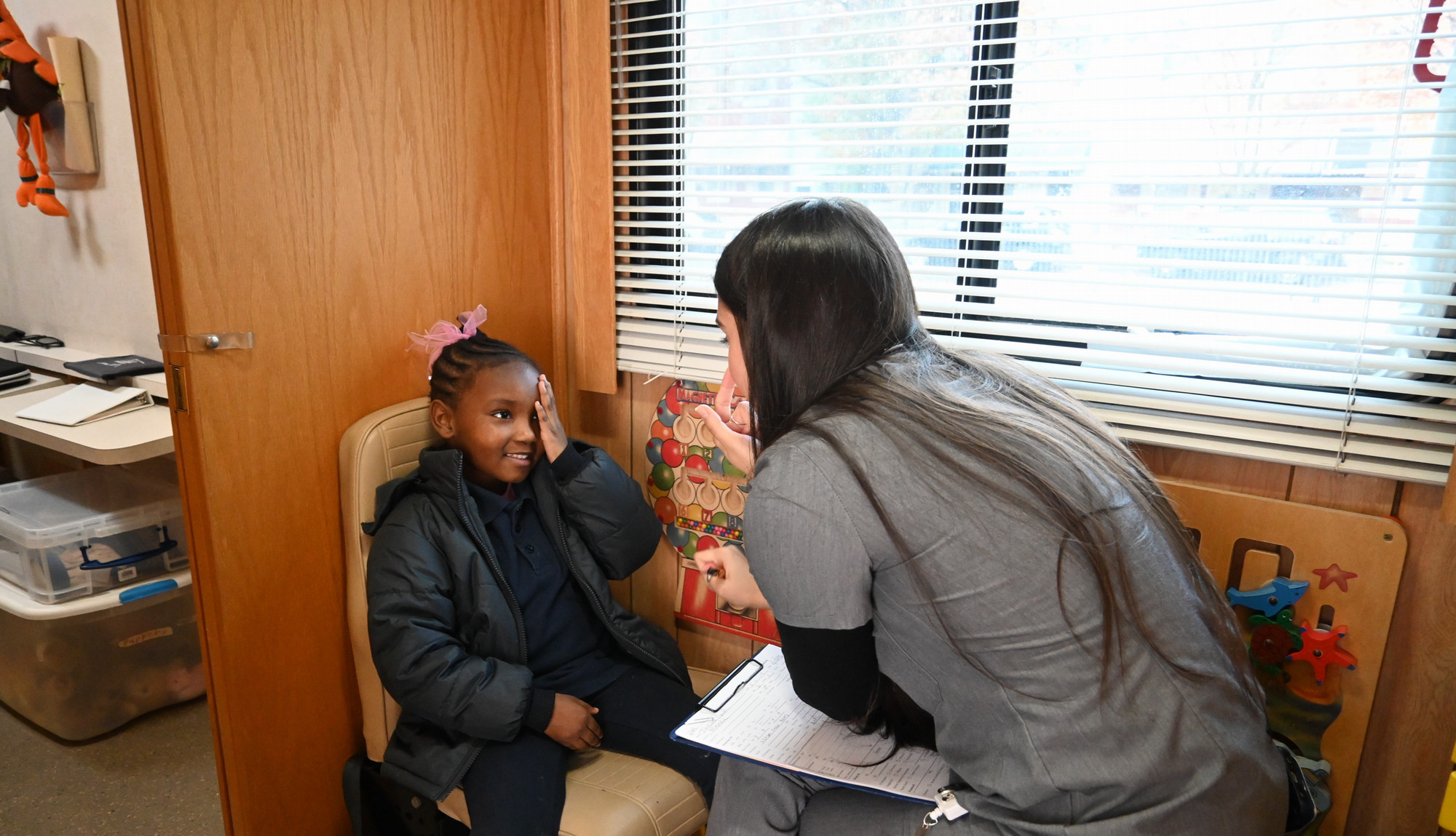
This year, the program started in April and has been going out once a week to various Head Start programs connected with the school district. To date, more than 65 students have been examined by the mobile equipment taken to the schools.
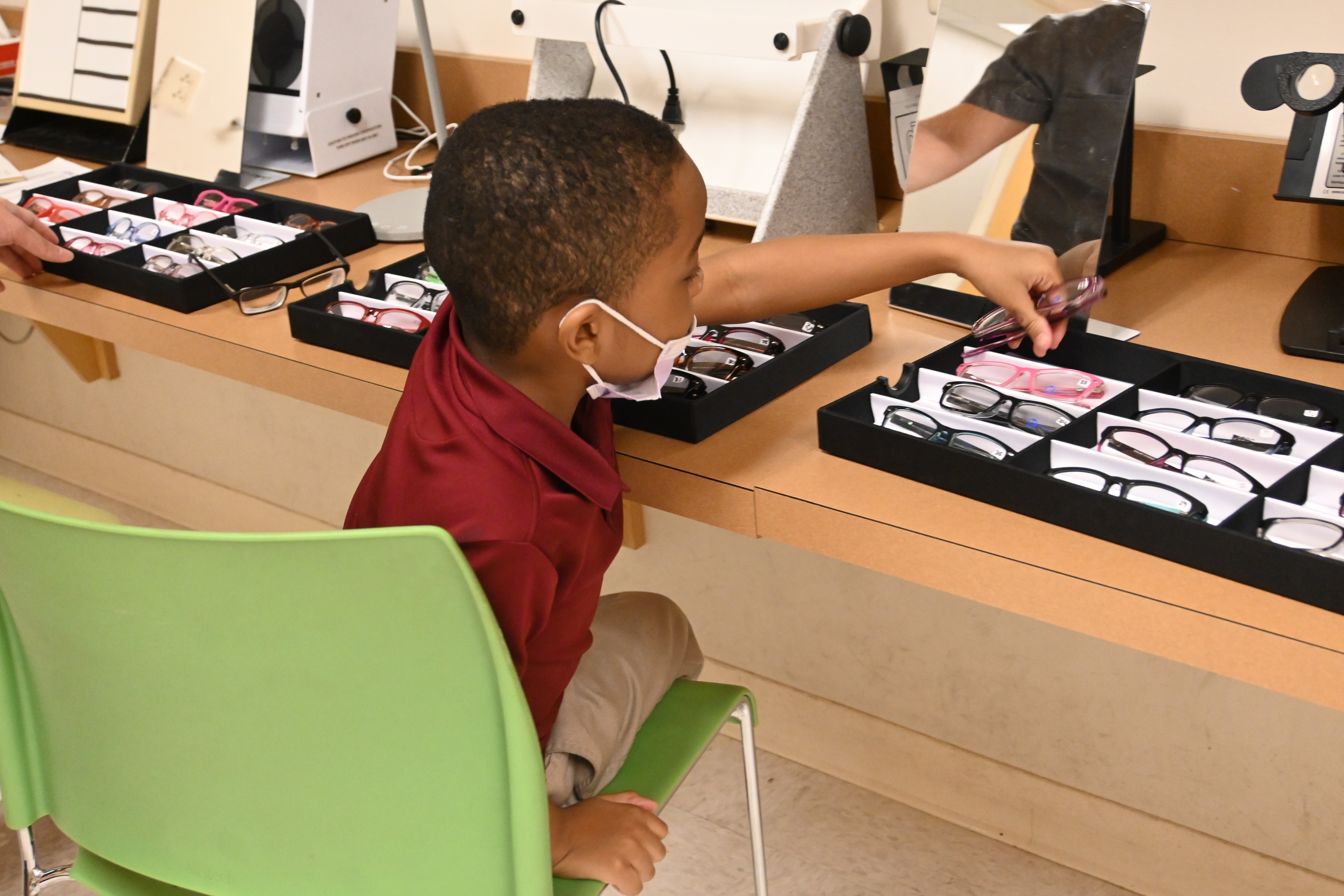 Depending on what time fourth-year Doctor of Optometry students from PCO have in their schedules, two students accompany Dr. Hill and travel to schools with mobile screening equipment. “For the PCO students, it sets out a trajectory of how they potentially want to practice,” said Dr. Hill. “Is this an area (pediatrics) where they can find a niche? Is this a chance to find out that they can do great work with kids?”
The national Head Start program, an office of the Administration for Children and Families (ACF) in the U.S. Department of Health and Human Services (HHS), promotes school readiness of children from birth to age five from low-income families through agencies in their local communities. Head Start services include early learning, health and family well-being.
By 1983, there were about 20 Head Start sites in the School District of Philadelphia, and that’s when Gale Orlansky, OD, MEd, retired assistant professor at PCO, began working with Head Start, a role she would serve in for more than 30 years.
“PCO was one of the few places that was doing Head Start screenings early on,” said Dr. Verma. “We couldn’t have provided that experience for our students, we couldn’t have created it any other way.”
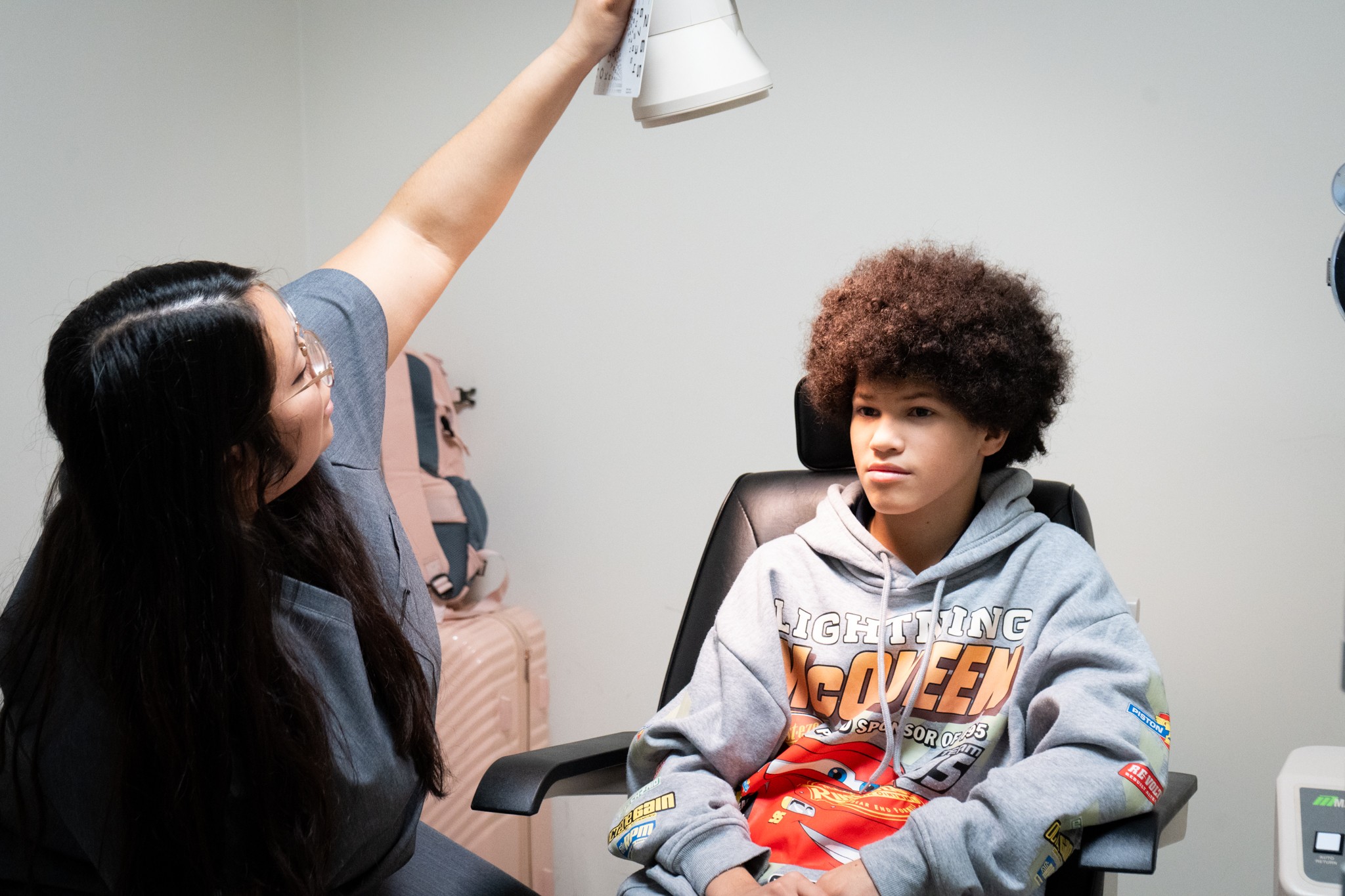 PCO added yet another aspect to its connection with Head Start in 1994 when, parallel to what Dr. Orlansky was doing with the screenings, Elise Ciner, OD, FAAO, PCO professor and co-director of the Special Populations Assessment and Rehabilitation Center at The Eye Institute, became involved with the Vision in Preschoolers Study, funded through the National Institutes of Health – National Eye Institute (NIH-NEI). The framework for the study originated at a summer invitational research symposium sponsored by the American Academy of Optometry and the American Optometric Association. Many of the current faculty worked on this study with Dr. Ciner and the protocols used are based on the study results.
The purpose of the study was to research the best methods for screening preschool children for vision disorders, which current faculty use to this day.
“We have the great opportunity to catch eye diseases that would not be detected until the children are six years old,” said Dr. Hill, who added that TEI sees children under six years old and as young as three months old. “What a great opportunity for young children to have already been seen by us and for paving the way for pediatric eye care at its best — being proactive rather than reactive when it comes to optometric care.”