Audiology
General News
Current Student News
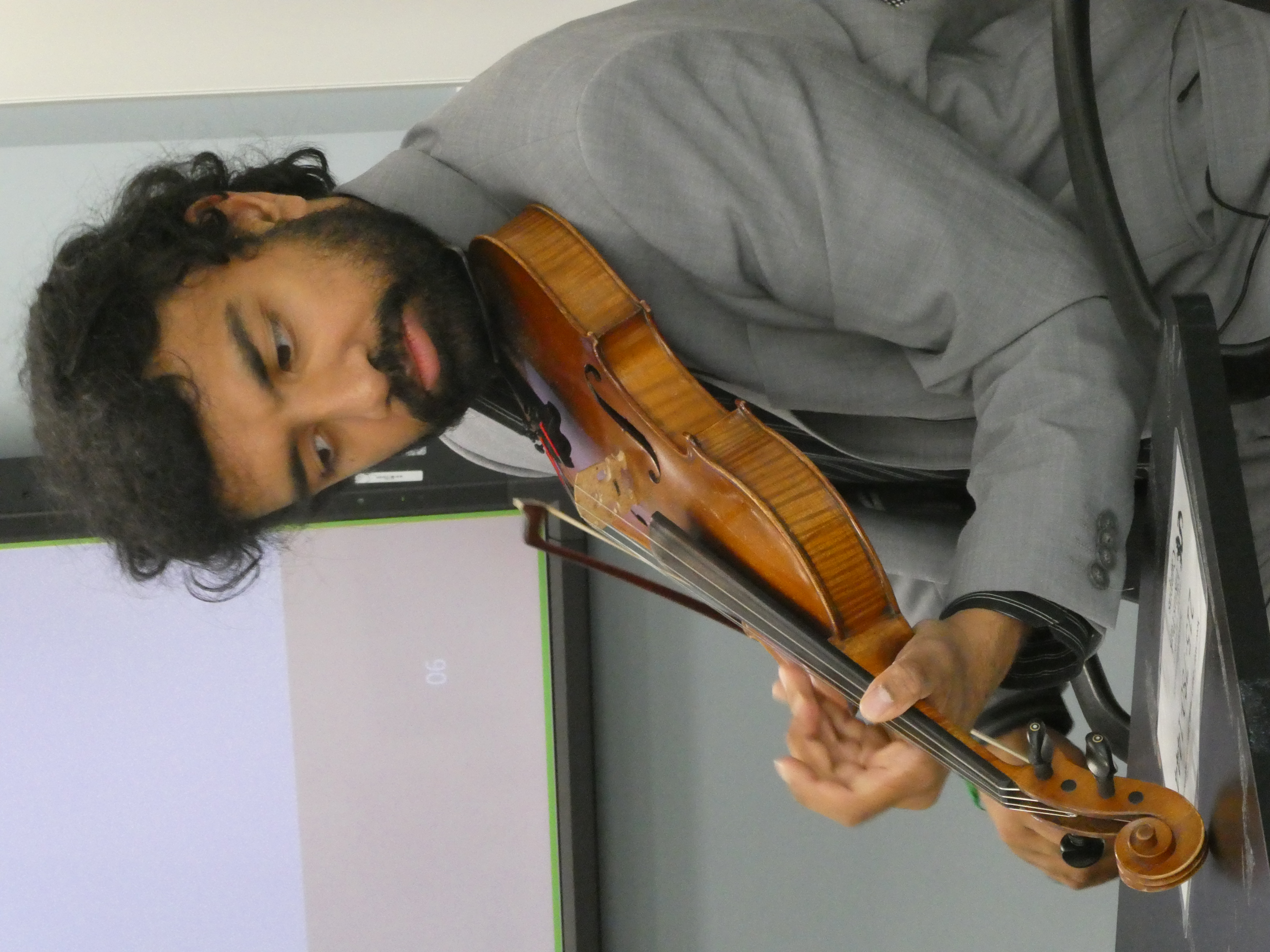
 Kamalakiran Vinjamuri’s biography tells the story of a professional Carnatic violinist. Audiology and Speech-Language Pathology? Not a mention. Yet, an unexpected connection brings him into both worlds.
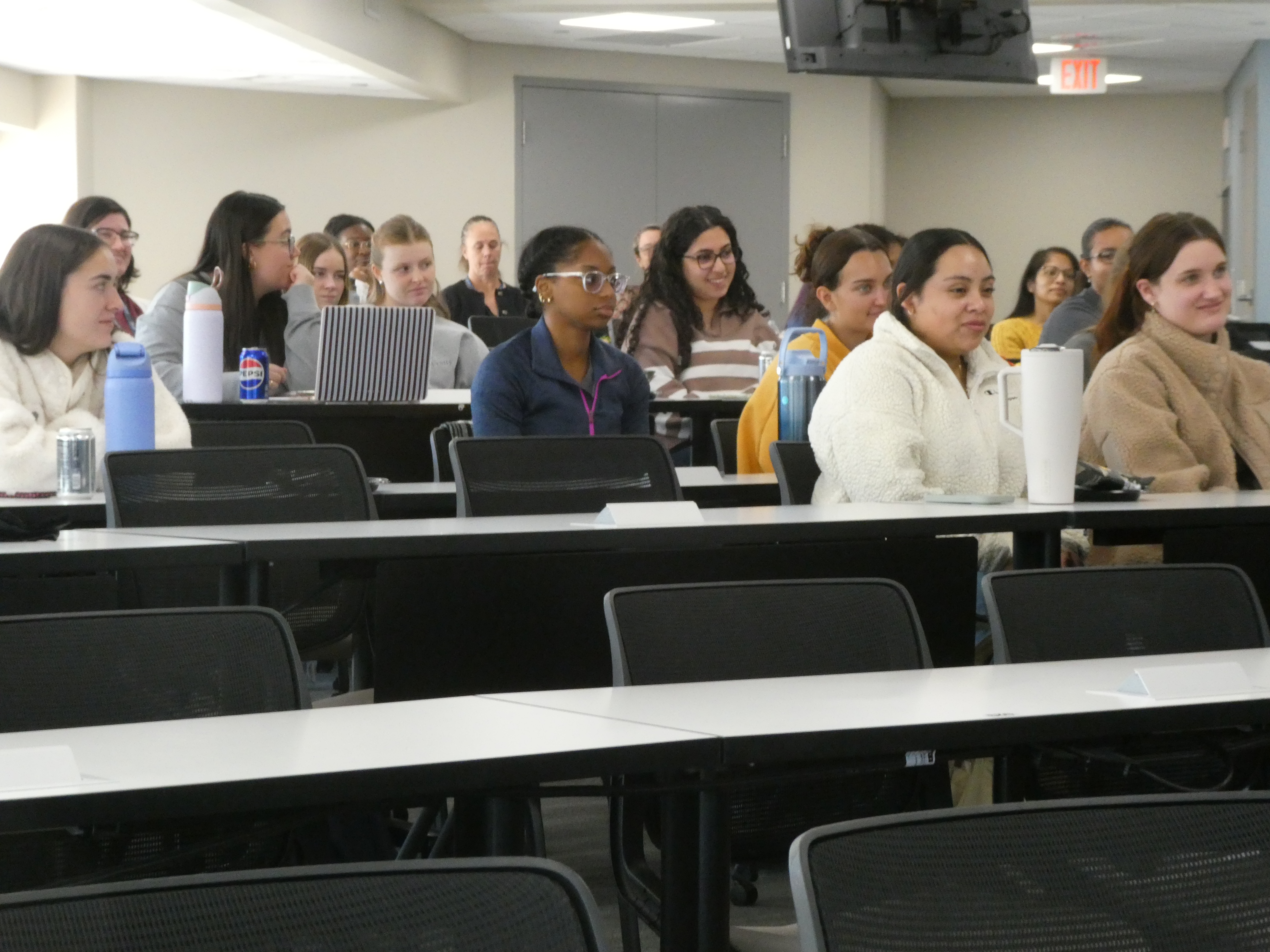
His recent visit to Drexel University’s Elkins Park Campus to speak with students about how they can broaden the way they think about health, well-being, perception and the human experience, fit perfectly into Osborne Audiology’s lecture series, “Beyond the Senses: Health, Hearing and the Human Experience.”
 The event, hosted by Osborne Audiology in collaboration with the College of Nursing and Health Professions’ Speech-Language Pathology (SLP) department at the Elkins Park campus and the Creative Arts Therapy department at Drexel’s main campus, was the second installment of the series. The series was developed to help students explore the broader human impact of hearing and health beyond traditional clinical measures. Through conversations connecting science, perception, communication, music, wellness, culture, and lived experience, the series aims to deepen students’ understanding of how sensory experiences influence overall quality of life and well-being.
According to Radhika Aravamudhan, PhD, EdD, chair of Osborne Audiology, bringing together perspectives from science, perception, communication, music, wellness and culture gives students an opportunity to explore the many dimensions of the human experience that can ultimately inform how they support their patients’ quality of life.
She also hopes interactive classroom experiences such as this guest lecture encourage students to look beyond the boundaries of their individual disciplines and see each patient as a whole person. By developing a broader appreciation for the diverse factors that shape health, well-being and lived experience, students can enrich the care they provide and make a more meaningful impact on the individuals and communities they serve.
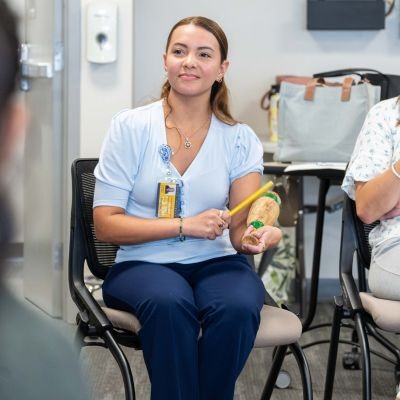
For his part, Vinjamuri explained Carnatic music – a South Indian classical form of music – that a raga, the equivalent of the musical scale, is not just a scale but a way of moving, resting, coloring and remembering, and the ways in which music can shape one’s perception. He played several pieces on the violin and solicited responses from the audience on what they experienced.
“Music for me is about more than performance, it’s about how I’m able to make people feel,” said Vinjamuri. “So when Dr. Aravamudhan invited me, I thought this is great, I can do some research and also talk about how I think music impacts mood and sensory experiences.”
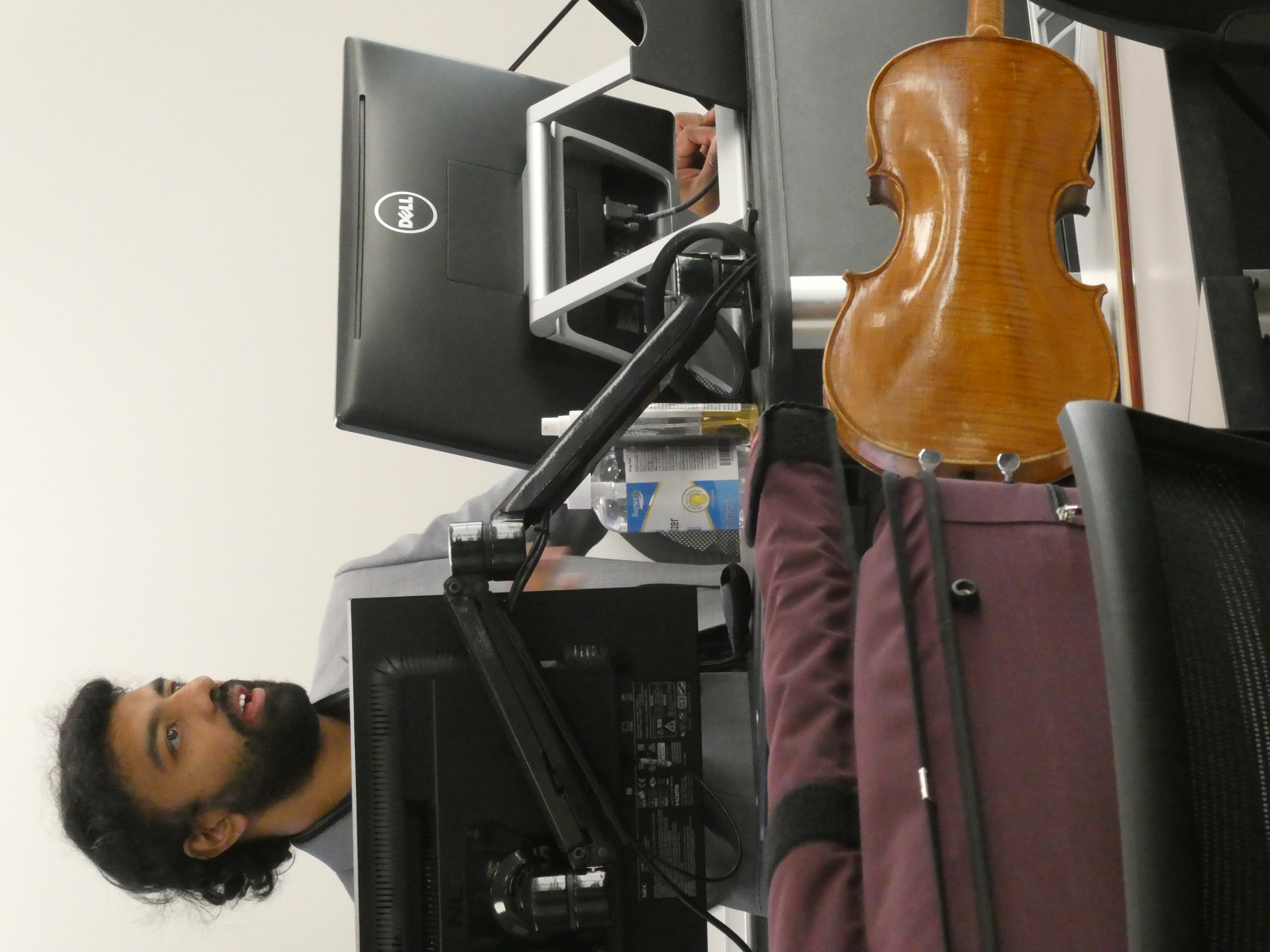 Vinjamuri has performed in many places across the U.S. and in India, including the Kennedy Center, and The Music Academy, Madras in India. He has shared the stage with many eminent musicians, including Grammy Award Winner Pandit Vishwa Mohan Bhat, an acclaimed Indian classical music instrumentalist.
Robert Serianni, MS, CCC-SLP, FNAP, chair of the SLP department at Drexel, said that during the course of Vinjamuri’s presentation, he moved away from thinking about what his perception should be about the music he was hearing and more toward what Vinjamuri’s perceptions were about his own music. That thinking, Serianni said, can be applied to SLP students in their clinical training.
“The students really need to have experiences like this to allow them to practice not taking what they think the answer should be, but really listening first,” he said. “And, then start to apply what they know to then broaden their understanding of what the patient is experiencing. It’s sort of the non-clinical experiences that allows them to be better in practice.”
Dr. Aravamudhan admitted she was a big fan of Vinjamuri and his music and was thrilled when he accepted her invitation to be one of the guest lecturers for the series. “I truly hope that the students understand the multi-faceted nature of our lives, and whenever they see a person, it’s not just about hearing or speech-language or vision problems, it’s also other things that impact it and how we can help them to have a wholistic life,” she said.