General News
Drexel
Audiology
Current Student News
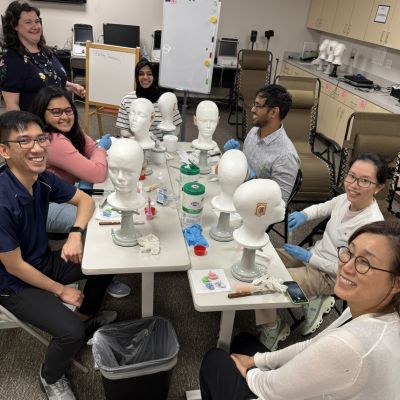
For Drexel University’s Osborne Audiology Class of 2030, the afternoon of Aug. 14 during Orientation Week at the Elkins Park campus offered an opportunity to build connections, strengthen their sense of community, and explore the role of creative arts in communication.
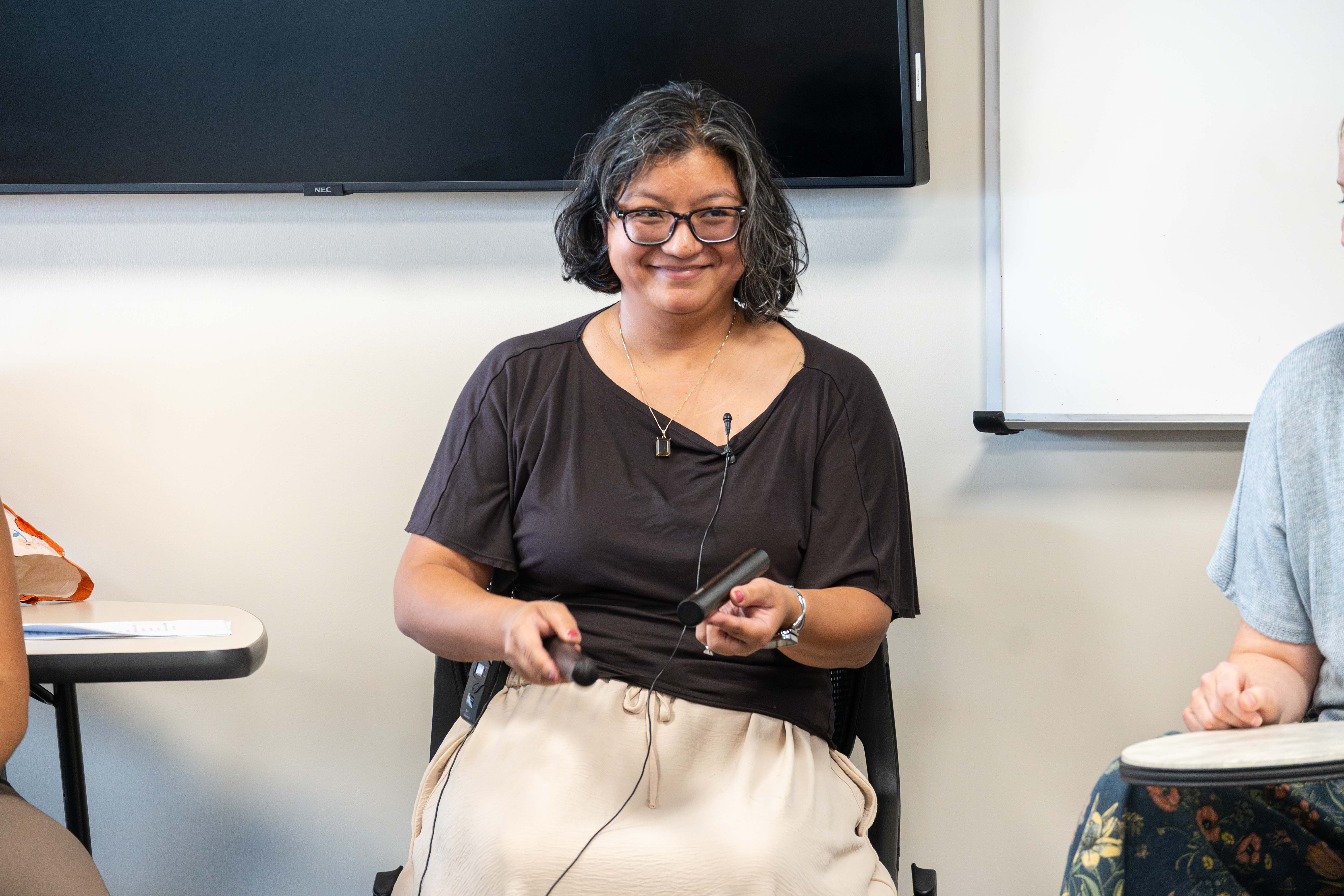 The cohort’s 20 students participated in an “Arts and Communication” session led by faculty from the Creative Arts Therapies Department in Drexel’s College of Nursing and Health Professions (CNHP). The session also introduced students to a hallmark of their education within CNHP: learning alongside professionals from other health disciplines. Through music, movement, and visual art, students explored observation, interpretation, empathy, and non-verbal communication – skills they will carry with them into their clinical and everyday interactions. The session was grounded in the idea that every patient presents a story, but what clinicians notice – and what they miss – depends on how intentionally they observe and listen.
“I wanted the students to be thinking about the perception and the interpretation of sound, which they will be working with very closely as (Doctor of) Audiology students,” said Clarissa Lacson, PhD, MA, MT-BC, program director of Music Therapy and Counseling in Drexel’s College of Nursing and Health Professions (CNHP).
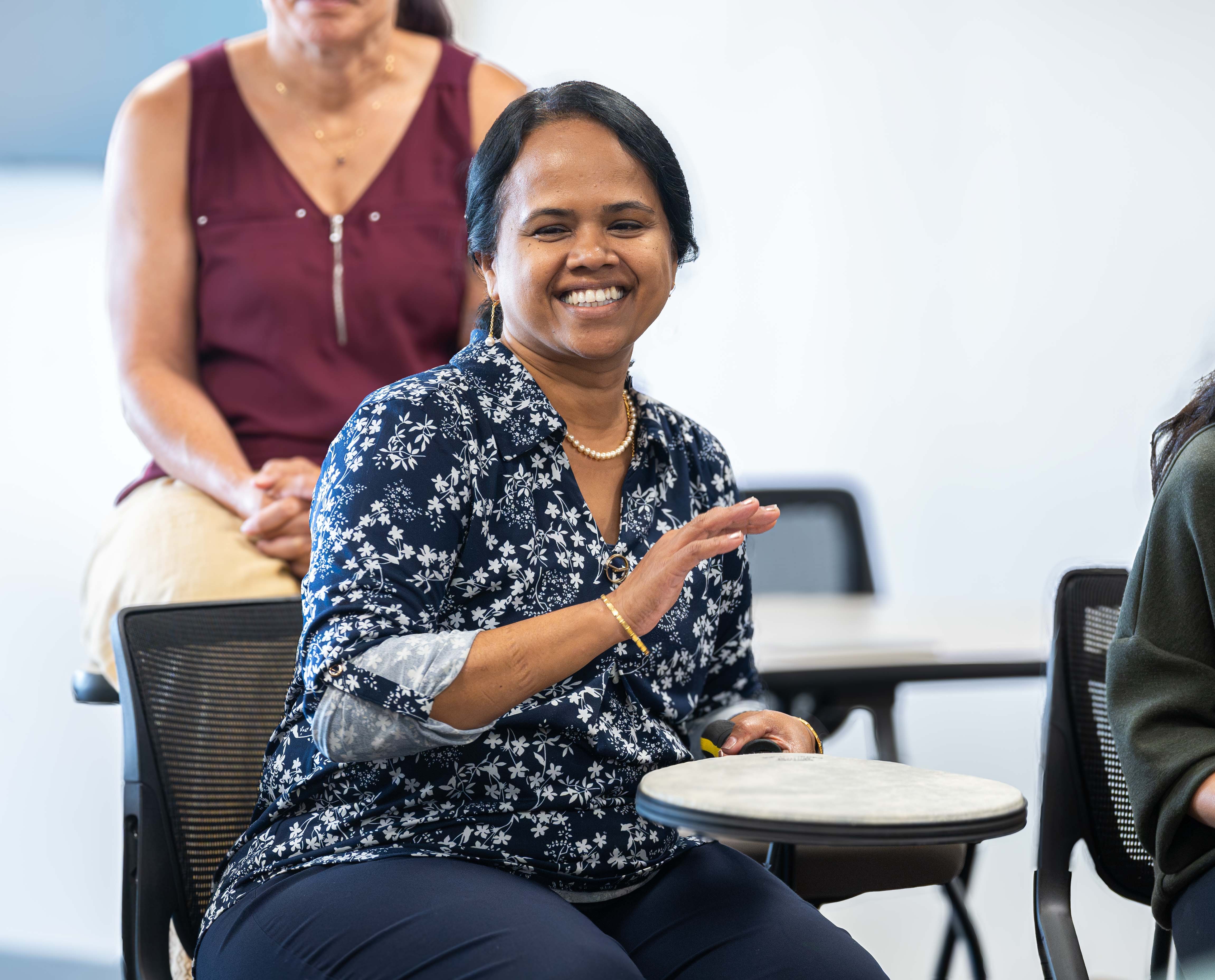 Dr. Lacson and Nalini Prakash, PhD, BC-DMT, CMA, director of Dance/Movement Therapy and Counseling in CNHP, were invited by Radhika Aravamudhan, PhD, EdD, chair of the Osborne Audiology Department, also in CNHP, to lead the students through an afternoon of creative arts experiences. The collaboration brought together faculty from different disciplines within the same college, giving the students an opportunity to learn from disciplines outside of audiology.
The activities encouraged students to explore their own experiences while also considering how patients may experience and respond to the world around them – an important skill as they begin their journey toward becoming audiologists and working with patients both in the Pennsylvania Ear Institute and during their clinical rotations.
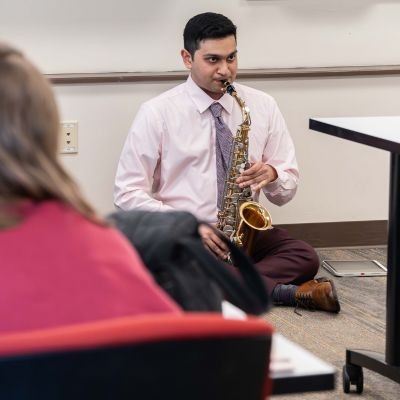
In addition to dancing and movement, students engaged with a variety of instruments, many originating from ancient traditions and indigenous populations in the Caribbean and Latin America. These included drums, shakers, maracas, raspers or scrapers, and tambourines.
Throughout the session, the activities blended team-building with an important skill for future audiologists: communicating without words. Through creative, hands-on exercises, students practiced paying attention to non-verbal cues, building trust with one another, and recognizing that communication extends far beyond what we say.
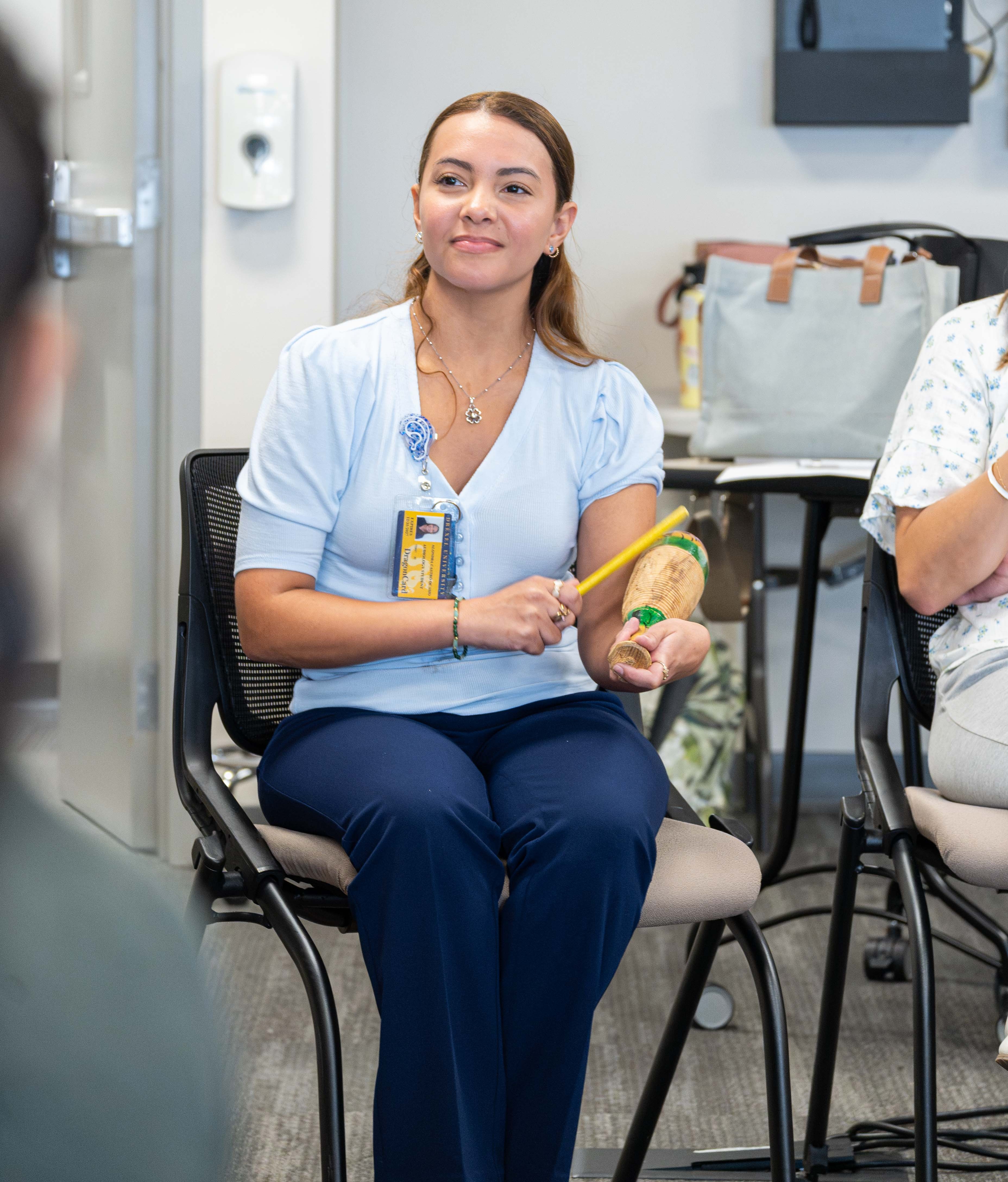 The experience was also designed to strengthen the student team by creating opportunities for connection, collaboration, and getting to know one another early in their graduate-school journey.
Gretta Ranalli ‘30AUD pointed out that many Orientation Week activities positioned students facing an instructor, making the creative arts session an opportunity to shift their focus toward one another. “This was the first time we were all in a circle sitting with each other. Even just being able to see everyone’s faces I think helped with our interaction,” said the Chester County, Pennsylvania native, who earned her undergraduate degree from Boston College.
Andie Garcia ‘30AUD, of Hockessin, Delaware, who earned a degree in cognitive science from the University of Delaware, said the session helped her feel more relaxed and comfortable as she begins graduate school. With the transition to a rigorous professional degree program bringing its own share of challenges and stress, she appreciated the opportunity to slow down, connect with her classmates, and enjoy an interprofessional session.
For Garcia, the highlight was simply the opportunity to make jokes, be more personable, and connect with classmates outside of the classroom. “I think everyone got to know each other a little bit more and to grow closer,” she said.
“I was very excited when we met the faculty in the Creative Arts Therapies Department at Drexel,” said Dr. Aravamudhan. “This time, we decided to bring the faculty here so they could demonstrate non-verbal communication and so that the students could have an understanding of the empathy that they should have for their patients and learn how patients communicate using both verbal and non-verbal modes.” These activities also help them to connect amongst themselves.
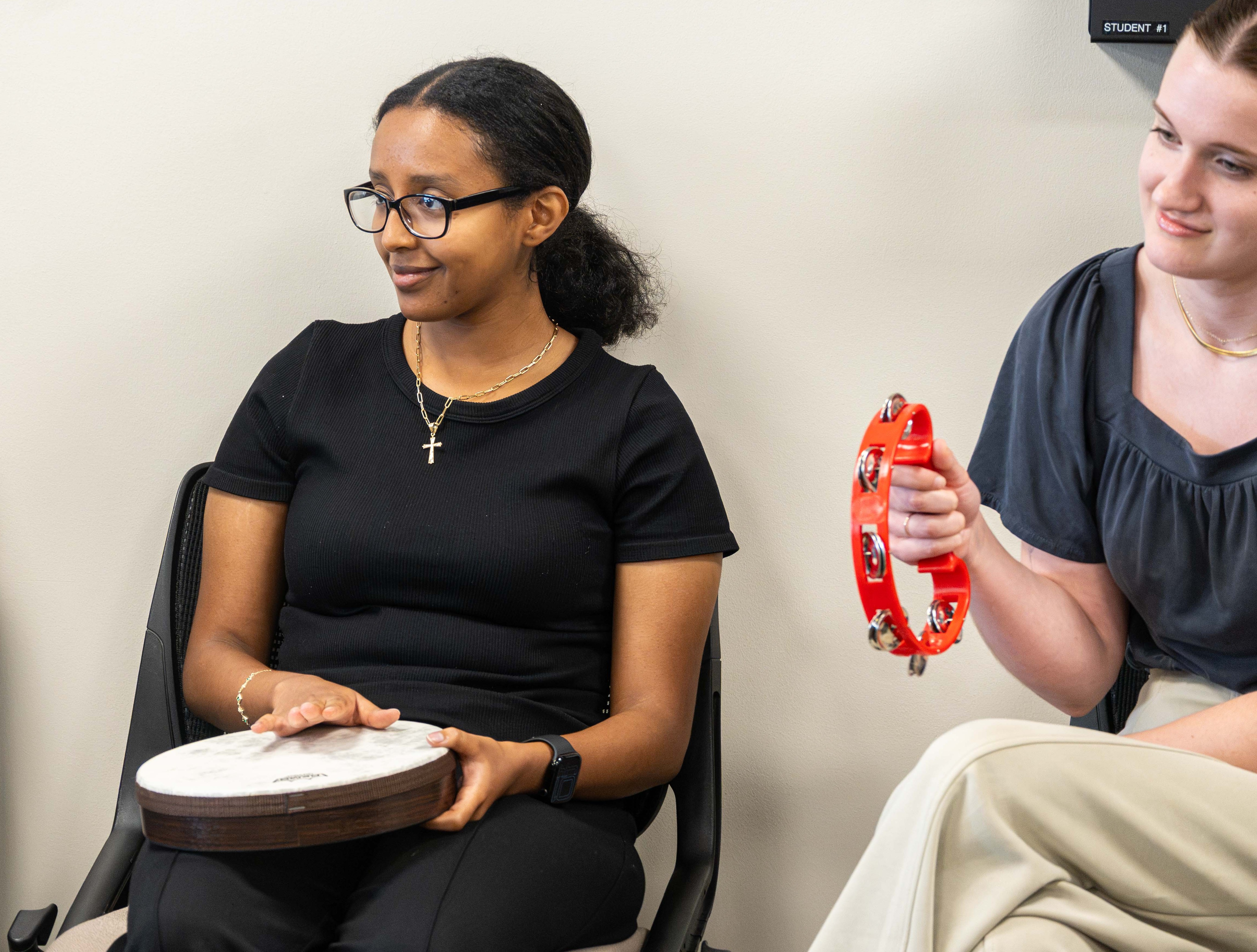 Dr. Lacson added that, for students who were meeting one another, discovering a program, and finding their way around campus, the activity was designed to make the transition feel a little easier. By creating space to connect, laugh, and collaborate, the afternoon helped students build a sense of community.
“I saw a group of students who were very excited but were also a little tentative and timid, which I would expect from a group that is new to each other,” she said. “And I saw some people who were really paying attention to what they were putting into the group and what the other group members were contributing to the group's sound.”
The collaboration gave students an early example of how professionals across CNHP can work together toward a shared goal of understanding and caring for patients. It also demonstrated how creative approaches can strengthen observation, communication, empathy, and connection. The experience was made possible through the collaboration of Drs. Lacson and Prakash, and Kristyn Stickley, PhD, MA, ATR-BC, LPCC, art therapist, with Girija Kaimal, EdD, ATR-BC, chair of the Creative Arts Therapies Department, helping bring the teams together.
For the Class of 2030, the afternoon was more than a break from Orientation Week – it was an opportunity to build community while developing skills they will carry into their future work with patients.