General News
Audiology
For Jason Chao ‘30AUD, it started with what he calls “an irrational fear of hearing loss.”
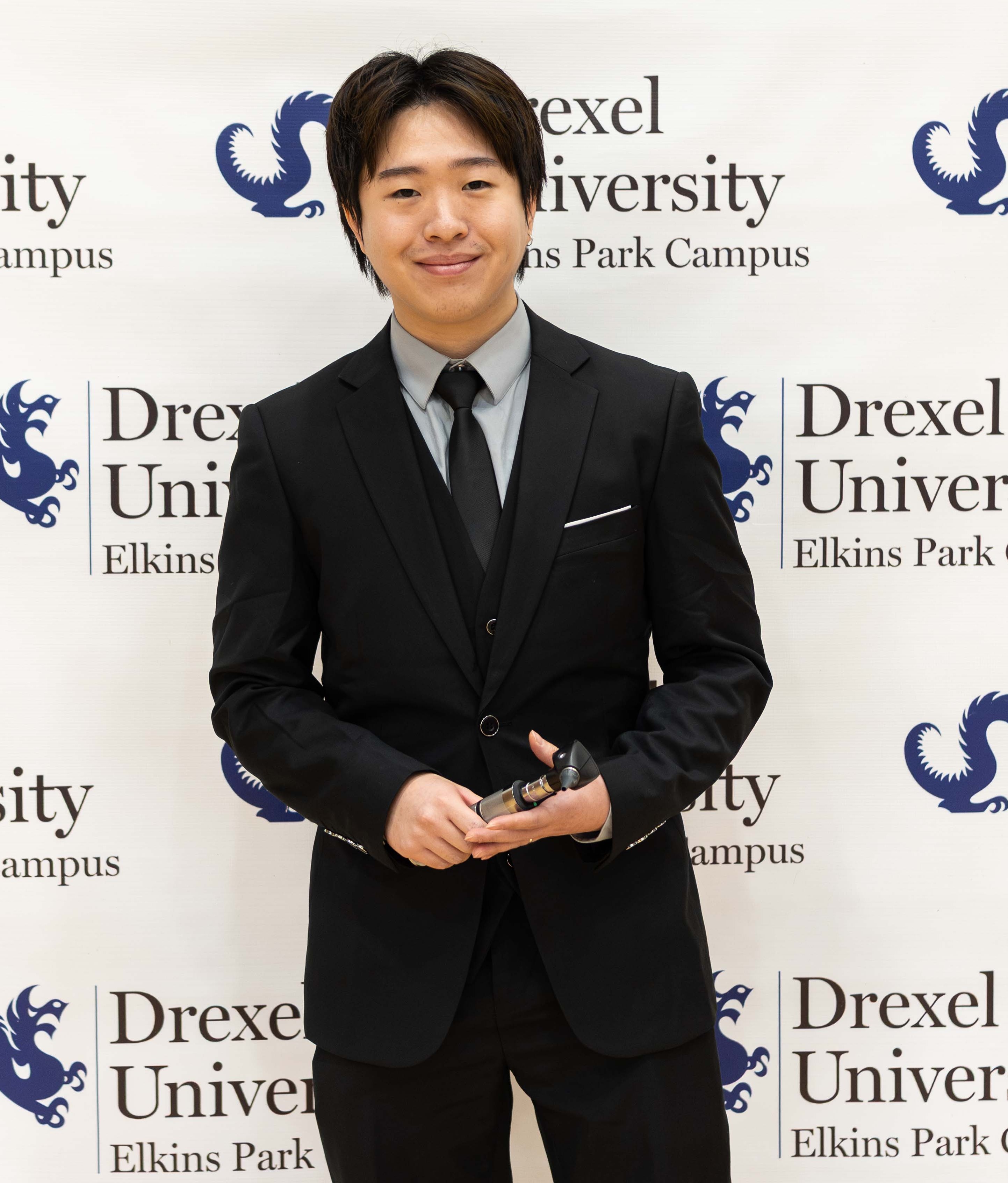 “I love going to musical festivals and raves. During those shows, my friends would ask me something, and I’d have to repeat myself to them,” said Chao, from Queens, New York. “Then I asked myself, ‘How can I fix that?’ And, that led me to ask myself, ‘How can I help other people?’ That extended into learning about audiology, and here I am.”
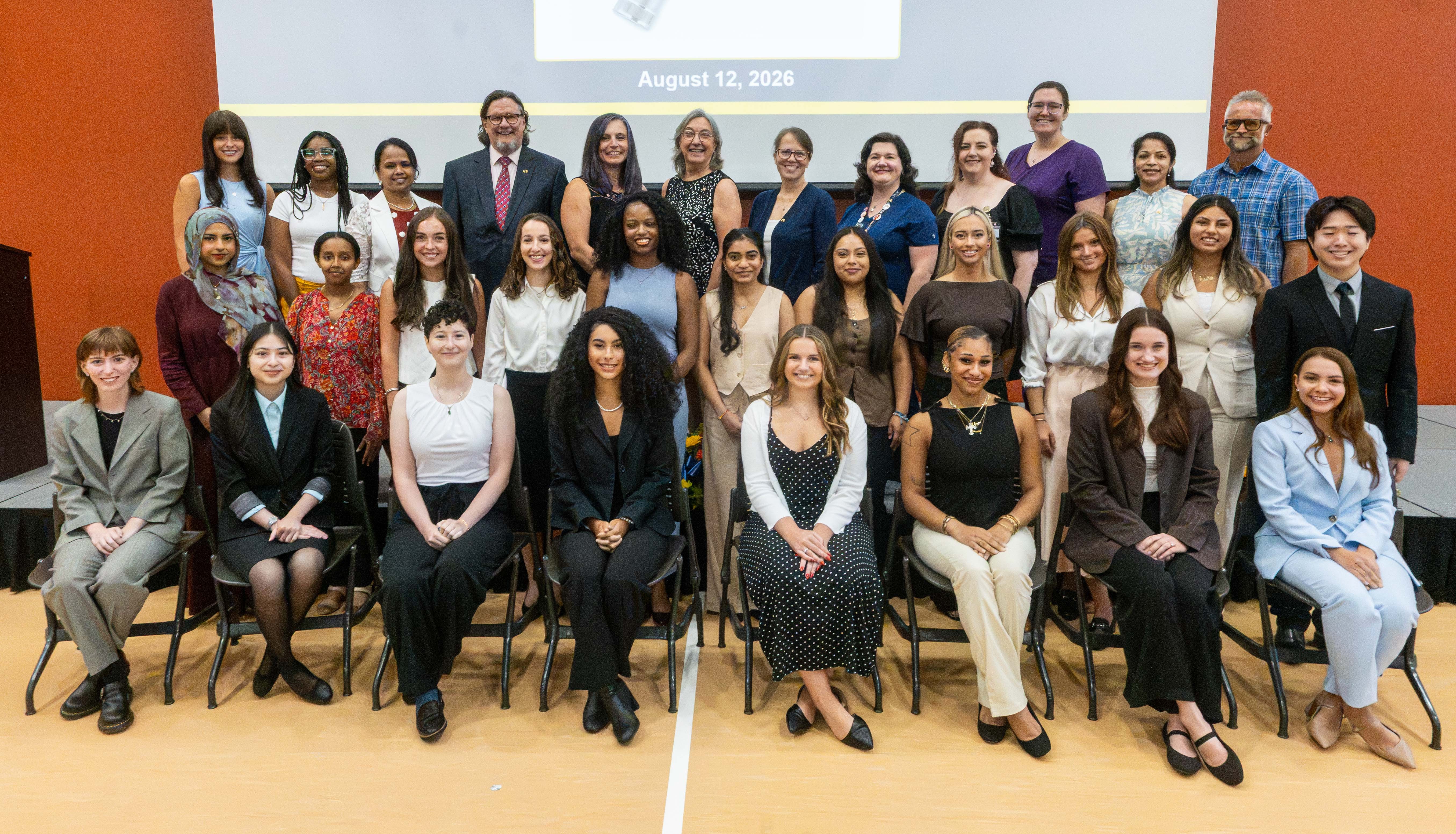
He was at the Hafter Student Community Center on Drexel University’s Elkins Park campus, fresh off receiving his otoscope during Osborne Audiology’s inaugural formal Otoscope Ceremony as one of 21 members of the Class of 2030.
The ceremony, held Aug. 12 as part of Orientation Week welcomed new students from all the Drexel health sciences programs offered at the campus.
The otoscope is a handheld medical tool with a light and magnifying glass Doctors of Audiology use to look inside the ear canal and check the eardrum. The presentation of otoscopes to each new student entering the program is a tradition at Osborne Audiology and represents the next step on the student’s path to the profession.
“While I know receiving that first piece of clinical equipment is exciting, this ceremony really isn’t about the instrument itself,” said Radhika Aravamudhan, PhD, EdD, chair of the Osborne Audiology department at Drexel. “It’s about what it represents.”
She said it’s one of the first moments when each student’s decision to become an audiologist starts to feel a little more real.
 “You’re entering a profession that is grounded in science, but also deeply rooted in service and compassion,” said Dr. Aravamudhan. “Over the next four years, you’re going to learn an incredible amount. You’re going to develop clinical skills, learn how to think critically, and eventually care for patients who are trusting you with something incredibly important — their ability to hear, communicate, connect, and navigate the world around them.”
Karletta Austin ‘30AUD knows firsthand how important it is to be able to communicate and connect. A mismanaged dental appointment a couple of years ago resulted in Austin losing the hearing in her right ear. At the time, she was pursuing a career in Speech, Language and Hearing Sciences, but the mishap made her focus more on audiology.
“I realized it was interesting to see how everything was connected and helped me understand why my hearing loss happened,” said Austin, who hails from Bayonne, New Jersey. “Because of my hearing loss, it’s going to help me have a better understanding of my patients and show them that I understand what they are going through.”
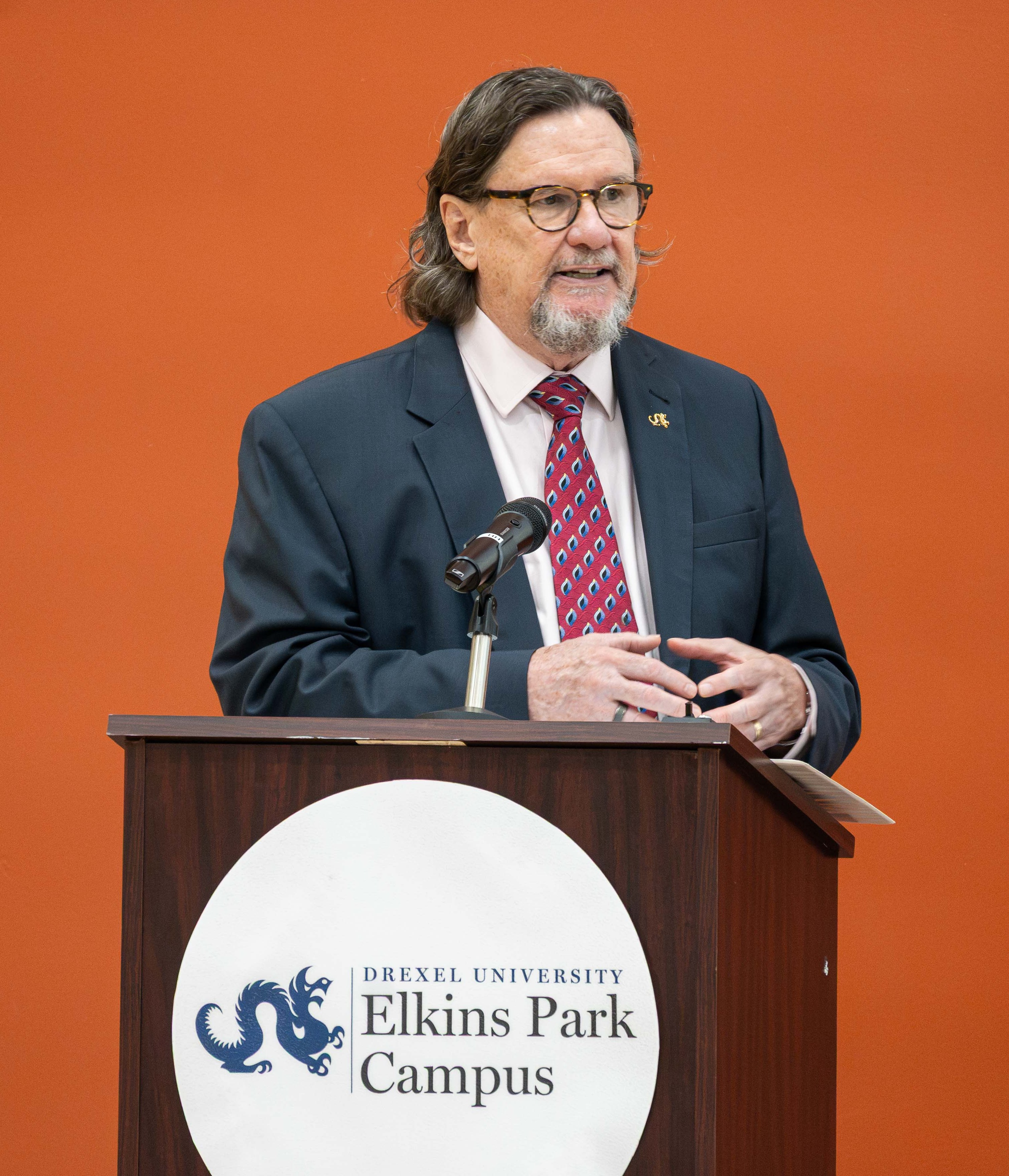 The keynote speaker for the event was Victor Bray, MCS, PhD, FNAP, former dean of the Osborne College of Audiology at Salus University from 2009 to 2016, before the merger with Drexel University in July 2025.
Dr. Bray leaned heavily into the history of the program and its namesake, George S. Osborne, PhD, DDS, who founded the program in 2000 as the Pennsylvania College of Optometry (PCO) School of Audiology. Dr. Osborne was a visionary who believed the responsibility of the profession went beyond preparing excellent clinicians.
Dr. Bray emphasized that Dr. Osborne believed audiologists should become doctorate-level healthcare professionals with the knowledge, clinical skills, independence, and responsibility to care for patients with hearing and balance disorders.
Dr. Bray introduced new students to the “Osborne Plan: Seven Ideas That Can Help Shape Your Future in Audiology.”
Those seven ideas include:
“Some of these seven goals have been accomplished. Some are still works in progress. And, some may ultimately become the responsibility of your generation of audiologists,” said Dr. Bray.
He added that the students before him will inherit the profession from those who came before them, but they do not have to leave it exactly as they found it.
“Some of you may eventually help change healthcare policy. Some may improve education. Some may conduct research. Some may develop new technologies. Some may build innovative practices. And, some may lead our profession,” said Dr. Bray. “You do not have to decide today which one of those people you become. For now, your job is to build the knowledge and skills that will prepare you for those choices in the future.”
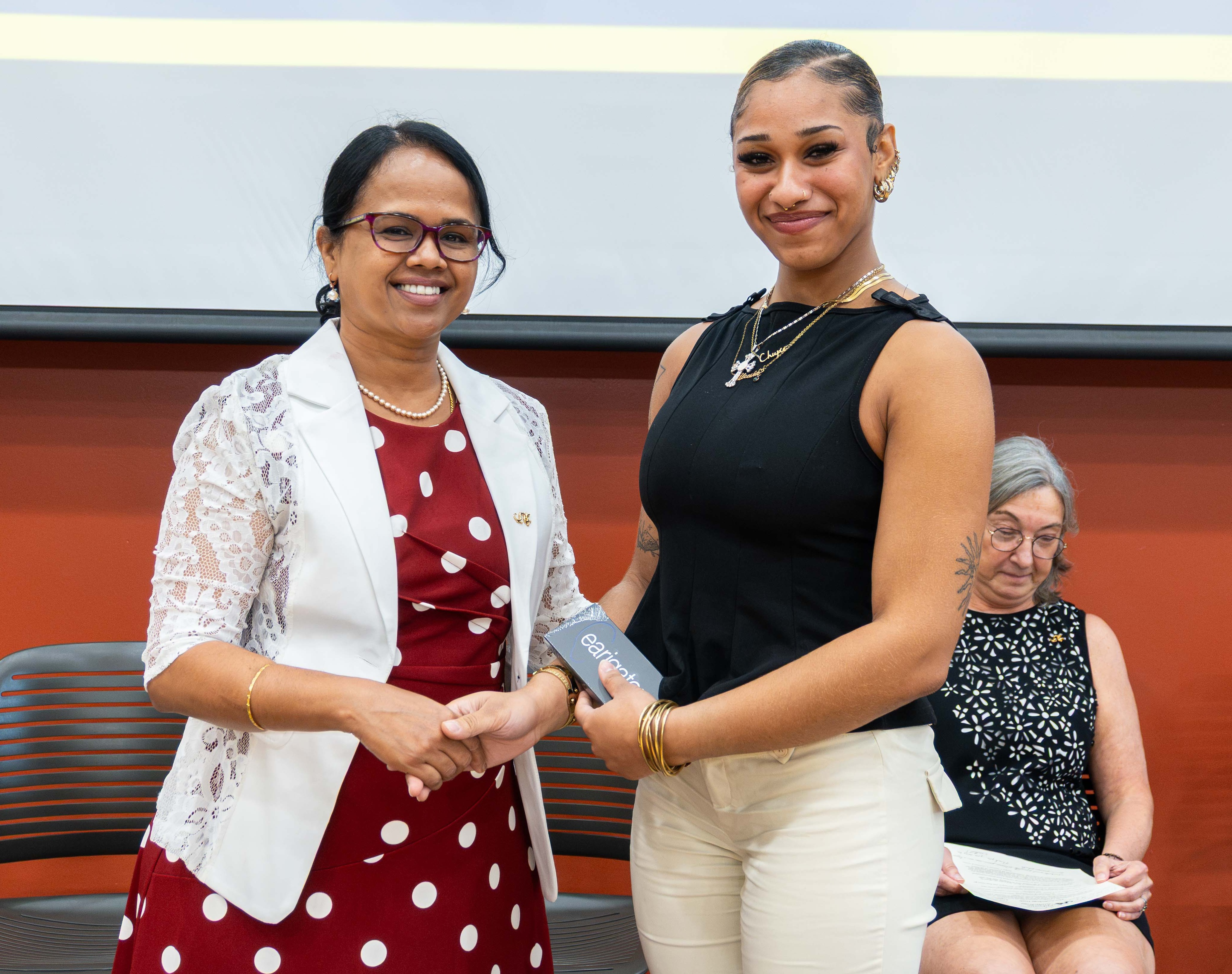
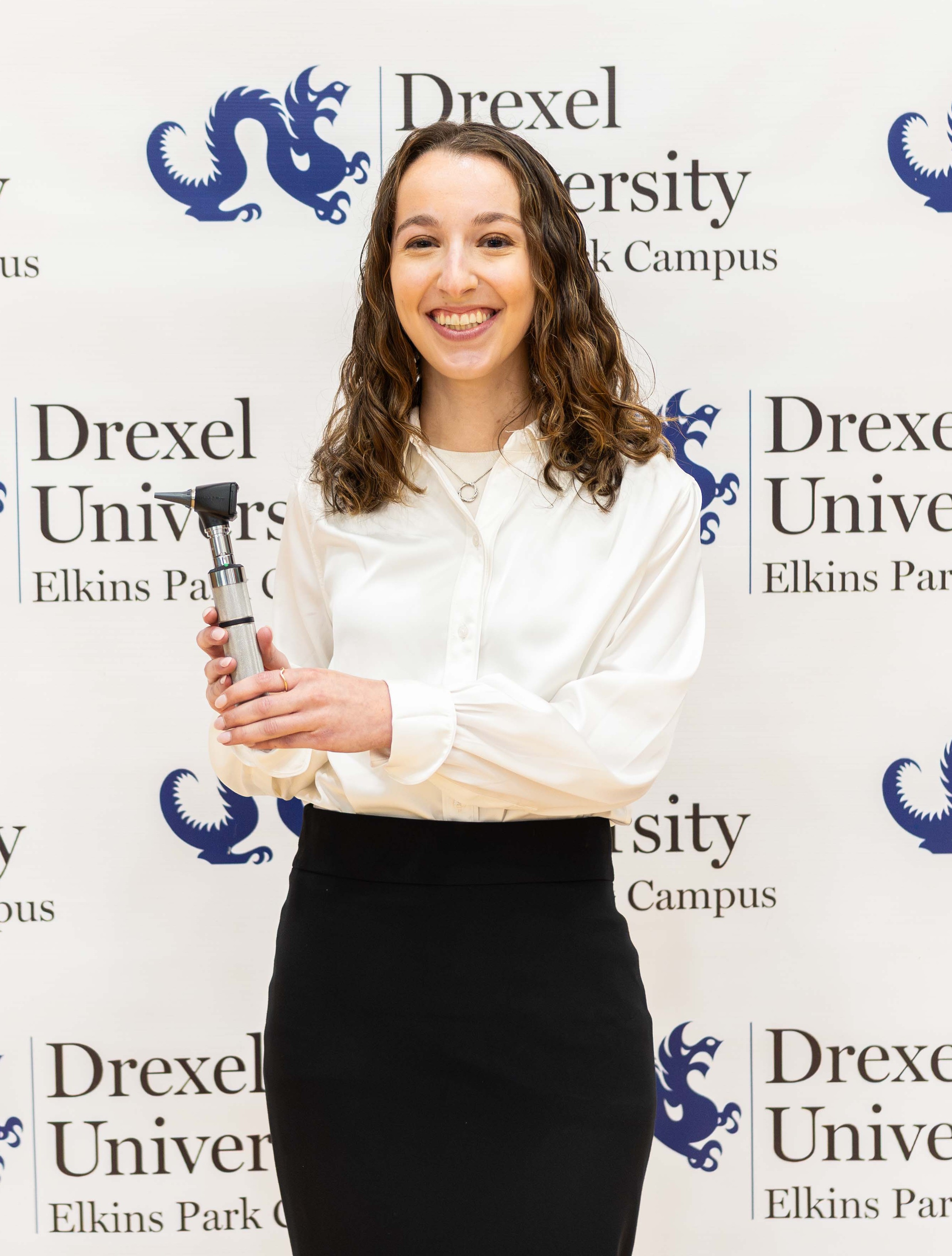 During the ceremony, the students were presented with their new otoscopes by Lindsay Bondurant, PhD, CCC-A, director of the Pennsylvania Ear Institute and associate professor at Osborne Audiology; and Bre Myers, AuD ‘06, PhD ‘17, CH-AP, associate professor and assistant program director for didactic education. Jonette Owen, AuD ‘03, MHA, FNAP, CH-A, associate professor and associate program director for Clinical Education, led the students in the Oath of Professionalism at the end of the formal program.
Talia Pulka ‘30AUD had her own cheering section at the ceremony. Her parents and sister had made the trip from New York to watch her receive her otoscope.
“It was a very exciting experience. It’s also surreal that it’s finally happening,” said Pulka. “When I came for my interview at Drexel, I saw such a warm environment. Everyone cares so much about the patients and the students. It felt like a place where I could really thrive.”
Her mother, Lara Pulka, said seeing her daughter receive the otoscope signified the beginning of a new chapter in Talia’s life and that the family would continue to support her just as it has throughout her educational journey.
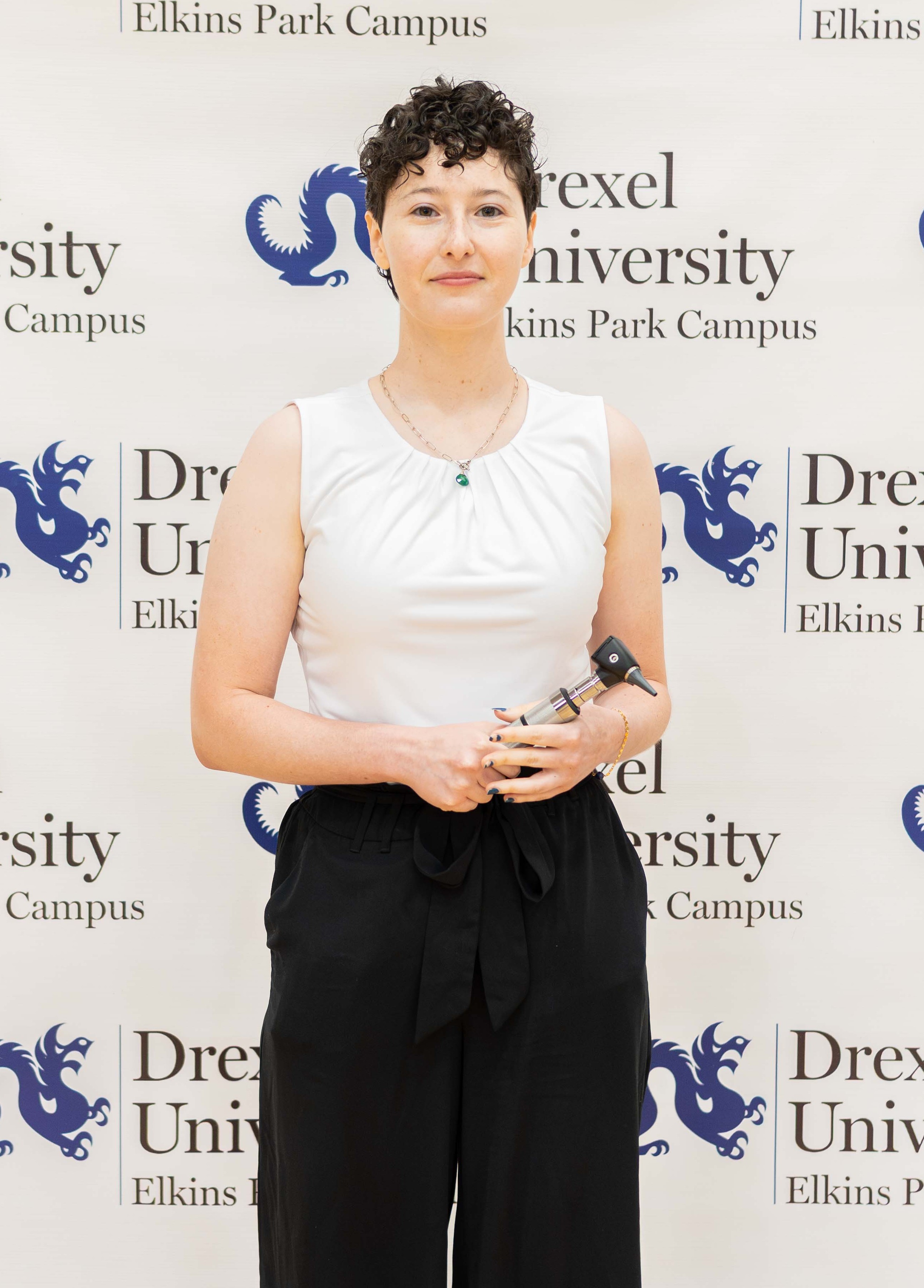 “This is the first step in the next chapter,” said Lara Pulka. “We’ll do the same thing we’ve always done. We’ll encourage her while letting her know that it’s going to be a tough road. Everything in life is a challenge. She just has to work at it, and she’ll be very successful.”
For Jessica Bisnoff ‘30AUD, the path to audiology started when she was a toddler and was treated for auditory processing disorder, a neurological condition where the brain struggles to interpret and process sounds even though the ears have normal hearing. As a teenager, she researched the disorder and discovered audiology.
“It was the first time I actually felt interested in a profession. Eight years later, here I am,” said Bisnoff, who is from Los Angeles. “Receiving the otoscope was more nerve-wracking than I anticipated. I almost tripped up the stairs. But I’m pretty excited to be here for the next four years.”