NEURO – IT'S IN THE PCO DNA
See Beyond the Eye. Where Vision Meets the Brain.
At the Pennsylvania College of Optometry (PCO) at Drexel University, neuro-ophthalmic disease is more than a specialty; it's a foundational part of how we teach students to understand vision, recognize disease, and care for patients.
From the classroom and labs to direct patient care at The Eye Institute (TEI), students learn how the eyes, brain, nerves, and muscles work together — and how disruption anywhere along these pathways can impact vision.
With a distinguished legacy, early clinical exposure, and expert faculty mentorship, PCO prepares students to see beyond the eye.
WHY NEURO MATTERS
Great Clinicians Look Beyond the Eyeball
Neuro-Ophthalmic Disease focuses on vision-related conditions involving the brain, nerves, and muscles. Patients may present with sudden vision loss, double vision, visual disturbances, visual field loss, drooping eyelids, or other neurological symptoms affecting vision.
At PCO, students learn to connect clinical clues, recognize potentially serious disease, and see the whole patient — not just the eyes.
A LEGACY UNLIKE ANY OTHER
The Foundation of Neuro-Optometric Education
PCO and The Eye Institute have decades of leadership in neuro-ophthalmic education and patient care.
What makes PCO unique is the depth of faculty expertise and institutional commitment to the specialty. With pioneering faculty, residency-trained clinicians, and the nation's first optometric Neuro-Ophthalmic Disease Residency Program, PCO has helped shape the future of the specialty. Because of this legacy, neuro isn’t simply a topic students encounter. It becomes part of how they learn to think clinically.
NEURO ACROSS THE CURRICULUM
Built into Your Education from Day One
Understanding vision means understanding the entire visual system. Since the eyes are an extension of the brain, you can’t understand the eyes without understanding the brain.
PCO integrates neuro concepts throughout the curriculum, including:
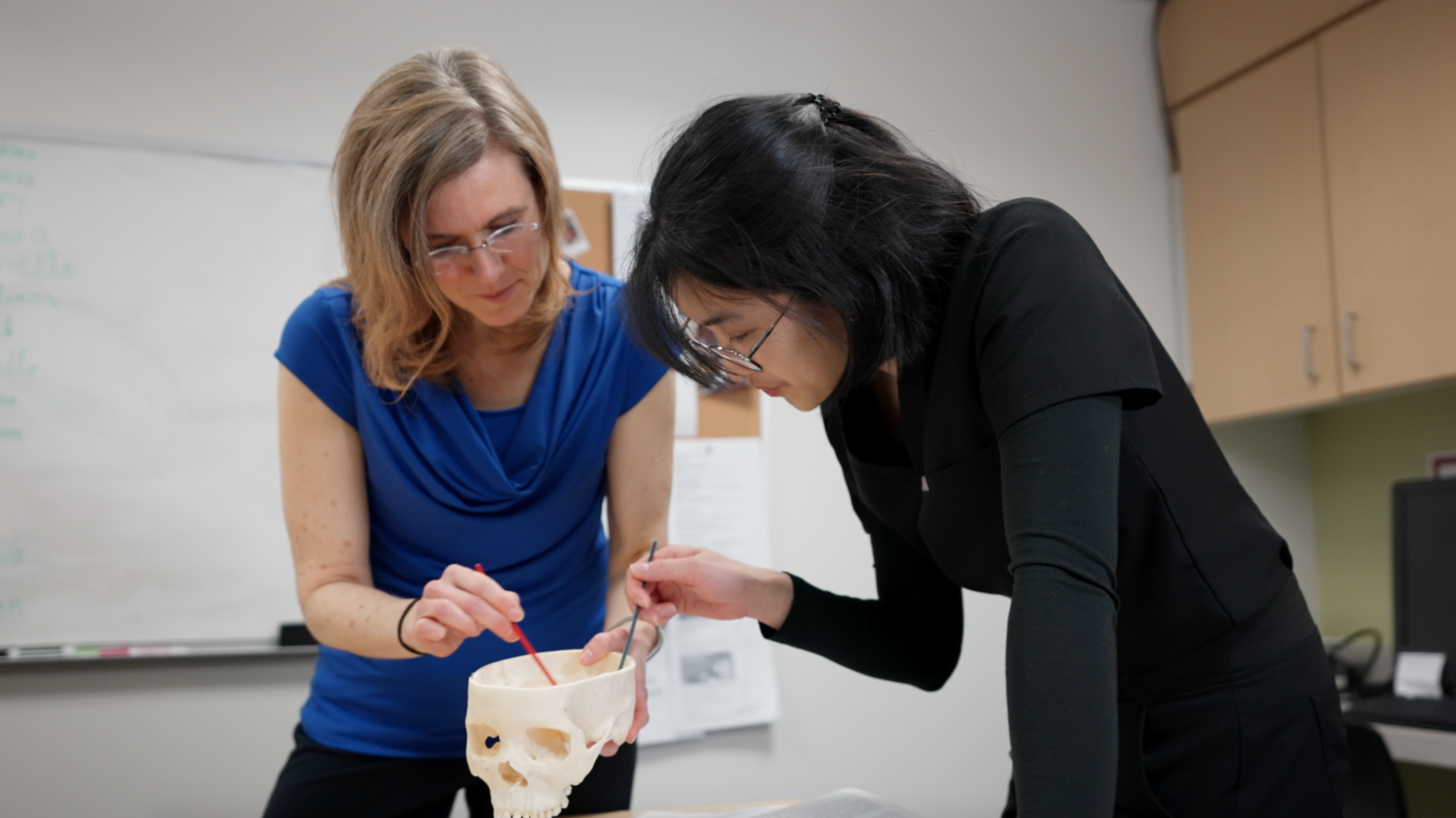
- Head and Neck Anatomy: Explore the structures supporting vision, eye movement, and neurological function.
- Neuroanatomy: Understand the nervous system and pathways connecting the brain to the eyes and to the spinal cord to understand manifestations of neurological disease.
- Neurologic Examination and Imaging: Develop skills in clinical evaluation of neuro-ophthalmic conditions and diagnostic technology.
- Neuro-Ophthalmic Disease Course Series: Explores how visual information travels between the eyes and the brain. Build on foundational concepts to understand disorders of the afferent and efferent visual systems, specific neurological disease processes, and advanced diagnostic and management strategies for complex cases.
LEARN IT TODAY. SEE IT TOMORROW.
Neuro at The Eye Institute
What truly sets PCO apart is the opportunity to apply classroom knowledge through direct clinical experiences alongside faculty specializing in neuro-ophthalmic disease. Students at PCO learn about these disorders while actively seeing them at TEI.
Clinical exposure includes optic nerve disorders, double vision, eye movement disorders, neurological causes of vision loss, visual field defects, neurodegenerative disease, stroke-related visual complications, and complex diagnostic cases.
Students learn to recognize subtle findings, identify serious disease earlier, and confidently guide patients toward appropriate care.
MENTORSHIP THAT SHAPES the PCO experience
Learn from Leaders in Neuro-Ophthalmic Disease
PCO faculty mentor students throughout their education, developing their diagnostic reasoning, clinical confidence, and judgment. Whether pursuing neuro-ophthalmic disease or primary eye care, students gain knowledge that strengthens every area of optometric practice.
SEE THE WHOLE PATIENT. BECOME A BETTER CLINICIAN.
PCO graduates develop the skills to recognize serious disease, think critically, collaborate with healthcare professionals, and provide comprehensive, patient-centered care. Become the clinician who sees what others miss.