Current Student News
General News
Orthotics & Prosthetics
The danger of witch doctors in the East African nation of Tanzania is very real. And brutal, particularly for individuals with albinism.
There are superstitious beliefs in Tanzania that body parts of the people with albinism — a genetic condition, according to the National Institutes of Health, characterized by a lack of melanin in the skin, hair, and eyes — can confer wealth, health, and political power. Those with albinism are hunted, mutilated or murdered for their body parts, which are then sold for thousands of dollars to witch doctors, also known as traditional healers.
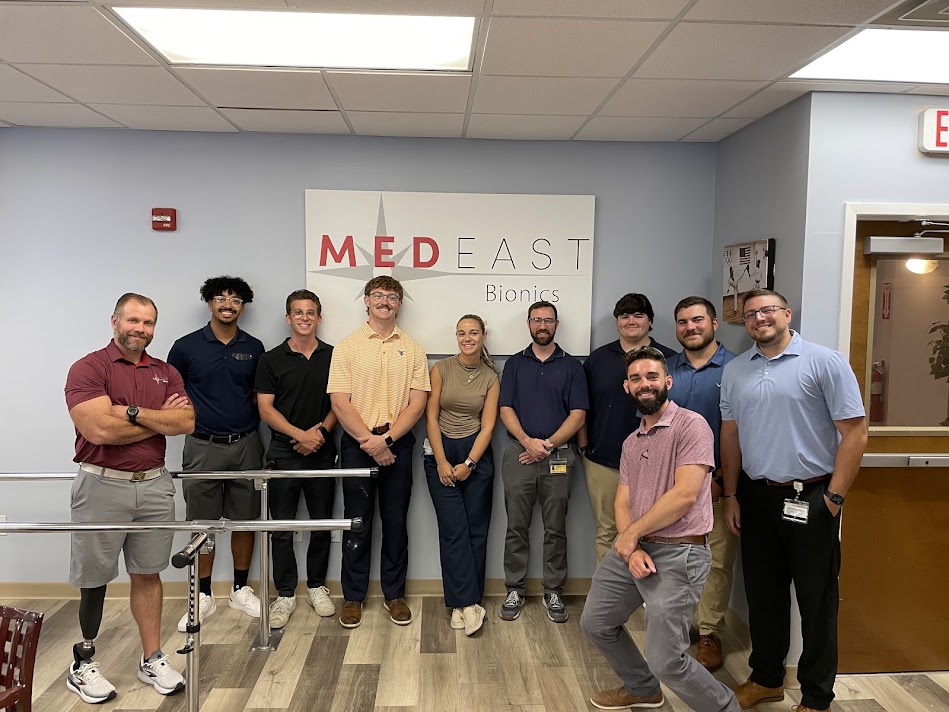
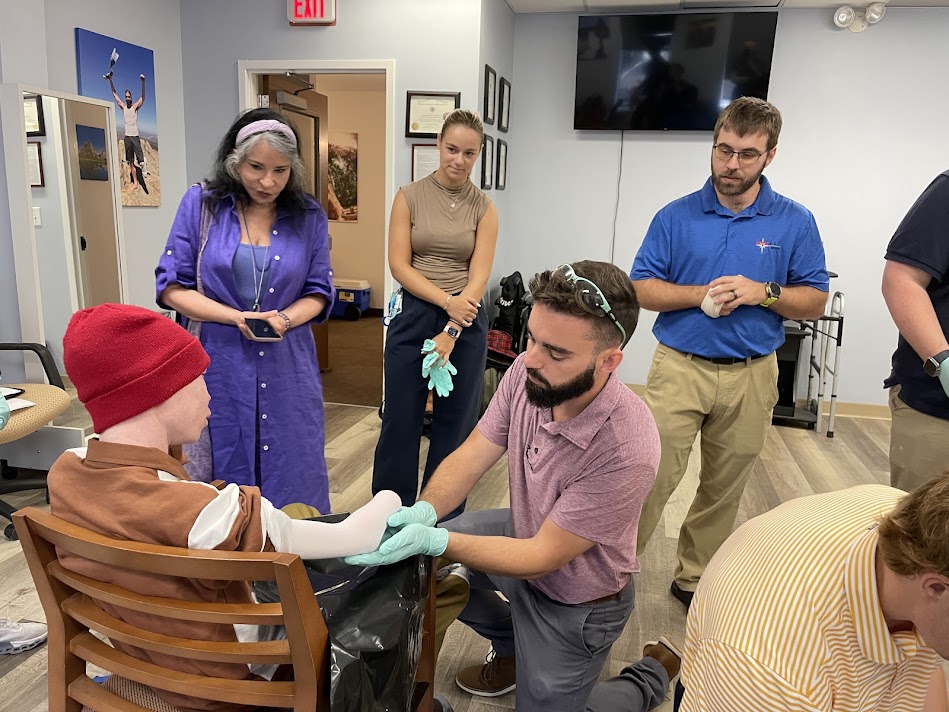
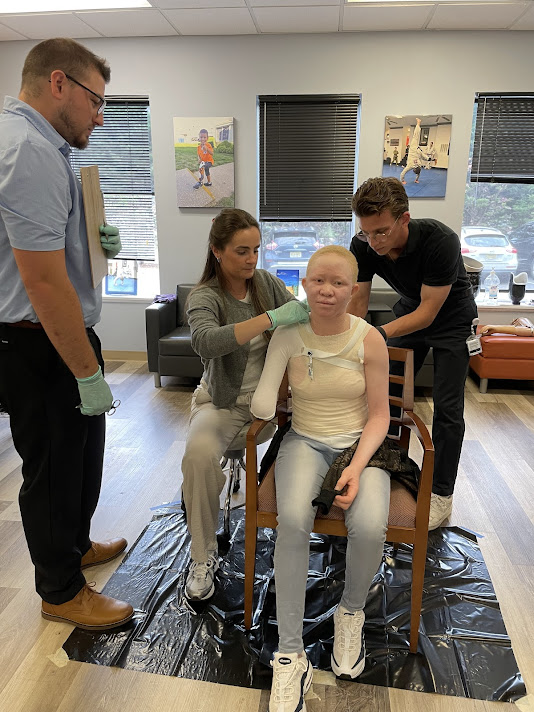 But students in the Orthotics and Prosthetics (O&P) program at Drexel University, Elkins Park Campus, are trying to make a meaningful difference for some of the victims of that violence. They recently had a chance to work with four upper limb amputees who traveled from Tanzania to the United States, making prostheses for them at MedEast in Cherry Hill, New Jersey.
“When my professors reached out to me and several other students about participating in this opportunity, I felt honored and grateful,” said Justin Hornung ‘27O&P, who was among eight O&P students who participated. “After hearing the tragic story of how these individuals lost their limbs and needed new devices, I immediately became interested in the chance to help and put the skills I have been learning, while in grad school, to good use.”
Matthew Graham, CPO/LPO, clinical director for MedEast, a company that provides preventative, rehabilitative, and deformity correction products for infants, children, adolescents, and adult patients with orthopedic and prosthetic needs, is also a mentor and patient model for the Drexel O&P program. Elissa Montanti, the founder and executive director of the Global Medical Relief Fund (GMRF), reached out to Graham after receiving his contact information from Dr. Scott Kozin at the Shriners Children’s Hospital of Philadelphia.
“It can be challenging to get experience with upper limb prosthetic patients, and so I saw this as an opportunity to involve the students of Drexel’s O&P program,” said Graham. “The patient presentations as well, being of a traumatic nature, also add a level of complexity to it. So, in working with the O&P program, I thought it would be valuable to include them in something that maybe was not normal to what they’ll see in clinical practice.”
According to Graham, the patients all had amputations in a traumatic fashion, and that presented multiple facts for the students to consider, including the different patient presentations and amputation levels, the patients' mental and cognitive state, and ultimately the potential lack of follow-up care due to them returning to Tanzania.
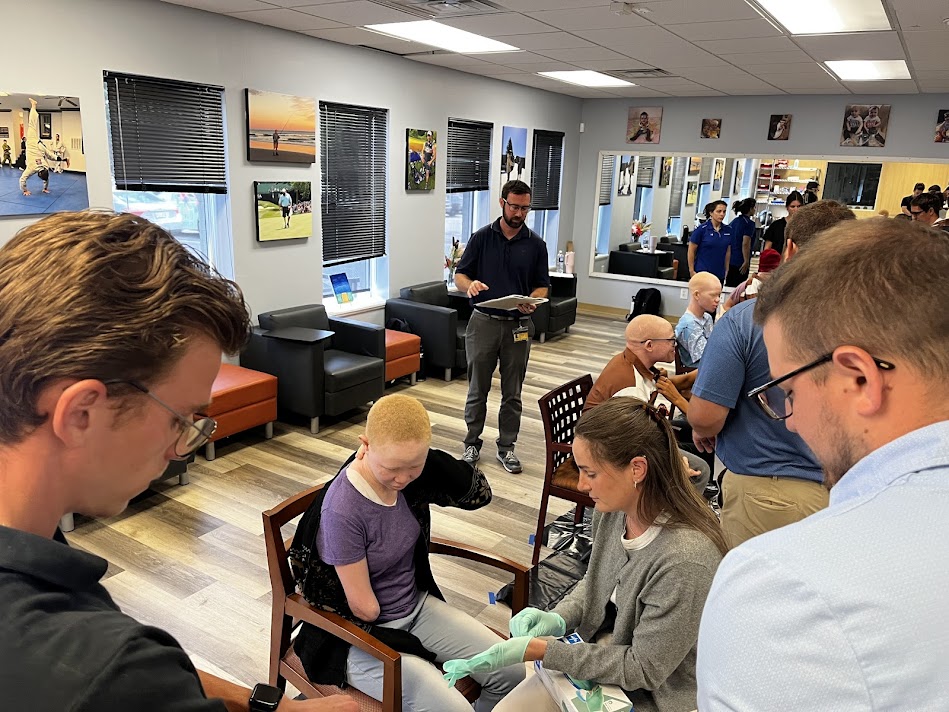 What really moved Ben Jolley ‘26O&P was the way patients were still able to smile after being victims of those horrible experiences.
“When I first heard their stories, it was sickening to think about how people could be so cruel. These were children, innocent children, who had their lives changed forever,” said Jolley, who is currently completing a residency at MedEast. “They have had to live in constant fear for their entire lives, all because they look different, and it is just so sad and angering to think about.”
Jolley worked with the youngest of the four patients, a 15-year-old boy who is a below-the-elbow amputee. He designed and 3D-printed a fixture that could be attached to the end of the teen’s diagnostic socket. The fixture allowed the MedEast team to quickly and easily set both the length and alignment of the prosthesis and then used it to set up the harness and fully test the arm before final fabrication.
“Having been able to do this all in one appointment saved valuable time and helped the patient to get his prosthesis before his departure at the end of the six weeks,” said Jolley.
Although he didn’t reveal the horrible details, Hornung shared his experience with a patient named Mwigulu, who described his particularly terrible story, one that made an indelible impact.
“I think after hearing him explain his story and still seeing how spirited and appreciative he was of our help, I felt so inspired and motivated to give him the best help that I could provide in making his new prosthesis,” said Hornung.
Working with these patients taught him a lot about real-life scenarios he will potentially experience throughout his career.
“The circumstances in Tanzania are sad to hear, and learning about them has broadened my perspective and encouraged me to prioritize advocacy and protection for other vulnerable groups,” said Hornung. “I think engaging in such opportunities will help make me a better clinician in my future endeavors within the profession of O&P.”
For Jolley, the experience built upon the time management and problem-solving skills necessary to practice in the O&P profession.
“Beyond the time constraints that we faced, this experience posed challenges at every turn. The ability to work through these challenges to meet the unique needs of the individual is vital for effective care,” he said. “This allows for creative thinking and is what lets me combine my passion for 3D design and manufacturing, with the restoration of functionality to those with limb differences.”