General News
Audiology

When exploring the role genetics can play in hearing health, Casey Ems ‘27AUD, found access to medical records allowed for a meaningful deep dive into a patient’s history. That access directly led to her development of a poster titled “Progressive Hearing Loss: Exploring the Impact of a Single USH2A Deletion,” that Ems presented recently at the Audiology Grand Rounds poster presentations for students in the Osborne Audiology program at Drexel University.
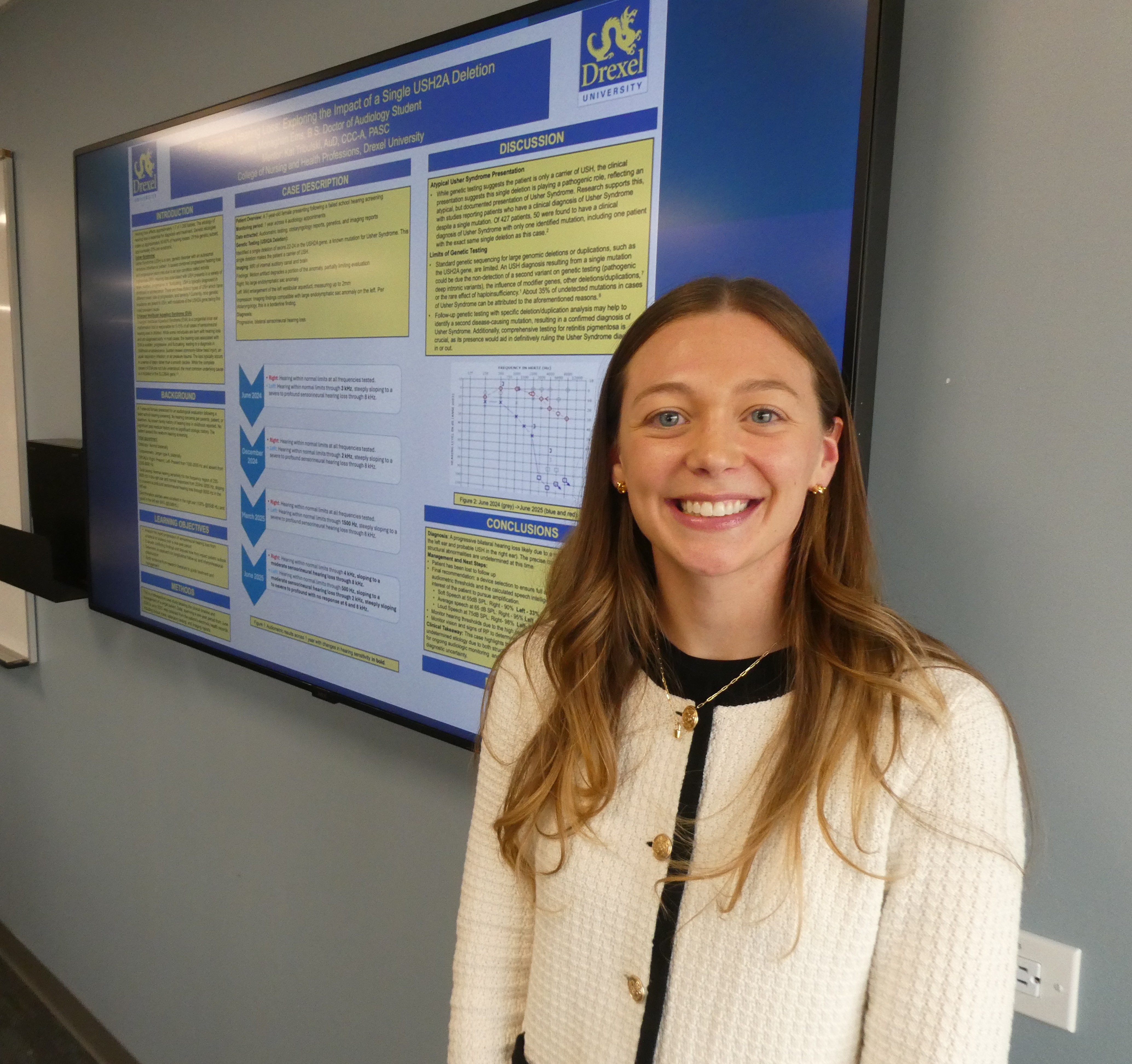 “In a retrospective case study on a seven-year-old female who had failed a school screening test, I saw genetic testing and imaging showing conflicting findings,” said Ems, who was mentored by Kathryn “Kat” Tribulski, AuD ‘16. “The imaging showed a borderline enlarged vestibular aqueduct on the left side and the genetic testing did not have anything to support the diagnosis of that.”
Ems said the genetics showed something she found interesting: a single deletion of exons 22 to 24 on the USH2A gene, which makes that patient a carrier for Usher Syndrome, a genetic disorder causing progressive hearing loss and vision loss (retinitis pigmentosa, or RP), making it the most common condition affecting both senses, with varying types affecting hearing/balance at birth versus later in life, according to the National Institutes of Health (NIH).
Ems was one of several third-year Doctor of Audiology students who presented their posters, which this year took on a different style, according to Bre Myers, AuD ‘06, PhD ‘17, CH-AP, associate professor and associate program director of Didactic Education at Osborne Audiology.
“In years past we had done Grand Rounds in a style where every week students would take turns presenting their case in a lecture style format. This year, we changed things up and had them create their own case posters that they can choose to submit to a national or state association for one of their poster sessions if they want to,” said Dr. Myers, who added that the presentations were open to anyone in the University to observe. “It’s the first time students have done the posters and we want to give them real-world experience and practice in presenting.”
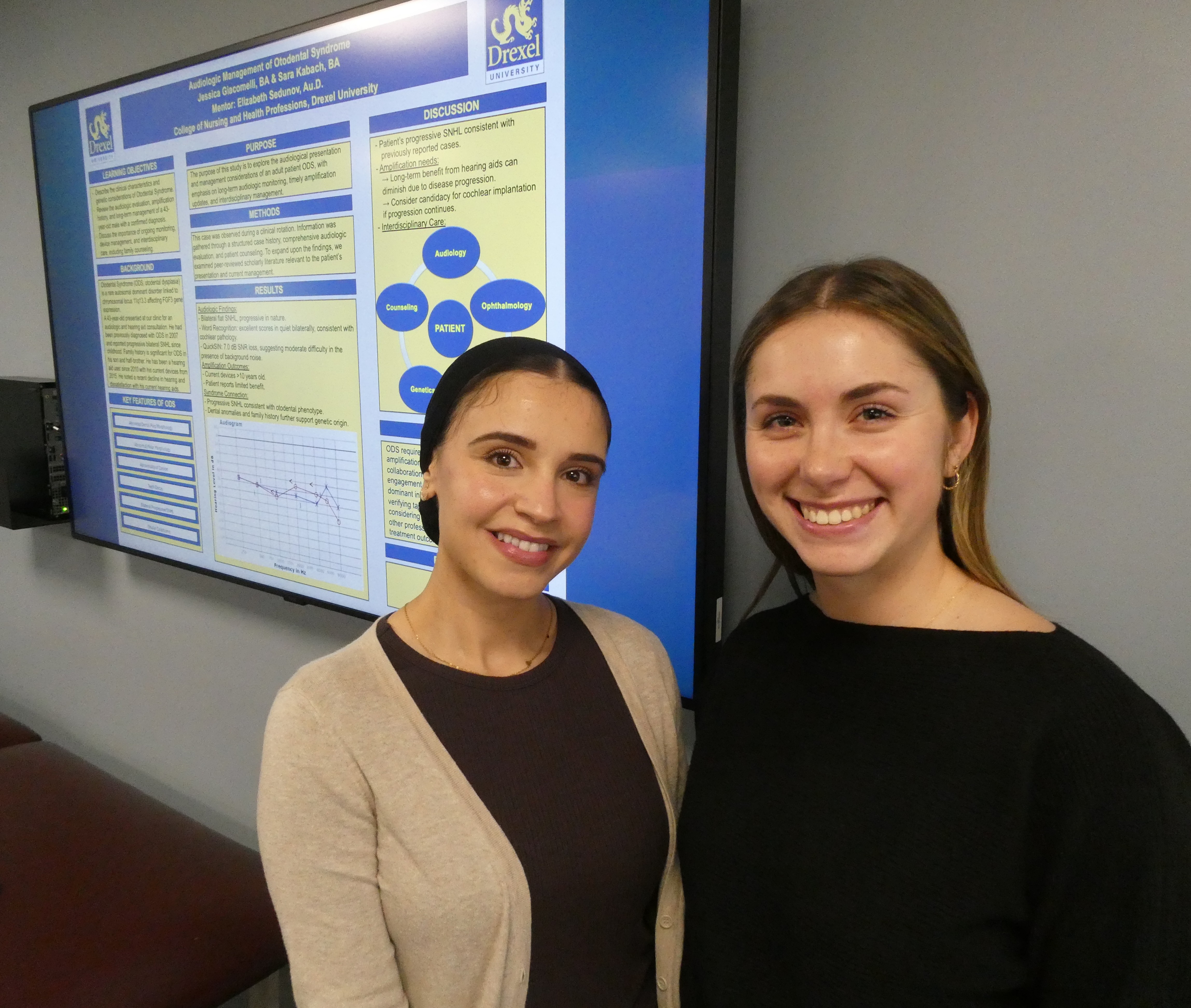 Under the mentorship of Elizabeth Sedunov, AuD, assistant professor in Osborne Audiology and clinical educator at the Pennsylvania Ear Institute (PEI), Jessica Giacomelli ‘27AUD and Sara Kabach ‘27AUD, encountered a patient at the PEI - the University’s on-site clinical facility in Elkins Park, Pennsylvania - who was diagnosed with Otodental Syndrome (ODS).
“It was something that we had never heard of before,” said Giacomelli. “It piqued our interest to look into it a little bit further and how we could dive into the audiological management of his progressive hearing loss.”
In the resulting poster by the duo, titled “Audiological Management of Otodental Syndrome,” they found that ODS requires lifelong audiologic monitoring, timely amplification updates and interdisciplinary collaboration, as well as genetic counseling and family engagement.
“Even though the focus of the poster is on audiology, this specific syndrome also involves other systems of the body, like vision and teeth, so ophthalmology and dentistry need to be involved in the management of a patient with a diagnosis like this, as well as counseling in genetics,” said Kabach.
Each week throughout the semester a different aspect of creating a poster along with presentation skills were introduced and applied. According to Dr. Myers, the students did an excellent job of researching and presenting their posters. She added that it was a great way to present clinical information and give them practice talking in small groups, explaining the science and building the confidence they need and will need for the development of their careers post-graduation.
“It’s a really unique learning opportunity,” said Dr. Myers. “There was a lot of peer review, too, so every time the groups would create something, I would collect the information and do blind peer reviews where the students could receive feedback. Of course, they are in constant contact with their mentors as well.”