

The Scope
Speech-Language Pathology
Let’s jump into the new school year ready to learn and ace our exams! High-performing students consistently excel in their studies by practicing both good habits and strong study methods. Here’s how you can level up in your academic life.
First, you should have an organized and ideal working environment. If your space is cluttered, your mind will likely be as well. Clean up and remove distractions from your workspace. This allows you to concentrate on your materials efficiently and effectively.
It will be difficult to perform well and focus if you aren’t well-rested. Everyone says this, but for good reason: prioritize your sleep. The quality and quantity of sleep can easily make or break your day. To get the most out of your study session, get ample amounts of shut-eye.
A great skill to have is time management. The ability to balance your personal and academic life can be challenging, which is why time management skills are incredibly valuable. It's important to assign specific time blocks for studying. This enforces structure and dedicates a time to fully lock in.
Now that you’ve mastered strong habits, try practicing active recall. One of the most effective forms of studying, active recall is a learning technique where you retrieve information from memory, rather than passively reviewing it (such as rereading or highlighting).
Feynman Technique
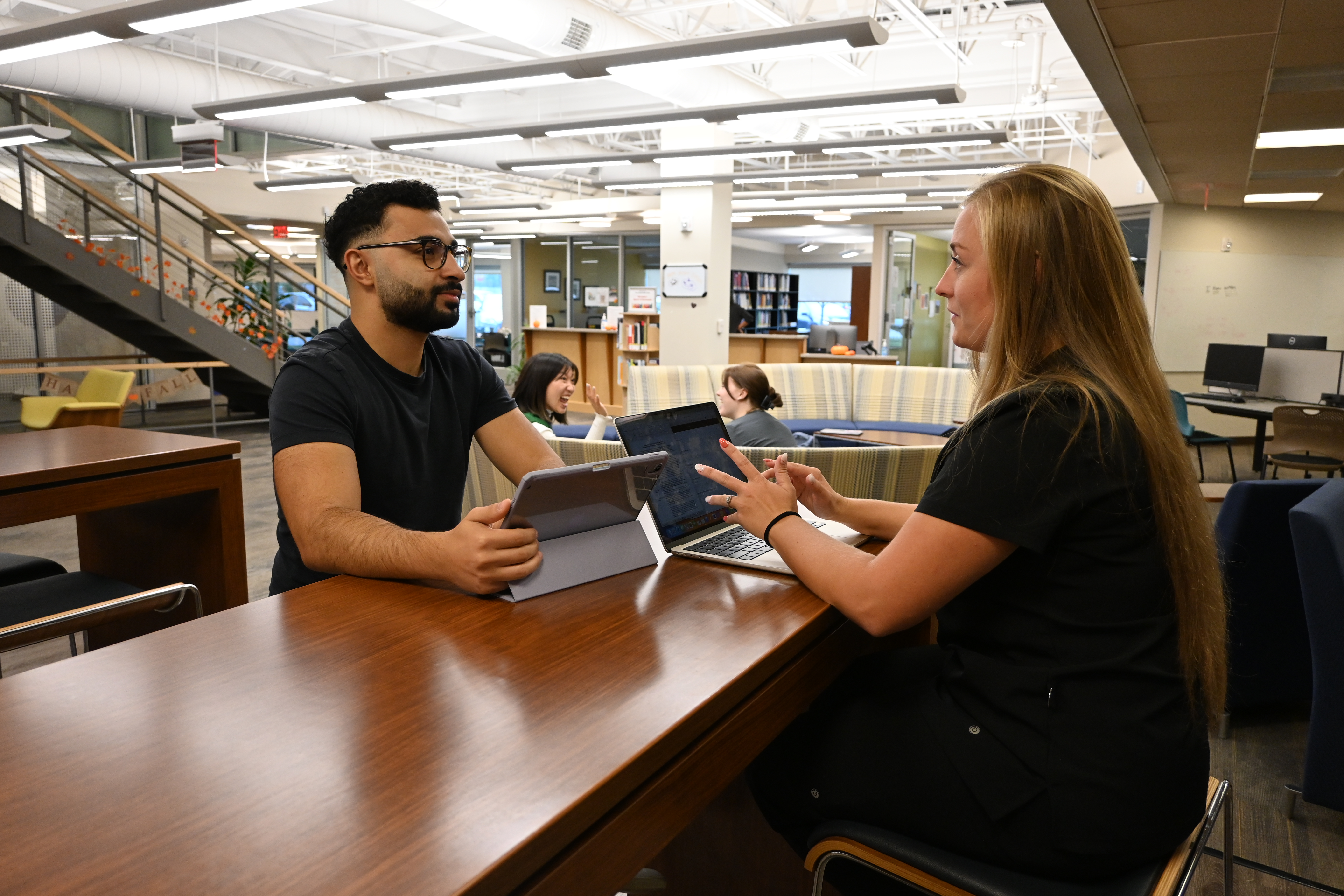
The Feynman Technique is one of the most useful studying strategies yet. It refers to teaching others what you know, or even pretending to teach a class. This technique helps identify the gaps in your knowledge while reinforcing what you already know. Every day when a teacher comes in to teach their students, they are sharpening their own ability on the subject. When their mind sometimes goes blank (it happens, we’re human), it’s a sign that they need to refine their knowledge. That’s okay—refine and repeat until those gaps are closed.
Spaced Repetition
If you’ve ever heard of cramming, spaced repetition is basically the opposite of that. First, you learn the material. Then, you review the material at spaced intervals, increasing time in-between each review session. For instance, if you learn the material on Monday morning, you review it later that evening, you take a look at it again on Tuesday, then two days later on Thursday, then three days after Thursday on Sunday. You continue to space out each study session until the material becomes intuitive. In between each session, you are essentially building the information into your brain. When it comes to spaced repetition, feel free to develop your own kind of system.
Flashcards
This is the most well-known form of active recall, likely introduced to you in elementary school. Flashcards can be either physical or digital (the most common. flashcard apps are Quizlet and Knowt). If you upload or copy and paste your notes into these apps, they can automatically generate flashcards for you. This is highly efficient and saves time; however, there’s no harm in taking the traditional route as well. Handwriting flashcards can also be beneficial as writing out study material can help your brain remember the content better.
Practice Exams
Practice exams mimic a real exam scenario by familiarizing students with the question formatting and pacing, allowing them to succeed on the actual exam. Students learn not only the content, but also understand how they are being asked. In high school, this method was extremely useful in preparation for SATs.
Blurting Method
The blurting method involves writing down all of the information you can remember from a lecture, even if it’s out of order or incorrect. Then, you go back and refer to your notes to see what you know and what you don’t know. You’re able to study the topic again and repeat the process until you remember everything you need.
Use AI as your TA
There is a lot of controversy around the use of Artificial Intelligence (AI). However, when used properly, AI can be a highly efficient tool. AI will spit out whatever you feed it, so be sure to ask the right questions. For instance, if you are stuck on a topic and Google searches aren’t helping, you can ask AI to explain it in simple terms, or in whichever way is easily understandable to you. You can also ask AI to generate test questions and/or create a detailed study plan based on your personal schedule. AI is extremely powerful, and it is up to you if you want to leverage it.
Pomodoro Technique
Have you ever tried to study for long periods of time, with no break? That studying method can not only be tedious, but also physically and mentally draining. By continuously studying, you set yourself up for burnout and lack of focus. Luckily, the Pomodoro Technique is structured in a way that prevents this. While you can choose to work in any interval you’d like, this technique typically entails setting a 25-minute timer, working on your task during that time, taking a five-minute break, and repeating that four times. If you still have work to complete after the four “Pomodoros,” you can repeat the process but take a longer break. This method is ideal for individuals who struggle with procrastination and focus.
I hope you try these methods and consider implementing lifestyle changes to become the academic mastermind you’re destined to be. Good luck in the new school year!