Current Student News
General News
Orthotics & Prosthetics
Current and prospective students at the Elkins Park campus of Drexel University take note: there are some changes in financial aid rules that go into effect July 1, 2026.
The One Big Beautiful Bill Act, passed on July 4, 2025, makes many changes to federal financial aid regulations. Currently, graduate students have access to the Graduate PLUS Loan, which allows them to borrow up to the cost of attendance, which encompasses tuition and fees and an allowance for books, equipment and living expenses.
Prior to July 1, 2026, a student could get a PLUS loan in addition to the unsubsidized loan for up to $20,500 a year for most programs, and $47,167 for optometry, as long as the student completed a Free Application for Federal Student Aid (FAFSA) and met the eligibility requirements for federal aid.
If, for example, Doctor of Optometry students were going for nine months, they could get $40,500 and if they were going for 12 months, they could get $47,167. If they needed additional funding, they could look to the Grad PLUS Loan, so they could have all their school expenses covered by federal loans.
What’s changing is that students who had taken out a federal loan prior to July 1 can maintain what is called a "limited exception” or “legacy” exemption. They are still allowed to borrow under the guidelines they had in their programs – essentially, they are grandfathered in – as long as they don’t take a leave of absence, stop enrollment, change programs or credential levels (going from a master’s to a doctorate, for example) or go beyond the published length of the program. If students do any of those things, they lose the “legacy” provision.
All incoming students or any student who does not meet the requirements for the legacy exemption have to follow the new provisions. The Grad PLUS Loan is eliminated as an option. Those students are going to have to turn to private loans. They were eligible for private loans before, and they could take them in lieu of, or in addition to, federal loans. It was up to the student as to what they preferred. Now they have no other options.
The changes for borrowers subject to the new rules maintain an annual unsubsidized limit of $20,500 for graduate programs, but now include an aggregate maximum of $100,000 of borrowing at the graduate level. Programs deemed “professional” by the Department of Education, which includes optometry, have an annual unsubsidized limit of $50,000 and an aggregate maximum of graduate-level borrowing of $200,000.
Any prior graduate-level loan debt of unsubsidized or PLUS loans will count towards these new lifetime limits, thereby reducing a student’s unsubsidized eligibility while completing their program. A new lifetime maximum of federal loans for both undergraduate and graduate study is $257,500. Borrowers eligible for the limited exception are still subject to the old aggregate subsidized/unsubsidized limits of $138,500 for non-OD programs and $224,000 for OD. Graduate PLUS borrowing does not factor into the aggregate for these students.
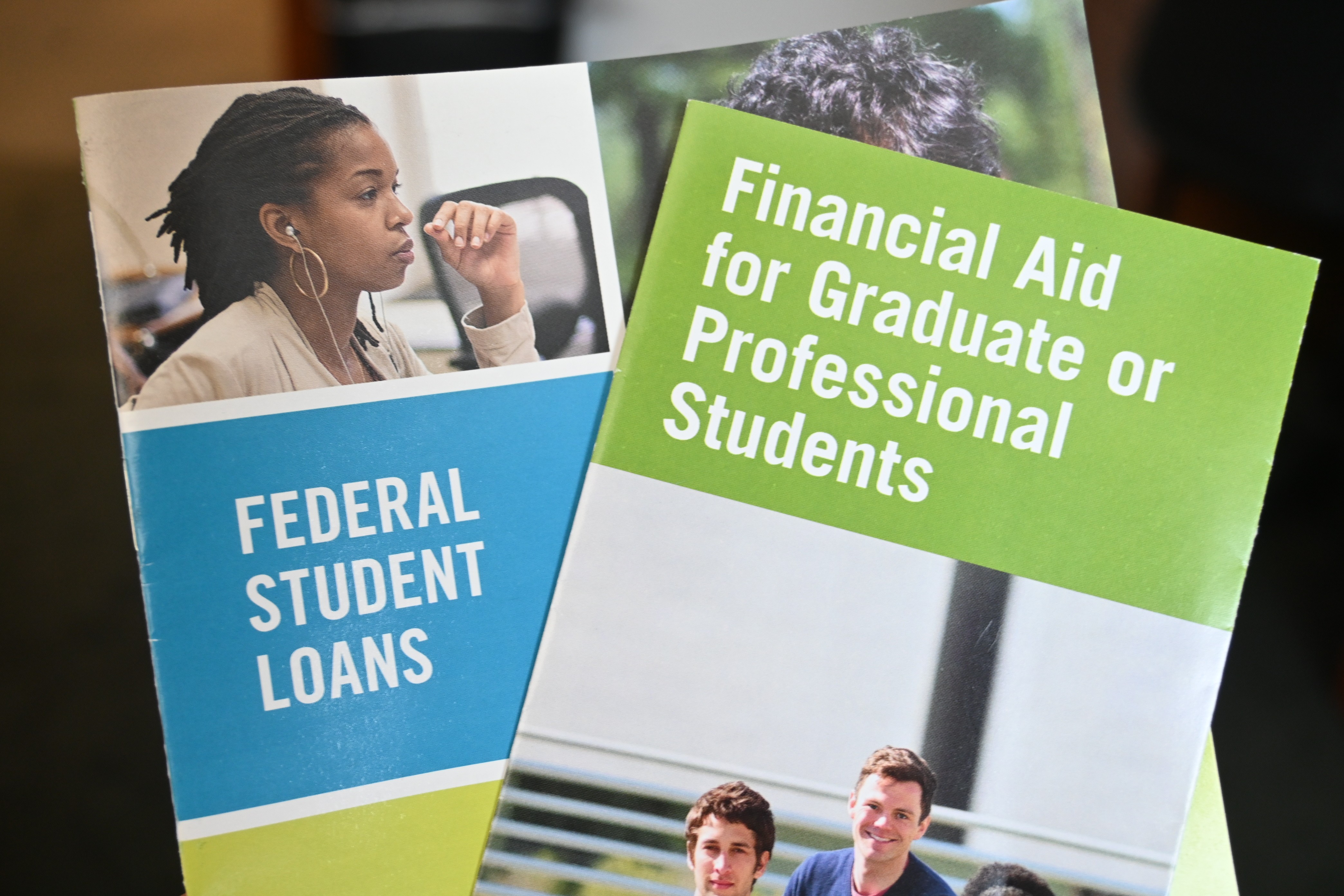 Another new provision is that students must be enrolled at least full-time (based on nine credits per term) to receive the full amount of their federal loans. Schulang explained that Elkins Park students will still need to be enrolled at least half-time in each term (four-and-a-half credits) to be eligible for federal loans, but of those students, those who are not taking at least the total full-time credit enrollment for the year (27 credits if summer is required, 18 credits if it is not required) will have their loans pro-rated based on their credit total compared to the full-time credit requirement. This pro-ration applies to all borrowers, both new and limited exception eligible, and impacts both the unsubsidized and PLUS loans.
There are also changes coming on the repayment side of federal loans. Currently, there are three basic options: (1) the standard plan, which is a 10-year plan; (2) the graduated plan, which is also a 10-year plan but starts with lower payments and steadily increases over the life of the loan; (3) and income-driven plans. Right now, two of the income-driven plans, the Pay-As-You-Earn and Income-Contingent plan, are still available to students who do not borrow a federal loan after July 1, 2026, but they will be sunset by July 1, 2028. If a student chooses one of those plans, he/she will have to choose a different plan after the deadline.
The third is the Income-Based Repayment (IBR) plan, and for now, it’s not going away. Anyone who has graduated in 2026 or before can opt into that repayment plan, as long as they do not borrow a new federal loan after July 1, 2026. Any current student or new borrower will not have access to the IBR plan.
Instead, those students will have access to a standard plan with a tiered-repayment system based on the amount borrowed in federal loans that correlates with the time frame in which the loans have to be repaid. In other words, the less a student borrows, the shorter the repayment time.
The new income-driven plan offered is called the Repayment Assistance Plan (RAP). Repayments can be up to 30 years, but if the student hasn’t finished paying off the loan, it is forgiven and the student gets taxed on the forgiven portion.
The difference between the two (RAP and the old income-driven plans) is that RAP looks at your adjusted gross income (AGI), but takes no consideration of your discretionary income. The RAP only looks at your adjusted gross income, and then bases your payment on a percentage of your income. The higher your income, the higher percentage you pay toward the loan. The payment percentages range from 1% to 10%. RAP requires a minimum monthly payment of $10, but will also eliminate any interest accrual which exceeds the payment amount. This will guarantee that students will not owe more at the end of each month than they did at the beginning. Also, if the required payment does not reduce the principal balance by at least $50, a subsidy will be applied to ensure the balance is reduced by at least $50 each month.
If you have any questions regarding types of financial aid, contact Drexel Central at Ask Drexel or by phone at 215.895.1600. Students can also visit the 2026 Financial Aid Changes page for more information.