I Chose Series
Optometry
My very first externship rotation was at a private practice in the Philadelphia area. Each externship rotation covers a specific specialty such as Pediatrics, Primary Care/Contact Lens, Interprofessional Collaborative Care, or Ocular Disease. This first rotation was my primary care/contact lens site, so I was able to learn a lot about both soft and hard contact lenses.
A single-doctor practice with its own optical shop, this externship site specializes in myopia control, which helps prevent nearsighted children’s glasses prescription from getting stronger and stronger over time. Nearsightedness, or myopia, means that the eyeball is slightly too long, which causes blurry vision in the distance. When a patient’s glasses prescription for myopia gets very high, they are at a higher risk for ocular disease and retinal detachment. Myopia control aims to slow down the progression of the child’s glasses prescription to lessen the chance of complications and help the patient function better visually in the future.
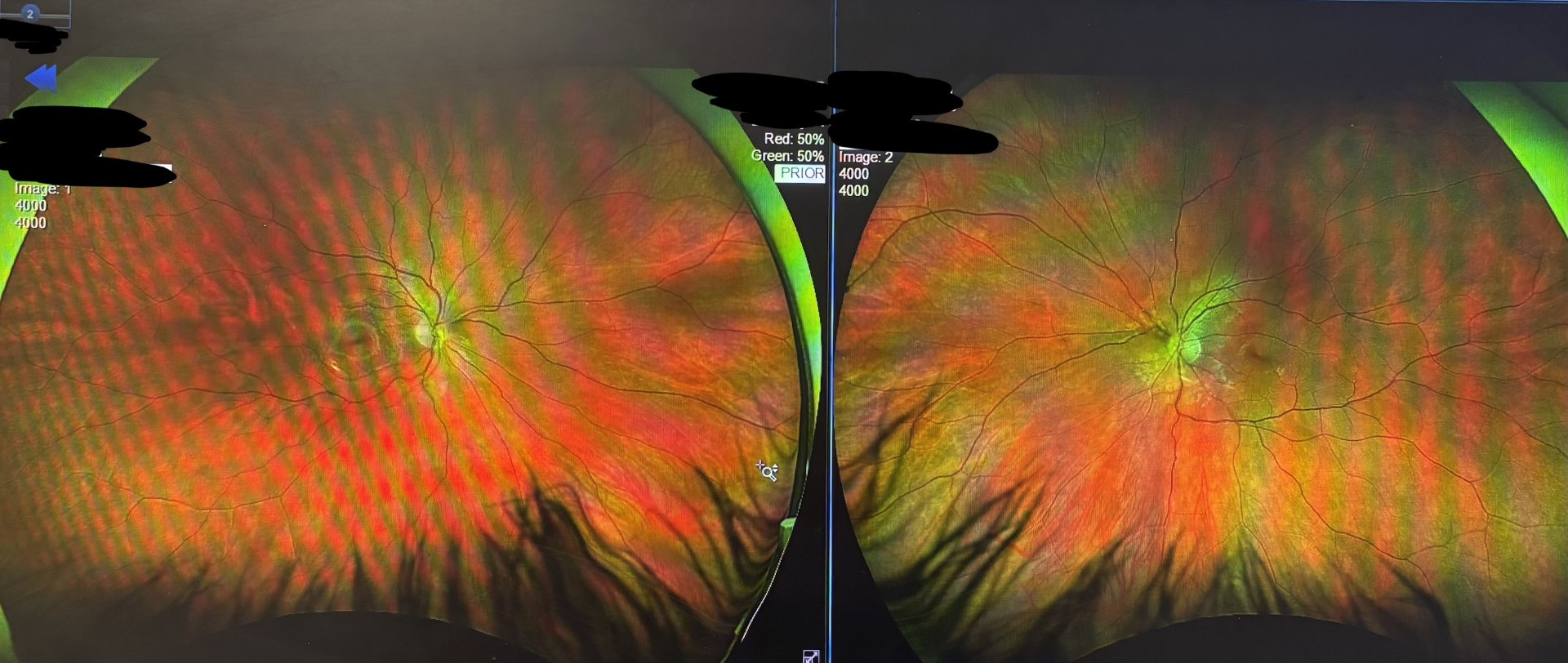
There are a few different ways we can treat myopia progression: daily eye drops, soft contact lenses, or hard contact lenses. Not every patient chose the same treatment option; we saw a variety of each option depending on many factors. If the patient was younger than six or seven years old, the parents would elect to start with the eye drops because contact lenses are a little difficult for young kids to take care of and get used to. We also saw many kids and families choose the contact lens options. I was very surprised at how successful children as young as six years old were with insertion and removal of contact lenses. Parents would often help out with young patients, but the kids did a really great job on their own as well.
Myopia control is a really new and exciting field of treatment within eye care, and we are seeing a ton of advancements in the technology. Just within the past few months, the FDA approved the first spectacle lenses for the treatment of myopia progression in the U.S., which is a huge step and will allow many more children to get the treatment that they need. I’m really glad that I was able to learn about myopia control at this site.
It was also great to learn about how a private practice functions. I was able to witness the business side of optometry and what it’s like to own a practice. There is so much behind-the-scenes work that goes into providing patient care: from submitting insurance claims to making your staff’s schedule, it can be a lot of work. This was a really great experience because the business aspect isn’t something that is easily taught in school. If I decide to open my own practice one day, I now have a much better idea of what that would entail.
My favorite part about this rotation was getting to know all the great patients and staff. At The Eye Institute (TEI), Pennsylvania College of Optometry’s clinical site, we don’t often get to see the same patient more than once because of our busy schedule as students and the vast number of students that work at the clinic. During this rotation, I was able to see patients multiple times for follow-up exams, get to know entire families, and develop a sense of community all within just three months. I also really enjoyed working with my preceptor and her staff. They were kind enough to invite me to their after work party at Top Golf in Philly, which was a really fun way to get to know everyone. I felt like a valued member of the staff from day one, and I am very appreciative of the connections I was able to make during my primary care/contact lens rotation.
- Madison is a third-year Accelerated Scholars Optometry student