I Chose Series
Optometry
 For my third and penultimate externship rotation, I spent three months at a private practice in the Philadelphia area. This practice specialized in cataract surgery, complex corneal disease and surgery, refractive surgery (such as LASIK), and glaucoma management. It had two doctors, one optometrist and one ophthalmologist, who worked together closely to coordinate care for patients. The ophthalmologist would spend two to three days per week in the operating room performing surgery, and the other days in the office seeing patients. The optometrist spent all of their time in the office seeing patients for comprehensive exams, corneal evaluations, pre-operative and post-operative visits, and more. I had the wonderful opportunity to spend time with both doctors during my time here, so I was able to learn an immense amount about ocular disease.
One of the most interesting procedures performed at this practice was something called a Descemet’s Stripping Endothelial Keratoplasty (DMEK). A DMEK is a type of corneal transplant where a thin strip of the innermost part of the patient’s cornea is removed and replaced by a donor’s cornea.
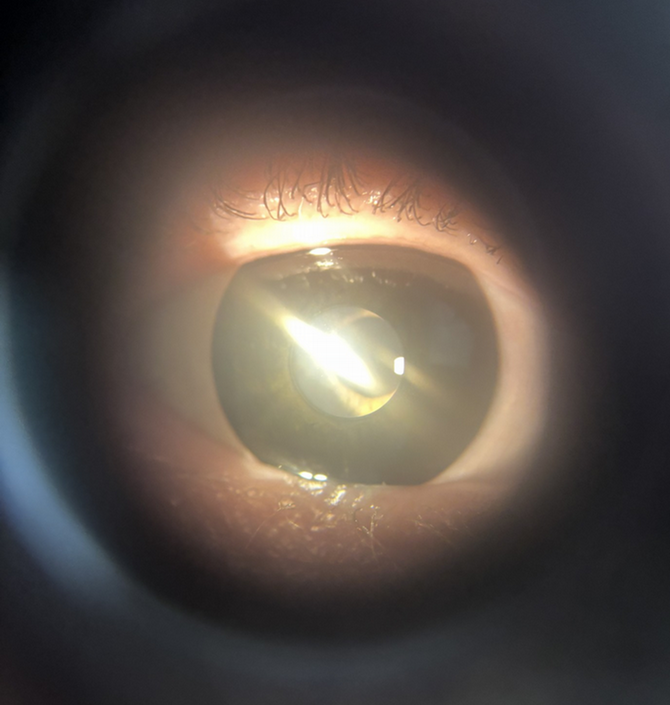 This surgery is common in a condition called Fuch’s Corneal Dystrophy, where the corneal cells become damaged over time leading to corneal swelling and blurry vision. When the cells become damaged in conditions like Fuch’s, they cannot regenerate on their own, so the only way to restore vision is to do a corneal transplant. DMEK is an amazing surgery that has helped countless patients regain their sight, and I was very lucky to have had the opportunity to observe patients from pre-op through surgery and post-op.
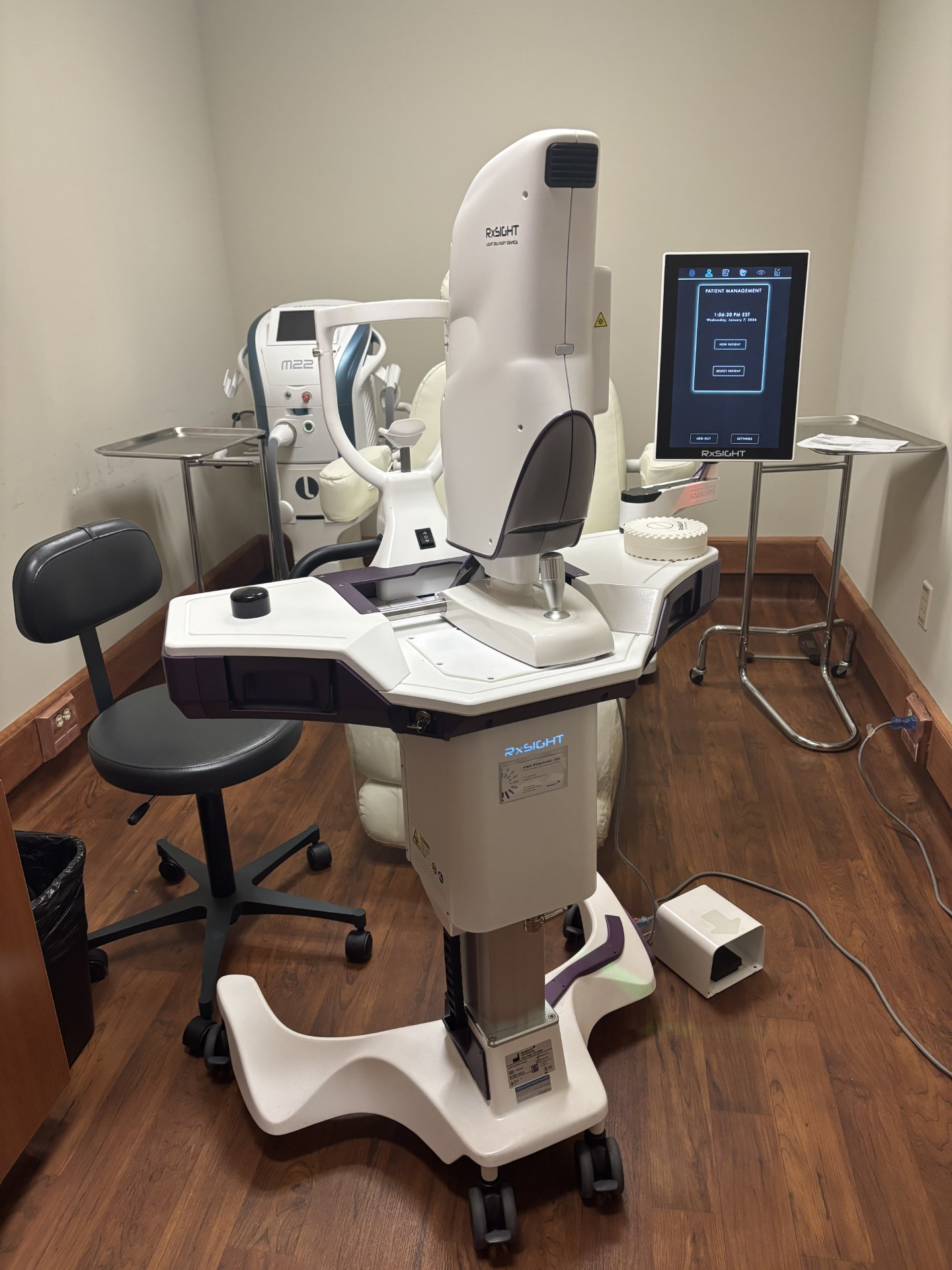
Another really interesting and unique aspect of this practice was its use of something called a Light Adjustable Lens (LAL). During cataract surgery, the natural lens in the middle of the eye is removed and replaced by a man-made lens, which we call an intraocular lens (IOL). After the IOL is placed in the eye, the prescription cannot be altered unless it is removed from the eye surgically.
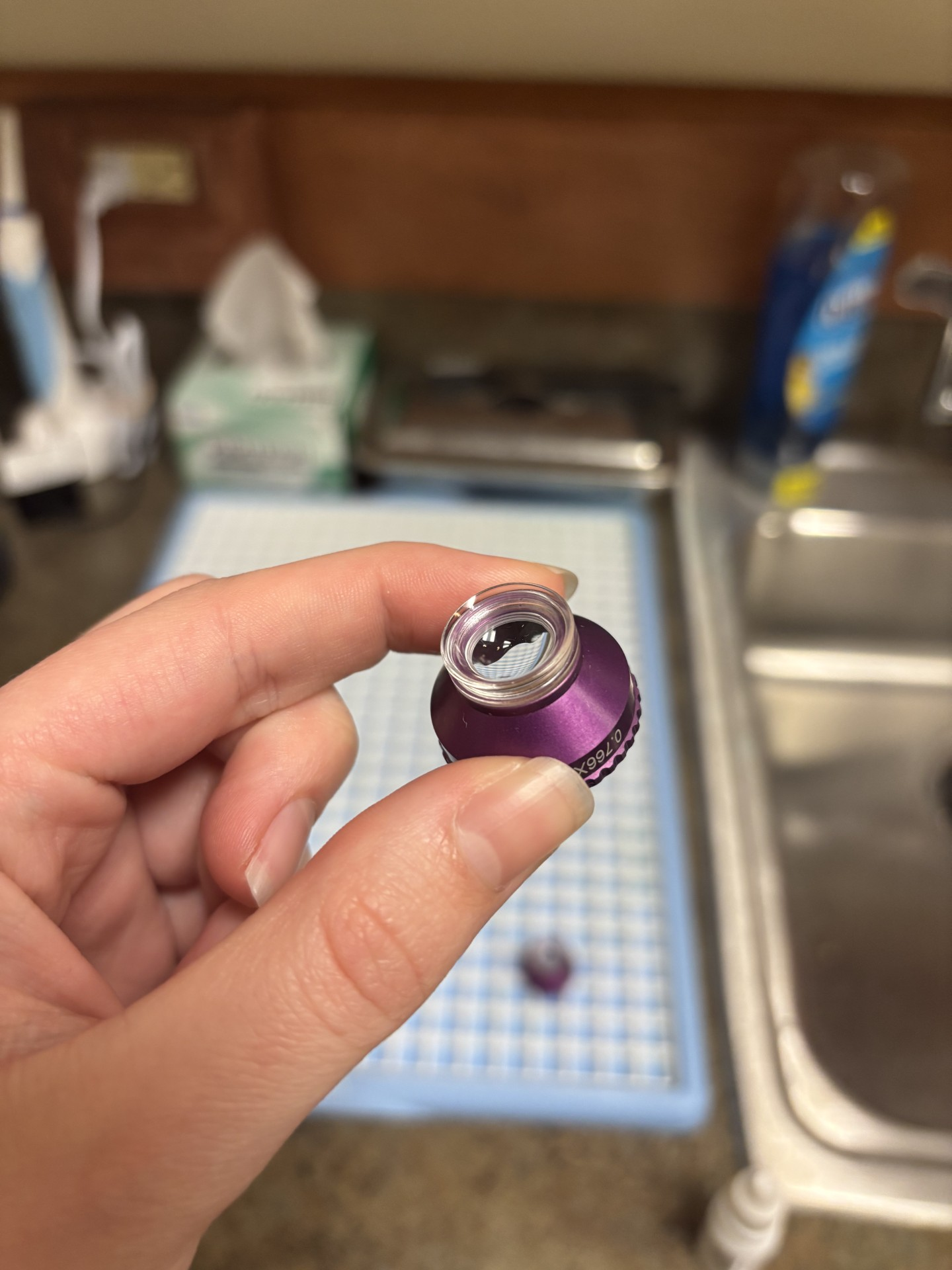 In patients that have irregular corneas, normal IOLs may prevent good quality vision, and that’s where the Light Adjustable Lens comes in. The LAL is a lens implant used during cataract surgery that can be altered non-surgically with a special ultraviolet light machine to ensure good quality vision. The LAL basically lets the patient choose what they want their glasses prescription to be: some patients choose to have perfect distance vision and wear glasses for reading, while some patients choose to have good near vision and wear glasses for distance. There are even some patients who choose to do something called monovision, where they have one eye see well at distance, and the other see well at near. It was extremely interesting and rewarding to learn about this technology and witness the process of helping patients achieve their goal vision.
I really enjoyed my time at this rotation because it challenged me in new and exciting ways. I learned about surgical procedures, specialty contact lenses, premium intraocular lens implants, post-op care, and the importance of teamwork within the eye care community. The optometrist and ophthalmologist at this site worked well together, and they both always had the same goal in mind: do whatever is best for the patient. I am extremely grateful for my time here, and I am excited to head into my fourth and final externship rotation!

- Madison is a third-year Accelerated Scholars Optometry student